 FishKillFlea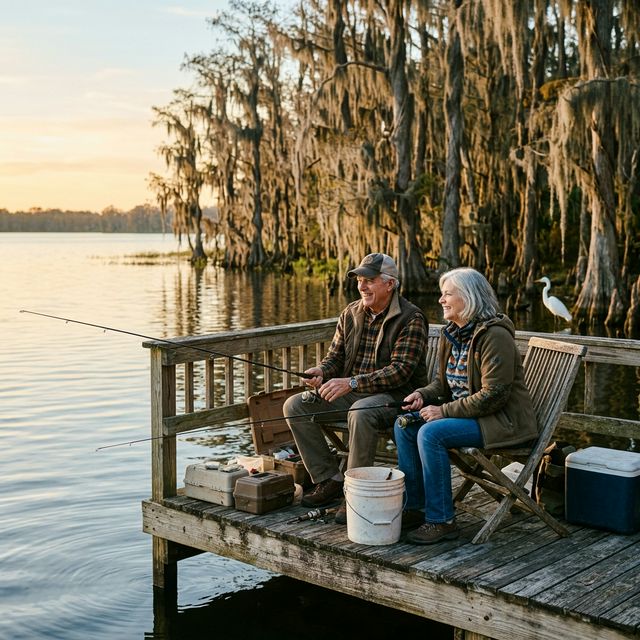
The morning after your retirement party, you wake up at 5:30 AM out of habit — except this time there’s nowhere to be. The coffee tastes different when there’s no commute. Your neighbor in Clermont mentioned the bluegill are biting at Lake Minneola, and you realize something you never had time to consider during 35 years of working: Florida lets you fish for free. Completely free. No license, no fee, no annual renewal. Just grab a rod and go.
Florida is one of the most generous states in the country for senior anglers. If you’re a Florida resident aged 65 or older, the state waives your recreational fishing license entirely — both freshwater and saltwater, every day of the year, with no application required. But the details matter: the exemption only applies to residents, and there are still species-specific permits that seniors aren’t exempt from. If you’re a snowbird who splits time between Florida and Ohio, or a non-resident retiree visiting for the winter, the rules are different.
The Senior Exemption: How It Works
Florida Statute 379.354 grants a complete fishing license exemption to Florida residents who are 65 years of age or older. This is not a reduced-fee license — it’s a full exemption. You owe nothing.
What the Exemption Covers
- ✅ Freshwater fishing — all Florida lakes, rivers, streams, and canals
- ✅ Saltwater fishing — all Florida coastal waters, bays, and the Gulf/Atlantic
- ✅ Boat fishing, shore fishing, pier fishing, wade fishing
- ✅ Both recreational and personal use catch
- ✅ Year-round coverage — no renewal needed
What the Exemption Does NOT Cover
- ❌ Species-specific permits (Snook Permit, Tarpon Tag, Spiny Lobster Permit, Shore-Based Shark Permit)
- ❌ State Reef Fish Angler designation (free but required for reef fish from private boats — see below)
- ❌ Non-resident seniors (you must be a Florida resident)
- ❌ Commercial fishing (requires a separate commercial license regardless of age)
Proof Requirements
You are not required to carry a special license or certificate. However, you must be able to prove both age and residency if asked by an FWC officer. Acceptable proof includes:
- Florida Driver’s License (proves both age and residency)
- Florida State ID Card (proves both age and residency)
- If you don’t have either, carry two separate documents: one proving age (birth certificate, passport) and one proving Florida residency (utility bill, voter registration card, bank statement with Florida address)
The Optional 65+ Certificate
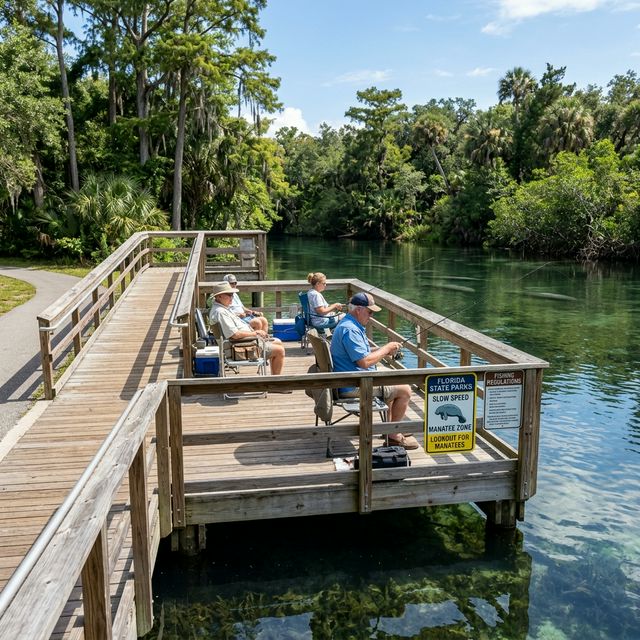
FWC offers a Resident 65 and Older Hunting and Fishing Certificate at no cost. This is not legally required — your Florida Driver’s License is sufficient proof — but many seniors find it convenient because:
- It eliminates the conversation with game wardens (“I’m over 65, here’s my license…”)
- It’s stored digitally in your GoOutdoorsFlorida account
- It appears in the Fish|Hunt FL app alongside any species permits you hold
To obtain the free certificate:
- Visit GoOutdoorsFlorida.com
- Call 888-FISH-FLORIDA (888-347-4356)
- Visit any Tax Collector’s office or authorized license agent
Practical advice: Get the free certificate. It takes two minutes, costs nothing, and prevents any confusion during a game warden check. Download the Fish|Hunt FL app and your certificate is always on your phone.

Fenwick Eagle Spinning Rod
Lightweight graphite blank. Comfortable cork handle ideal for extended use. Great for seniors.
Affiliate link · Prices may vary
The Snowbird Question: Residency vs. Presence
Florida’s massive snowbird population creates a common licensing confusion. Spending winters in Florida — even owning property — does not automatically make you a Florida resident for fishing license purposes.
You qualify as a Florida resident if you can prove:
- A valid Florida Driver’s License or Florida ID card, OR
- A declaration of domicile filed with your county clerk, OR
- Two of the following: Florida voter registration, Florida vehicle registration, federal tax return filed with a Florida address, child enrolled in a Florida school
You do NOT qualify based on:
- Owning a Florida vacation home or condo
- Spending six months per year in Florida
- Having a Florida mailing address through a UPS Store or P.O. Box
- Filing a homestead exemption on Florida property (necessary but not sufficient alone)
For non-resident seniors: You need a standard non-resident fishing license regardless of your age. The exemption is residency-based, not age-based alone.
| Scenario | License Required? | Cost |
|---|---|---|
| FL resident, age 65+ | ❌ Exempt | Free |
| FL resident, age 65+, wants Snook Permit | ✅ Permit only | $10 |
| Non-resident, age 65+ | ✅ Full NR license | $47/year per water type |
| Non-resident, age 65+, 3-day trip | ✅ Full NR license | $17 per water type |
| Snowbird with FL vacation home, no FL ID | ✅ Full NR license | $47/year per water type |
Permits That Seniors Still Need
The fishing license exemption does not extend to species-specific permits. If you’re a free-fishing senior who targets any of these species, you must purchase the appropriate permit:
| Permit | Cost | Required For |
|---|---|---|
| Snook Permit | $10/year | Catching or attempting to catch snook |
| Tarpon Tag | $51.50/year | Keeping a tarpon (IGFA record harvest only) |
| Spiny Lobster Permit | $5/year | Taking or attempting to take spiny lobster |
| Shore-Based Shark Permit | Free | Shark fishing from shore, bridges, piers (age 16+) |
The Snook Permit is the most commonly missed by seniors. Snook are everywhere in coastal Florida — from Tampa Bay to the Indian River Lagoon — and FWC officers specifically check for this permit during inshore stops.

Zebco 33 Spincast Combo
Classic push-button reel. No tangles, no backlash — ideal for seniors and beginners.
As an Amazon Associate, we earn from qualifying purchases. Prices may vary.
The State Reef Fish Angler Designation: Yes, Seniors Need This Too
This is the requirement that catches the most experienced senior anglers off guard: the State Reef Fish Angler designation has no age exemption. Even if you’re 80 years old and haven’t paid for a fishing license in 15 years, you must obtain this free annual designation if you fish for any of the following 13 reef fish species from a private recreational vessel:
- Red snapper, vermilion snapper, mutton snapper, yellowtail snapper
- Gag grouper, red grouper, black grouper
- Greater amberjack, lesser amberjack, almaco jack, banded rudderfish
- Hogfish, gray triggerfish
Why it exists: The designation feeds into FWC’s State Reef Fish Survey (SRFS), which collects harvest data to set accurate season lengths and quotas. Without accurate data from all reef fish anglers — including license-exempt seniors — FWC cannot properly manage these fisheries.
How to get it: Visit GoOutdoorsFlorida.com, use the Fish|Hunt FL app, call 888-FISH-FLORIDA, or visit any license agent. It’s free, takes about 30 seconds, and must be renewed annually.
Important nuance: If you fish exclusively from licensed charter vessels or licensed piers, you do not need this designation personally — the charter captain’s license covers the survey reporting. But if your neighbor takes you out on their boat for a day of grouper fishing, you need it.
Bottom line for seniors: Get the free 65+ certificate AND the free State Reef Fish Angler designation. Both are at GoOutdoorsFlorida.com, both are free, and both take less than a minute. This covers 90% of the compliance issues that trip up senior anglers.
Top 5 Senior-Friendly Fishing Destinations in Florida
These spots were selected for easy access, calm water, shade availability, and consistent year-round fishing:
1. Crystal River / Homosassa — Citrus County
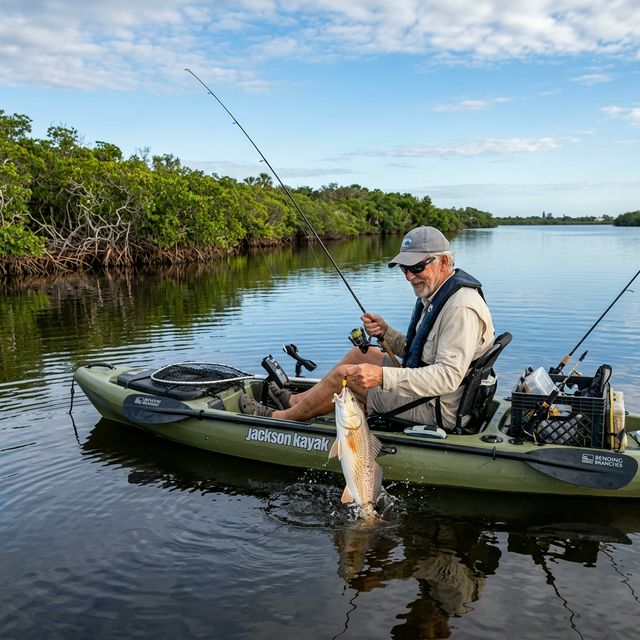
The spring-fed waters of Crystal River and Homosassa are some of the calmest in Florida. Water temperatures stay around 72°F year-round, the bottom is visible in 6–8 feet of water, and the inshore fishing for redfish, snook, and seatrout is exceptional. Several state parks offer ADA-compliant piers and boardwalks. Bonus: manatee viewing from November through March draws visitors from around the world.
2. Sunshine Skyway Fishing Pier — Pinellas County
The longest fishing pier in North America (1.5 miles), built on the old Skyway Bridge. Benches, shade structures, bait shop, and restrooms on-site. Catches include snook, mackerel, sheepshead, and the occasional tarpon. Entry costs $4 per vehicle plus $4 per adult ($2 per child), with a $1.50 bridge toll. No fishing license is needed — the pier holds a valid FWC pier license. Note: check current operating status, as portions of the pier underwent structural repairs after Hurricane Milton in 2024.
3. Lake Kissimmee State Park — Osceola County
For freshwater seniors who prefer bass and panfish, Lake Kissimmee offers calm water, well-maintained docks, and access to the Kissimmee Chain of Lakes. The park has paved trails to fishing areas and a boat ramp. Largemouth bass, bluegill, and black crappie are the primary targets.
4. Honeymoon Island State Park — Pinellas County
An accessible beach and pier with paved walkways, restrooms, and covered fishing shelters. The inshore flats around Honeymoon Island hold spotted seatrout, redfish, and snook year-round. The park pier has a valid pier license, so no individual license is needed for pier fishing.
5. Sebastian Inlet State Park — Indian River/Brevard County
One of the most productive shore-fishing spots on Florida’s east coast. The inlet jetties and catwalk provide access to snook, redfish, flounder, and bluefish. The park has accessible catwalks and fishing platforms. Note: the Indian River Lagoon area has special catch-and-release rules for redfish — check current regulations before fishing.

KastKing Blackhawk II Telescoping Rod
Portable telescoping design collapses to 17 inches. Perfect for travel fishing.
Affiliate link · Prices may vary
Senior Fishing Regulations: Everything Still Applies
The license exemption covers your permission to fish — it does not exempt you from any fishing regulations. Seniors must still follow:
- Bag limits (e.g., 5 bass per day, 1 snook per day)
- Size limits (e.g., snook slot 28–33 inches, redfish 18–27 inches)
- Seasonal closures (e.g., snook harvest closure December–February on Atlantic coast)
- Gear restrictions (e.g., no spearfishing for game fish in freshwater)
- Reporting requirements for certain species
- Catch-and-release zones (e.g., Indian River Lagoon redfish)
Violations carry the same penalties regardless of age or license status — including fines up to $500 and potential equipment confiscation.
How Florida Compares: Senior Fishing Across the Southeast
| State | Senior Age | Benefit | Residency Required? |
|---|---|---|---|
| Florida | 65+ | Full exemption — free | ✅ FL residents only |
| Alabama | 65+ | Full exemption — free | ✅ AL residents only |
| Georgia | 65+ (born before 7/1/1952) | Free Lifetime Sportsman’s | ✅ GA residents only |
| Georgia | 65+ (born on/after 7/1/1952) | Reduced fee ($4 fishing permit) | ✅ GA residents only |
| Texas | 65+ | Reduced fee ($12 FW / $17 all-water) | ✅ TX residents only |
| Louisiana | 60+ | Reduced fee ($5 senior license) | ✅ LA residents only |
| Louisiana | Born before 6/1/1940 | Full exemption — free | ✅ LA residents only |
Florida and Alabama are the most generous in the Southeast — both offer complete license exemptions with no fee for residents 65 and older. Georgia’s split system based on birth date creates confusion, and Louisiana’s “free” benefit applies only to a shrinking cohort born before 1940. Texas charges a reduced but still mandatory fee.