 FishKillFlea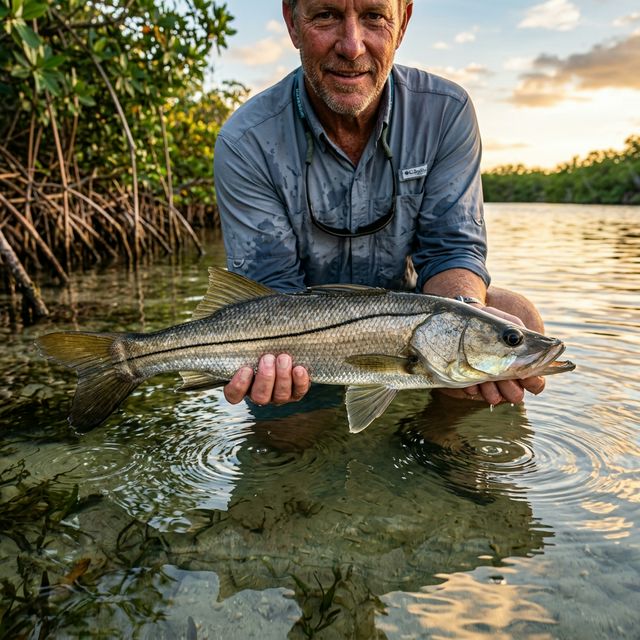
You hook into something heavy near the mangroves off Sanibel Island. The fish peels 40 yards of line on the first run, then turns and crashes into the root structure. You work it out, and your guide says, “That’s a nice snook — 34 inches easy.” Your heart sinks. The slot limit is 28 to 33 inches. This fish — the biggest snook of your life — goes back in the water. Florida’s fishing regulations are designed to protect exactly this kind of fish: the big breeders that sustain the population. And violating them carries penalties that can ruin a fishing trip far more than releasing a trophy.
Florida manages one of the most complex fisheries in the United States. The state has two coastlines (Gulf and Atlantic) with different seasons and regulations for the same species, a freshwater system that spans from the panhandle to the Everglades, and unique invasive species (peacock bass, Mayan cichlid) that exist nowhere else in the continental U.S. Understanding the rules is not optional — it’s the difference between a citation and a clean day on the water.
Freshwater Game Fish: Bag Limits and Size Limits
Black Bass (Largemouth, Florida, Suwannee, Spotted, Choctaw, Shoal)
| Rule | Statewide Regulation |
|---|---|
| Daily bag limit | 5 (all species combined) |
| Size limit | Only 1 of the 5 may be 16 inches or longer |
| Minimum size | No minimum for Florida/largemouth bass |
| Suwannee/Spotted/Choctaw/Shoal bass | 12-inch minimum |
Florida-specific rule: FWC manages several special regulation lakes (TrophyCatch lakes) where bass over 8 pounds qualify for conservation awards. On these waters, releasing trophy bass is encouraged but not legally required (unless local regulation states otherwise).
The Shoal Bass Exception: On the Chipola River and its tributaries, killing or possessing shoal bass is completely prohibited — any shoal bass caught must be released immediately. This is a conservation measure for a species with extremely limited habitat.
Panfish and Other Freshwater Species
| Species | Daily Bag Limit | Size Limit |
|---|---|---|
| Bluegill / Redear Sunfish | 50 (combined) | No minimum |
| Black Crappie | 25 | No minimum |
| Striped / White / Sunshine Bass | 20 combined (only 6 ≥ 24 inches) | No minimum |
| Channel Catfish | No limit | No minimum |
| American Eel | 25 | 9-inch minimum |
Peacock Bass — Miami’s Unique Fishery
| Rule | Regulation |
|---|---|
| Daily bag limit | 2 |
| Size limit | Only 1 may be 17 inches or longer |
| Where found | Miami-Dade, Broward, Palm Beach counties only |
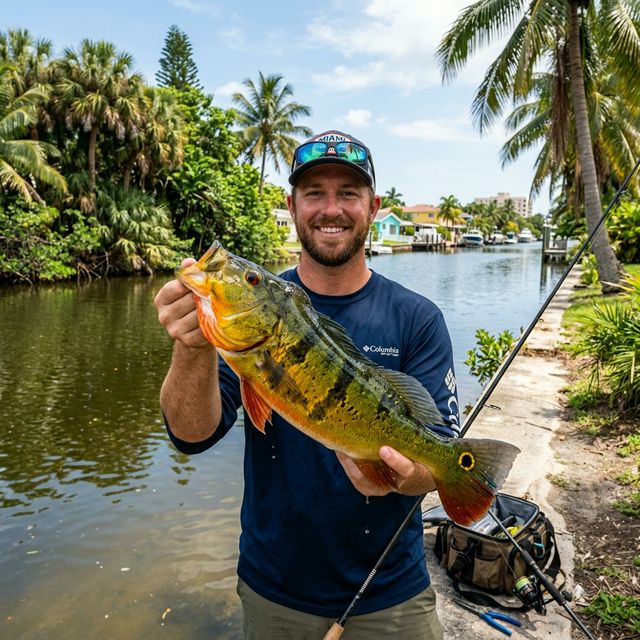
Peacock bass are an introduced tropical species that thrive in South Florida’s urban canal system. They cannot survive water temperatures below 60°F, which keeps them confined to the southeast corner of the state. They are one of the most sought-after freshwater game fish in Florida — aggressive strikers, acrobatic fighters, and found in settings that feel more like the Amazon than suburban America.

Crab & Lobster Measurer
Stainless steel gauge ensures your catch meets minimum size regulations.
Affiliate link · Prices may vary
Saltwater Game Fish: The Big Three (Snook, Redfish, Tarpon)
Snook
Snook are Florida’s most regulated and most citation-generating game fish. FWC manages snook through a regional system with different slot sizes and seasons for Gulf and Atlantic coasts:
| Rule | Atlantic Coast | Gulf Coast (most regions) | Gulf SW (Charlotte Harbor/SW) |
|---|---|---|---|
| Slot limit | 28–32 inches | 28–33 inches | 28–33 inches |
| Daily bag limit | 1 | 1 | 1 |
| Winter closure | Dec 15 – Jan 31 | Dec 1 – end of Feb | Dec 1 – end of Feb |
| Summer closure | Jun 1 – Aug 31 | May 1 – Aug 31 | May 1 – Sep 30 |
| Snook Permit required | ✅ ($10/year) | ✅ ($10/year) | ✅ ($10/year) |
Common mistake in our article’s original version and across competitor sites: Many sources list snook as having a uniform 28–33 inch slot limit statewide. This is wrong. The Atlantic coast slot is narrower (28–32 inches) and the closure dates differ significantly from the Gulf. Anglers who fish both coasts must know these distinctions — keeping a 33-inch snook on the Atlantic is a violation.
Critical detail: The Snook Permit ($10/year) is required when targeting or attempting to take snook — which means casting in areas where snook are present with gear capable of catching them. FWC considers this “attempting to take” even during catch-and-release.
Redfish (Red Drum)
| Rule | Statewide (except IRL) | Indian River Lagoon |
|---|---|---|
| Slot limit | 18–27 inches | Catch-and-release ONLY |
| Daily bag limit | 1 | 0 (no harvest) |
| Closure | No seasonal closure | Ongoing conservation order |
The Indian River Lagoon situation: FWC implemented catch-and-release only regulations for redfish in the Indian River Lagoon system due to severe population declines linked to recurring harmful algal blooms and habitat degradation. This covers a massive stretch of Florida’s east coast from Ponce Inlet (Volusia County) south through Brevard, Indian River, St. Lucie, and Martin counties.
Tarpon
| Rule | Regulation |
|---|---|
| Bag limit | Catch-and-release only (unless pursuing IGFA record) |
| Tarpon Tag required to keep | ✅ ($51.50/year) |
| Size limit for keeping | 75 inches minimum fork length |
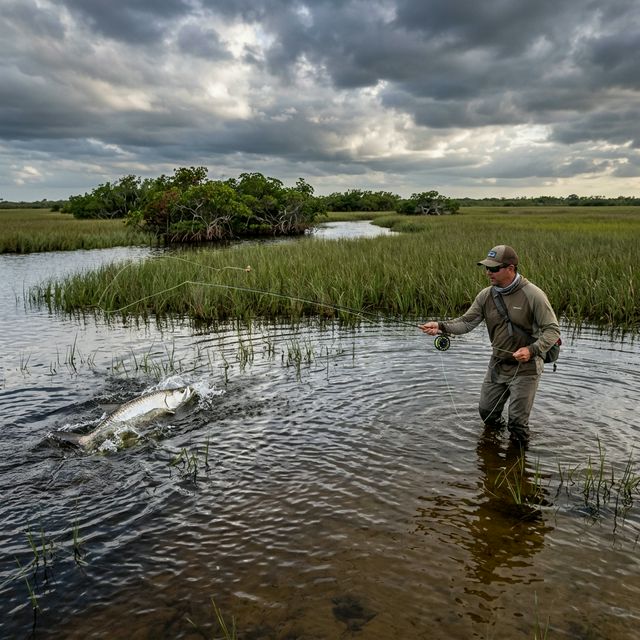
Tarpon fishing in Florida is overwhelmingly catch-and-release. To legally keep a tarpon (which only happens for IGFA world record attempts), you must possess a Tarpon Tag AND have an IGFA record application submitted before the fish is removed from the water.

Rapala Stainless Steel Fishing Pliers
Stainless steel construction. Side cutter and split ring tool. Corrosion resistant.
As an Amazon Associate, we earn from qualifying purchases. Prices may vary.
Other Key Saltwater Species
| Species | Minimum Size | Bag Limit | Notes |
|---|---|---|---|
| Spotted Seatrout | 15–19 inch slot (varies by region) | 3–4/day (varies by region) | 9-region system effective April 2026 — check MyFWC.com |
| Red Snapper (Gulf) | 16 inches | 2/day | Short season — check MyFWC.com for 2026 dates |
| Red Snapper (Atlantic — state waters) | 20 inches | 2/day | Open year-round in FL state waters (0–3 nm) |
| Red Snapper (Atlantic — federal waters) | No minimum | 1/day | Extremely limited season — 2 days in 2025 (Jul 11–12); FWC pursuing 39-day EFP for 2026 |
| Grouper (Gag) | 24 inches | 2/day | Season varies — check MyFWC.com |
| Flounder | 14 inches | 5/day | |
| Dolphinfish (Mahi) | 20 inches FL Atlantic | 10/day or 60/vessel | No min size in Gulf |
| Cobia | 33 inches fork | 1/day or 6/vessel | |
| Sheepshead | 12 inches | 8/day |
Red Snapper Atlantic — critical distinction: Our original article stated “open year-round” for Atlantic red snapper without clarification. This is only true in Florida state waters (shore to 3 nautical miles). In federal Atlantic waters (3–200 nm), the season was just 2 days in 2025. FWC submitted an Exempted Fishing Permit (EFP) to the Commerce Secretary for a proposed 39-day season in 2026 (May 22–Jun 20 + October weekends). Always verify which waters you’re fishing.

Plano 3700 Tackle Storage Box
Adjustable dividers. Durable construction. Perfect for organizing lures and tackle.
Affiliate link · Prices may vary
Prohibited Gear and Methods
Florida prohibits several gear types and fishing methods:
Freshwater prohibitions:
- No spearfishing in any freshwater
- No explosives, electricity, or chemicals for taking fish
- No gill nets, seines, or cast nets for game fish (cast nets legal for bait fish only)
- No trotlines in most public waters
Saltwater prohibitions:
- No spearfishing for snook, redfish, tarpon, spotted seatrout, pompano, or permit
- No spearfishing within 100 yards of a public swimming beach
- No spearfishing in Monroe County (Florida Keys) canals
- No harvest of any species during spawning closures, regardless of method
Special Management Areas
Everglades National Park
- Requires a separate National Park fishing permit in addition to your Florida license
- Slot and bag limits may differ from statewide regulations
- Several zones are no-motor or trolling motor only
- All tarpon, bonefish, and permit are catch-and-release only in the park
Biscayne National Park
- Federal waters regulations apply
- Florida fishing license is honored within park boundaries
- Lobster and stone crab regulations follow Florida state rules
Indian River Lagoon System
- Redfish: catch-and-release only (ongoing conservation order)
- Spotted seatrout: reduced bag limits in some zones
- FWC conducts enhanced enforcement in this area
2026 Regulation Changes to Watch
- Spotted Seatrout regional overhaul (April 1, 2026): FWC is implementing a 9-region management system for spotted seatrout — mirroring the regional approaches used for snook and redfish. Each region will have specific bag limits, slot sizes, and seasonal closures. This is the biggest regulatory change of 2026 for inshore anglers. Check MyFWC.com for your region’s rules.
- Red Snapper Gulf season: FWC announces the annual Gulf recreational red snapper season each year. Check MyFWC.com for the 2026 season dates, which typically fall between June and August
- Red Snapper Atlantic EFP: FWC is pursuing management authority over Atlantic red snapper through an Exempted Fishing Permit. If approved, the proposed 2026 season would run 39 days (May 22–Jun 20 + October weekends) — a massive expansion from the 2-day 2025 federal season
- Gag Grouper Atlantic: The 2026 season is anticipated to open May 1, but season length varies based on federal quota allocations
- Indian River Lagoon: The catch-and-release redfish rule (in effect since September 2022) remains active with no announced end date
Penalties: What Violations Cost
| Violation Type | Penalty Level | Potential Fine |
|---|---|---|
| Fishing without license | 2nd degree misdemeanor | Up to $500 + 60 days jail |
| Over bag limit (minor) | Civil penalty | $50–$250 per fish |
| Over bag limit (major/commercial) | Felony | Up to $10,000 + prison |
| Undersized fish retained | Civil penalty | $50–$500 per fish |
| Fishing during closed season | 2nd degree misdemeanor | Up to $500 |
| Spearfishing prohibited species | 1st degree misdemeanor | Up to $1,000 + 1 year jail |
| Equipment confiscation | All violations | Boat, gear, catch at risk |
FWC operates a Wildlife Alert Hotline (888-404-3922) for public reporting of fishing violations. Tips can be submitted anonymously and may qualify for cash rewards through Crime Stoppers.