 FishKillFlea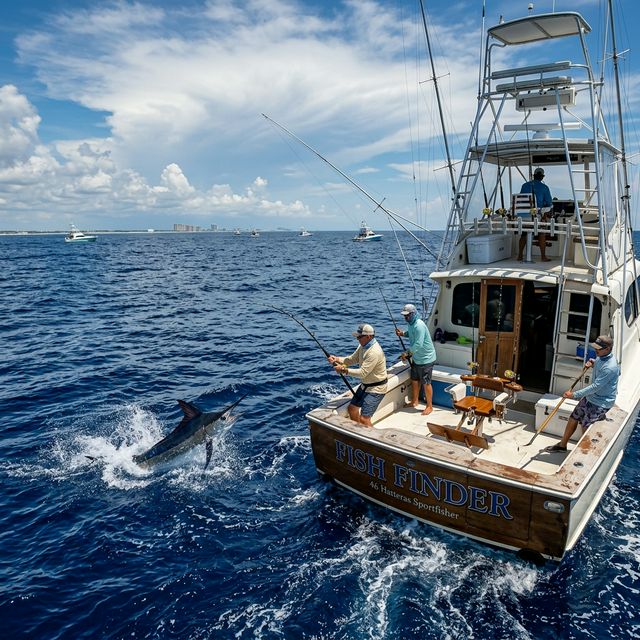
The sun hasn’t cleared the condos on Navarre Beach yet, and you’re already watching a pod of redfish tailing across the grass flat from the kayak launch. Behind you, the Santa Rosa Sound stretches toward Pensacola. Ahead, the Gulf of Mexico is a sheet of teal glass beyond the pass. This is where Florida’s saltwater licensing system gets interesting — and confusing. The redfish flat you’re looking at is technically “saltwater,” which requires a saltwater fishing license. But the sound behind you connects to rivers that are classified as “freshwater” at a line drawn by FWC that most anglers can’t locate without a map. One cast in the wrong direction with the wrong license, and you’re in violation.
Florida has 8,426 miles of coastline — more than any state except Alaska. Its saltwater fishing economy generates over $13 billion annually and supports 1 in 6 jobs in coastal counties. But unlike most coastal states that offer a combined fishing license, Florida stubbornly separates freshwater and saltwater into individual licenses. Understanding which one you need (and when you might need both) is essential for anyone fishing Florida’s coast, bays, estuaries, or the Gulf and Atlantic offshore.
Saltwater License Types and Costs
| License Type | Resident | Non-Resident |
|---|---|---|
| Annual Saltwater | $17.00 | $47.00 |
| 7-Day Saltwater | — | $30.00 |
| 3-Day Saltwater | — | $17.00 |
| 5-Year Saltwater | $79.00 | — |
| Free Shoreline License | $0 (residents only) | Not available |
Source: FWC Recreational License Fees, verified March 2026.
Important: Short-term (3-day and 7-day) non-resident saltwater licenses are not available at Walmart. Purchase them at a County Tax Collector’s office, authorized license agent, or online at GoOutdoorsFlorida.com.
The Free Shoreline License: Florida’s Hidden Perk
Florida offers a unique benefit for residents: a completely free saltwater fishing license for fishing from shore.
What It Covers
- Fishing from land (beaches, seawalls, rocks)
- Fishing from structures permanently attached to land (docks, bridges, piers, jetties, bulkheads)
- All saltwater species (with standard bag limits, size limits, and permit requirements)
What It Does NOT Cover
- Fishing from a boat (kayak, canoe, powerboat, paddleboard) — even in shallow water
- Fishing from a structure not permanently attached to land (anchored floating dock)
- Wading if you accessed the water by boat (even though you’re standing on the bottom)
- Non-residents — this license is for Florida residents only
Who Should Get It
- Florida residents who only fish from shore or piers
- Budget-conscious anglers who prefer bank fishing to boat fishing
- Seniors under 65 who want some coverage without paying $17/year
- Residents who want a backup license for impromptu shore fishing
Apply at GoOutdoorsFlorida.com, the Fish|Hunt FL app, or any Tax Collector’s office. Processing is immediate and there is no fee.

Yo-Zuri Crystal 3D Minnow
Holographic finish attracts fish. Great for inshore saltwater species.
Affiliate link · Prices may vary
State Waters vs. Federal Waters: Why It Matters
Florida’s saltwater jurisdiction is split between state and federal management, and the rules can differ significantly for the same species depending on where you are.
State Waters (FWC Managed)
- Gulf of Mexico: 0–9 nautical miles from shore
- Atlantic Ocean: 0–3 nautical miles from shore
Federal Waters (NOAA Fisheries Managed)
- Gulf of Mexico: Beyond 9 nautical miles
- Atlantic Ocean: Beyond 3 nautical miles
Why This Creates Problems
The same species can have different seasons, bag limits, and size limits depending on whether you’re in state or federal waters:
| Species | State Waters Rule | Federal Waters Rule |
|---|---|---|
| Red Snapper (Gulf) | FWC sets season annually | NOAA sets separate season |
| Gag Grouper | FWC season + size limits | NOAA season may differ |
| Greater Amberjack | FWC regulations apply | NOAA regulations apply |
| Cobia | FWC: 1/day, 33” fork | NOAA may differ seasonally |
Practical impact: If you’re on a bottom fishing trip 15 miles offshore in the Gulf, you’re in federal waters. Your Florida fishing license is still required, but NOAA bag limits and seasons apply — not FWC’s. Your charter captain will know the difference, but if you’re running your own boat, verify the boundaries before you go.
The “9-mile vs 3-mile” confusion: Florida’s Gulf state waters extend a full 9 nautical miles — three times farther than the Atlantic side. This is a historical artifact of Florida’s original territorial boundaries. It means the Gulf has a much larger zone where state rules (often more generous than federal rules) apply.
The Pier and Vessel Exemptions
Licensed Pier Exemption
If a fishing pier holds a valid FWC-issued pier license, everyone fishing from that pier is covered — no individual saltwater license required.
Major licensed piers include:
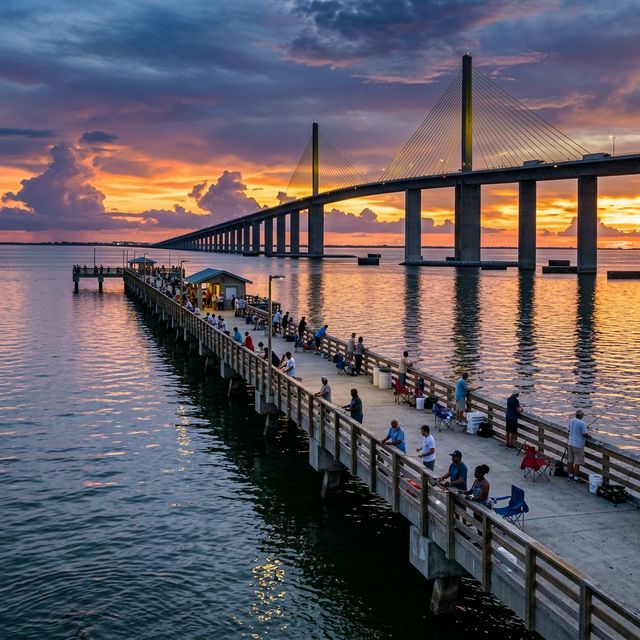
- Sunshine Skyway Fishing Pier (Tampa Bay — 1.5 miles long, North America’s longest fishing pier)
- Navarre Beach Fishing Pier (Santa Rosa County)
- Juno Beach Pier (Palm Beach County)
- Deerfield Beach International Fishing Pier (Broward County)
- Sebastian Inlet State Park Pier (Brevard County)
- Pensacola Beach Gulf Pier (Escambia County)
Licensed Charter Vessel Exemption
If you’re fishing from a for-hire charter or guide boat that holds a valid FWC charter license, you do not need your own saltwater fishing license. This is the most common way visitors fish Florida saltwater without buying a license — and it’s completely legal.
The catch: Individual species permits (Snook, Lobster, Tarpon, Shark) may still be required depending on what you target. Ask your captain before boarding. One key advantage: the State Reef Fish Angler designation is NOT required when fishing on a licensed charter — the captain’s reporting covers the survey requirement.

Penn Battle III Surf Spinning Combo
10-foot surf rod with Penn Battle III reel. Built for beach casting stripers and bluefish.
As an Amazon Associate, we earn from qualifying purchases. Prices may vary.
Species-Specific Permits for Saltwater
Your saltwater license is the base layer. Depending on what you target, you may need additional permits:
| Permit | Cost | Required For | Notes |
|---|---|---|---|
| Snook Permit | $10/year | Catching or attempting to take snook | Required even for C&R |
| Tarpon Tag | $51.50/year | Keeping a tarpon (IGFA record only) | Most anglers don’t need this |
| Spiny Lobster Permit | $5/year | Taking or attempting to take spiny lobster | Regular season: Aug 6 – Mar 31; Mini-season: last Wed–Thu of July |
| Shore-Based Shark Permit | Free | Shark fishing from shore structures | Online course required |
| State Reef Fish Angler | Free | Fishing for 13 reef species from private boats | No age exemption — seniors 65+ must register |
The State Reef Fish Angler Designation: Your Most Overlooked Requirement
This is the single most commonly violated saltwater requirement in Florida — because most anglers don’t know it exists.
The State Reef Fish Angler (SRFA) designation is a free, mandatory registration required for anyone fishing for or harvesting any of the following 13 reef fish species from a private recreational vessel (not charter boats):
- Mutton Snapper
- Yellowtail Snapper
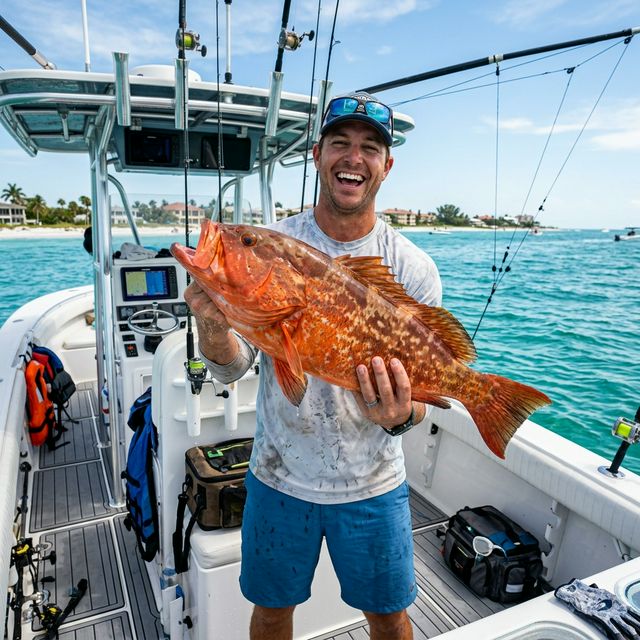
- Hogfish
- Red Snapper
- Vermilion Snapper
- Gag Grouper
- Red Grouper
- Black Grouper
- Greater Amberjack
- Lesser Amberjack
- Banded Rudderfish
- Almaco Jack
- Gray Triggerfish
Critical Details
- No age exemption — anglers 65+ who are normally license-exempt MUST still register for SRFA
- Must be renewed annually (lifetime/5-year holders can opt in for automatic duration coverage)
- Does NOT apply when fishing from licensed charter/guide boats or from shore
- Registration available at GoOutdoorsFlorida.com, Fish|Hunt FL app, or by phone
- You may be randomly selected for a mail survey or dockside interview by FWC biologists
Why this matters: This designation replaced the Gulf Reef Fish Survey in July 2020 and expanded to cover ALL of Florida including Monroe County and the Atlantic coast. The data collected helps FWC manage reef fish populations and set season dates. Failing to register is technically a violation — and it costs nothing to comply.

Penn Battle III Spinning Reel
Full metal body and sideplate. HT-100 carbon fiber drag washers for smooth performance.
Affiliate link · Prices may vary
The Freshwater/Saltwater Boundary Problem
Florida has thousands of miles of brackish water — estuaries, tidal rivers, coastal lagoons, and canals where fresh and saltwater mix. FWC draws a legal boundary line on each system that determines where “freshwater” ends and “saltwater” begins.
How to Find the Boundary
- Check the FWC Freshwater/Saltwater Boundary Interactive Map
- Boundaries are published in the official Florida fishing regulations handbook
- At most locations, the boundary is at a specific bridge, dam, or landmark
The Safe Strategy
If you’re fishing anywhere near a brackish area and you’re not 100% certain which side of the boundary you’re on: carry both a freshwater and saltwater license. For residents, that’s $34/year total. For non-residents, it’s $94/year — but the alternative is a second-degree misdemeanor for fishing with the wrong license.
Florida’s Saltwater Zones: Gulf vs. Atlantic
Florida’s two coastlines produce fundamentally different fishing experiences — and sometimes different regulations for the same species.
Gulf of Mexico (West Coast)
- Character: Warmer water temperatures, shallower nearshore shelf, extensive flats systems
- Signature species: Red grouper, gag grouper, red snapper, tarpon (Boca Grande Pass), snook
- Key destinations: Destin, Panama City, Tampa Bay, Boca Grande, Ten Thousand Islands, Naples
- State waters: Extend 9 nautical miles from shore
Atlantic Ocean (East Coast)
- Character: Deeper water closer to shore (especially south of Palm Beach), Gulf Stream proximity
- Signature species: Dolphinfish (mahi), sailfish, blackfin tuna, wahoo, snook, redfish (IRL)
- Key destinations: Miami, Fort Lauderdale, Palm Beach, Stuart, Sebastian Inlet, Jacksonville
- State waters: Extend 3 nautical miles from shore
Florida Keys
- Character: Unique bridge between Gulf and Atlantic, coral reef ecosystem, flats fishing capital
- Signature species: Bonefish, permit, tarpon (the “Grand Slam”), yellowtail snapper
- Key destinations: Key West, Islamorada, Marathon, Big Pine Key
- Special rules: Some Monroe County-specific regulations (no spearfishing in canals, specific lobster zones)
Gulf Red Snapper: Florida’s Most Controversial Season
The recreational Gulf red snapper season is one of the most closely watched (and debated) fisheries management decisions in Florida each year. FWC announces the season dates annually based on federal quota allocations.
What to know for 2026:
- Season dates are announced on MyFWC.com
- Typical season: a summer window (often June–August) lasting a few weeks
- Bag limit: 2 per person per day
- Minimum size: 16 inches total length
- Federal waters may have a different (often shorter) season — check NOAA’s South Atlantic and Gulf of Mexico Fishery Management Council announcements
The most common mistake: Catching red snapper outside the open season. The fish are abundant and aggressive bottom feeders — they’ll hit your bait whether the season is open or not. If the season is closed and you catch one, you must release it immediately with a venting tool or descending device. FWC fines for out-of-season red snapper retention start at $250 and escalate quickly.
Planning a Florida Saltwater Trip
For Non-Residents on a Budget
- Book a licensed charter — no individual license needed
- Fish from licensed piers — free access, no license needed
- Buy a 3-day saltwater license ($17) for independent shore fishing
For Regular Visitors
- Buy the annual NR saltwater ($47) if you visit more than once per year
- Add the Snook Permit ($10) if fishing anywhere from Tampa Bay south
- Consider the NR freshwater ($47) if your trip includes bass or panfish
For Florida Residents
- Get the free shoreline license as a baseline
- Add the annual saltwater ($17) when you start boat fishing
- Consider the 5-year saltwater ($79) if you plan to stay long-term
- Add the Snook Permit ($10) — you’ll need it eventually