 FishKillFlea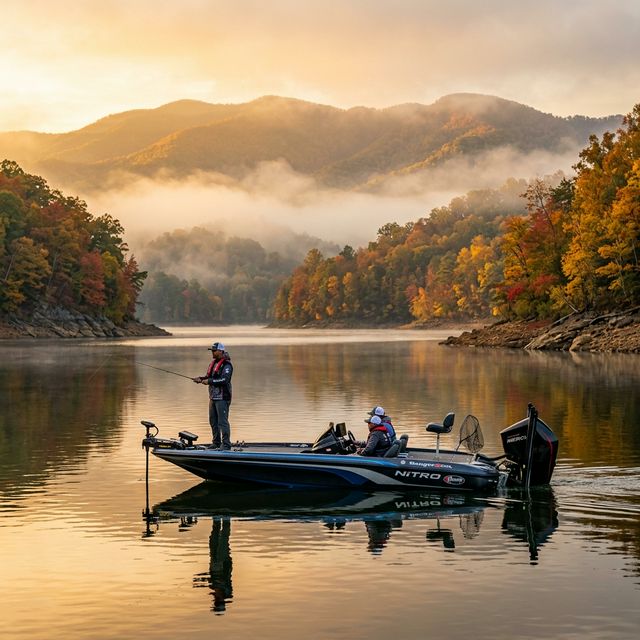
You pull off I-40 south of Knoxville at a predawn exit you’ve never taken before. The GPS says 22 minutes to the Cherokee Lake boat ramp. By the time you back the trailer down the concrete, the first band of orange is cracking over the Great Smoky Mountains foothills, and a blue heron lifts off the glassy surface. A local in the next slip-lane mentions smallmouth are stacked on the point by Panther Creek. The whole scene feels like an undiscovered secret — because compared to its neighbors, Tennessee’s 25-plus TVA reservoirs are genuinely underleveraged by out-of-state anglers.
But there’s a catch that surprises most first-time visitors: Tennessee separates its fishing licenses into “trout” and “no trout” tiers. If your trip includes any chance of catching trout — and in East Tennessee, that chance is high — buying the wrong license could cost you a citation. Here’s the complete breakdown.
Tennessee’s Two-Tier System: Trout vs. No Trout
Unlike most states that sell a single “all fish” license, Tennessee splits its licensing into two categories. This reflects the state’s heavy investment in coldwater trout fisheries across East Tennessee — the tailwaters, mountain streams, and stocked waters that require special management.
The practical impact: a non-resident who only plans to bass fish on Chickamauga Reservoir can save 50% by choosing the no-trout option. But if that same angler decides to stop at the Clinch River tailwater on the way home, they need additional trout privileges — or they’re fishing illegally.
Non-Resident License Types and Prices
Annual Licenses
| License Type | Price | What’s Included |
|---|---|---|
| Annual Non-Resident (No Trout) | $49.00 | All species except trout |
| Annual Non-Resident (All Species) | $98.00 | All species including trout |
| Trout Supplemental (add-on) | $21.00 | Add trout privileges to a no-trout license |
| Junior Hunt & Fish (ages 13-15) | $10.00 | All species including trout |
Short-Term Licenses
| License Type | Duration | Price |
|---|---|---|
| 3-Day (No Trout) | 3 consecutive days | $20.00 |
| 3-Day (All Species) | 3 consecutive days | $40.00 |
| 10-Day (No Trout) | 10 consecutive days | $30.00 |
| 10-Day (All Species) | 10 consecutive days | $61.00 |
Note: Tennessee does not offer a 1-day non-resident fishing license. The shortest option for visiting anglers is the 3-day license. Residents can purchase a 1-day all-species license for $11.50.
Special Permits: Gatlinburg & South Holston
Gatlinburg’s stocked mountain streams require their own permits — separate from your standard Tennessee license. Three permit types exist:
| Permit | Price | Who It’s For |
|---|---|---|
| 1-Day Gatlinburg Trout Permit (Type 097) | $11.50 | Standalone — no Tennessee fishing license needed. Best for tourists who only plan to fish Gatlinburg city waters |
| Gatlinburg Daily Add-On (Type 099) | $3.00 | Add-on to an existing TN fishing license. Required for licensed anglers ages 13-64 fishing Gatlinburg waters |
| Gatlinburg 3-Day Add-On (Type 096) | $9.00 | Add-on to an existing TN fishing license. 3-day version of the daily permit |
| South Holston Reservoir Supplemental | $20.00 | TN residents only — for fishing the Virginia portion of South Holston Reservoir |
Gatlinburg fishing rules to know: Streams are closed every Thursday for stocking. From December 1 through March 31, all trout caught in Gatlinburg city waters must be immediately released — only artificial lures with a single hook are permitted during this catch-and-release period.
Source: Tennessee Wildlife Resources Agency (TWRA), verified March 2026. Processing fees of $0.50–$5.00 may apply.
The Break-Even Decision
Weekend bass trip only (no trout)? The 3-day no-trout license at $20 is unbeatable. Even for a 4-day trip, the $30 ten-day beats the $49 annual if you won’t return this year.
Planning trout fishing? At $40 for the 3-day all-species, you break even against the $98 annual after just 2.5 trips. But here’s the hidden math: the annual is valid for 365 days from purchase, so if there’s any chance of a return trip, the $98 annual is smarter than buying two separate 3-day passes ($80).
Mixing bass and trout? The $49 annual no-trout + $21 trout supplemental = $70, which saves $28 over the $98 all-species annual — but only if you buy the trout supplement before you encounter trout waters. If you add it later, you’ve made two purchases. The all-species annual eliminates decision-making.

Piscifun Fishing Tackle Backpack
Large capacity fishing backpack with tackle boxes. Waterproof rain cover included.
Affiliate link · Prices may vary
The Trout Licensing Detail That Trips People Up
Tennessee defines “trout waters” broadly. The Trout Supplemental License (or all-species license) is required for:
- All Class A Wild Trout Streams year-round
- All designated trout waters from March 15 through Labor Day
- TWRA-stocked community lakes during winter trout stocking (November–March)
The confusion arises because some waters are obvious trout destinations (Clinch River tailwater, South Holston River), while others are seasonal surprises — like a local lake stocked with rainbow trout by TWRA in January. If you’re holding a no-trout license and catch a trout accidentally, you must release it immediately.
Pro Tip: When in doubt, buy the all-species license. The $49 premium over the no-trout annual eliminates any ambiguity — and Tennessee’s tailwater trout fisheries are genuinely world-class.
Tennessee’s Big 4 Tailwater Trout Fisheries (Why the All-Species License Pays For Itself)
If you’re from a state without coldwater tailwaters, Tennessee’s trout program will rewrite your expectations. These aren’t stocked-and-forgot creeks — they’re managed, generation-controlled rivers producing wild brown trout over 20 inches and rainbows year-round. All require a trout license or all-species license.
South Holston River (Sullivan County)
- Dam: South Holston Dam (TVA)
- What’s special: Wild brown trout reproduction. Fish up to 8 lbs documented. Consistent sulphur hatches from May through September create dry fly opportunities rare in the Southeast.
- Generation impact: Wading is only possible during non-generation. Check TVA’s generation schedule daily at 1-800-238-2264 or the TVA lake info app.
- Non-resident note: The river begins in Tennessee but South Holston Reservoir extends into Virginia. If you launch a boat on the reservoir’s Virginia side, you need a Virginia license.
Clinch River (Anderson County)
- Dam: Norris Dam (TVA) — Tennessee’s oldest TVA dam (1936)
- What’s special: Prolific midge and sulphur hatches. Quality over quantity — fewer but larger fish than other tailwaters. The stretch from Norris Dam to Clinton holds rainbow and brown trout.
- Generation impact: High flows push wading anglers off the river. Plan morning trips during low-generation windows.
Caney Fork River (DeKalb/Smith County)
- Dam: Center Hill Dam (USACE)
- What’s special: Tennessee’s most popular tailwater. Excellent bank access, gentle wading, and consistent stocking. Brown trout over 10 lbs are caught annually. The Protected Length Range (14-20 inches for rainbow, 24-inch minimum for brown) creates a genuine trophy fishery.
- Generation impact: The Caney Fork can rise 6+ feet during generation, making it unswadable. Non-generation windows are typically early morning.
Elk River (Franklin/Lincoln County)
- Dam: Tims Ford Dam (TVA)
- What’s special: Quieter than Caney Fork with less pressure. Brown trout emphasis — 20-inch minimum, 1 per day. The limestone geology produces excellent aquatic insect life.
- Generation impact: Less dramatic than other tailwaters but still significant. Wade with caution.
Non-resident planning: All four tailwaters are within a 3-hour drive of Nashville. A dedicated trout trip hitting South Holston and Clinch (East Tennessee) or Caney Fork and Elk (Middle Tennessee) justifies the $98 all-species license immediately. The 365-day rolling validity means any return trip within the year is already covered.

Plano Guide Series Rod Tube Case
Hard-shell rod tube protects rods during travel. Airline-approved for checked baggage.
As an Amazon Associate, we earn from qualifying purchases. Prices may vary.
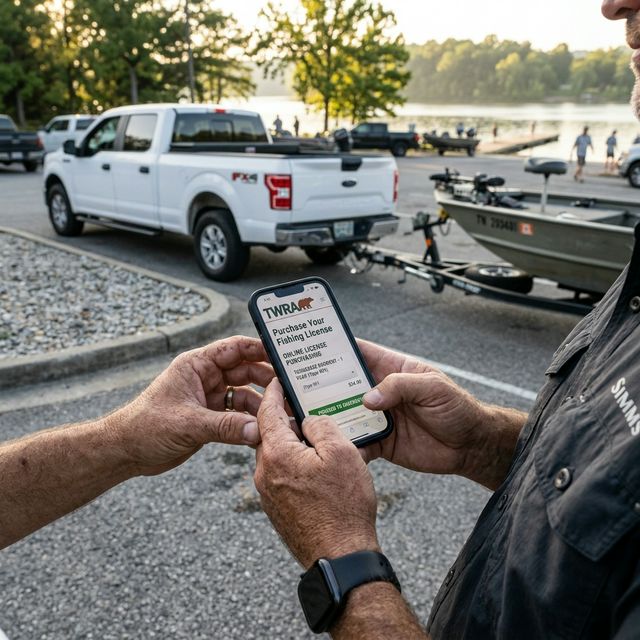
How to Buy Your Non-Resident License
Online (Fastest)
- Go to GoOutdoorsTennessee.com
- Create an account or log in (date of birth + last 4 of SSN)
- Select your license type
- Pay with credit or debit card
- Your emailed license is an immediate, legally valid document
Go Outdoors TN Mobile App
Download the free Go Outdoors TN app (iOS or Android) to purchase, store, and display your license on your phone. Game wardens accept the digital version — no paper printout needed.
In-Person Retailers
Over 1,000 license agents statewide sell Tennessee licenses:
- Walmart — Sporting goods counter
- Bass Pro Shops — Full-service license counter
- Local bait and tackle shops — Especially near major lakes and rivers
- TWRA Regional Offices — Nashville headquarters and 4 regional offices
By Phone
Call 1-888-891-8972 for telephone purchases.
What You Need
- Date of Birth (required for all purchases)
- Social Security Number (required by law for all U.S. purchasers)
- Driver’s license or state ID (for in-person purchases)
- Non-U.S. citizens: Valid passport. Contact TWRA at 615-781-6500 for SSN alternatives.
Border Water Rules: Tennessee Shares Water With 8 States
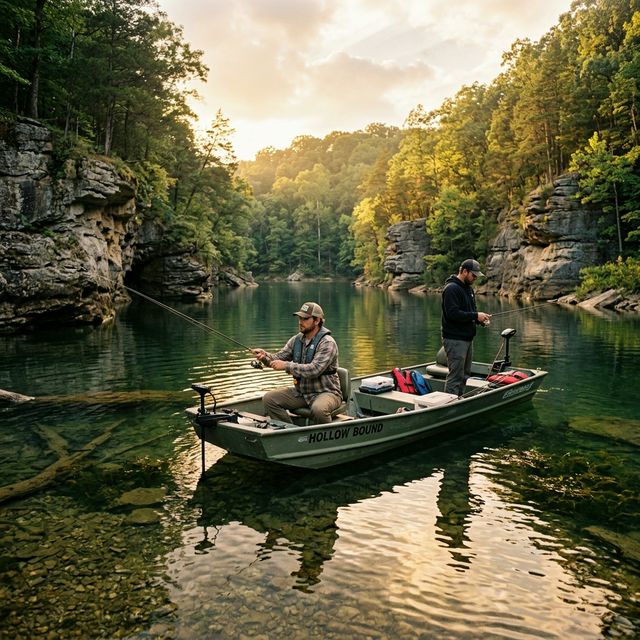
Tennessee borders eight states — more than any other state except Missouri. Several of its most famous fishing destinations sit directly on state lines. Here’s what you actually need:
Dale Hollow Lake (Tennessee-Kentucky)
Dale Hollow holds the world-record smallmouth bass (11 lbs, 15 oz — caught by David Hayes in 1955, still unbroken). The lake straddles the TN-KY border, with the dam on the Tennessee side near Celina.
Reciprocal agreement status (verified October 2025): Tennessee and Kentucky have a reciprocal fishing license agreement — but it has a complicated recent history:
- The agreement expired in March 2025 and was reinstated in October 2025
- Coverage is limited to specific areas: the Wolf River arm (including Illwill Creek embayment), from a line crossing the Wolf River at its mouth where it meets the Obey River and the main body of the lake
- Areas requiring a Kentucky license: The northern sections of Natty Branch, Hendricks Creek, Pusley Creek, and Sulphur Creek — all located in Kentucky — are excluded from the reciprocal agreement
- From a boat: Follow the fishing regulations of the state that issued your license
- From the bank: Follow the regulations of the state you’re physically standing in
Pro Tip: Before any Dale Hollow trip, check TWRA’s current reciprocal agreements page — this agreement has lapsed before and could change again. If you plan to fish the northern embayments, carry a Kentucky license ($55 NR annual).
Pickwick Lake / Tennessee River (Tennessee-Alabama-Mississippi)
Pickwick is a tri-state reservoir — one of the most complex border situations in American fishing.
- No blanket reciprocal agreement: You need the license of the state whose waters you’re occupying
- The state line generally follows the old river channel, but marking is minimal — GPS is the only reliable way to know which state you’re in
- Practical advice: If you’re fishing Pickwick from a boat and moving freely, carry licenses from all states you’ll enter. Tennessee ($49 NR no-trout) + Alabama ($15.80 NR) + Mississippi ($68 NR) covers everything
- Tennessee and Alabama both enforce a 15-inch minimum for largemouth and smallmouth bass on Pickwick
- Mississippi’s regulations may differ — check MDWFP rules for the Pickwick Pool
Reelfoot Lake (Tennessee-Kentucky)
This 15,000-acre natural lake in Northwest Tennessee (formed by the 1811-12 New Madrid earthquakes) extends slightly into Kentucky.
- Tennessee license covers most of the lake
- Kentucky portion requires a Kentucky license
- The lake is primarily managed by Tennessee (TWRA oversees the majority)
Other Border Waters
- Mississippi River (Tennessee-Arkansas-Mississippi): Each state requires its own license for its waters. The state line is the center of the main shipping channel.
- Watauga/South Holston (Tennessee-Virginia): Separate licenses required. Tennessee residents need the additional $20 South Holston Reservoir Supplemental to fish the Virginia portion.

KastKing Blackhawk II Telescoping Rod
Portable telescoping design collapses to 17 inches. Perfect for travel fishing.
Affiliate link · Prices may vary
Cost Comparison: Tennessee vs. Neighboring States
Planning a multi-state trip through the Volunteer State corridor? Here’s how Tennessee’s non-resident fees compare:
| State | Annual NR (No Trout/Basic) | Short-Term NR Option | Trout Add-On |
|---|---|---|---|
| Tennessee | $49.00 | $20.00 (3-day) | $21.00 supplement |
| North Carolina | $35.00 | $9.00 (1-day) | Trout included |
| Virginia | $47.00 | $16.00 (5-day) | $23.00 supplement |
| Kentucky | $55.00 | $15.00 (1-day) | N/A (no separate) |
| Georgia | $50.00 | $10.00 (1-day) | $10.00 supplement |
| Alabama | $15.80 | $9.00 (1-day) | N/A (freshwater only) |
Multi-state trip strategy: The classic “Smokies to Shoals” route — trout fishing in East Tennessee’s tailwaters, then bass on Pickwick/Guntersville in Alabama — requires a Tennessee all-species ($98) + Alabama freshwater ($15.80) = $113.80 total for unlimited access to some of the best freshwater fishing in America.
Tennessee’s 365-Day License: The Smart Advantage
Unlike most states that use a fixed calendar year (September 1 – August 31), Tennessee licenses are valid for 365 days from the date of purchase. This means:
- A license purchased on July 1, 2026 expires on June 30, 2027
- There’s no “dead zone” where you lose months of validity
- You always get a full year of use, regardless of when you buy
This rolling validity makes Tennessee one of the fairest licensing systems for non-residents who visit at unpredictable times.
Exemptions: Who Doesn’t Need a Non-Resident License
| Category | License Required? |
|---|---|
| Non-residents under 13 | ❌ Free — no license needed |
| Non-residents aged 13-15 | ✅ Junior Hunt & Fish ($10) |
| U.S. military on official leave | ❌ Must carry leave papers |
| Non-resident military stationed in TN | ✅ But can buy at resident rates |
| TWRA Free Fishing Day (typically early June) | ❌ for one day annually |
| Non-resident seniors 65+ | ✅ No discount — senior benefits are for TN residents only |
| Non-resident disabled veterans | ✅ No discount — veteran benefits are for TN residents only |
For details on age exemptions, see the Tennessee age requirements guide. For veteran benefits (residents only), see the veterans & disabled guide.
Three Things Most Non-Residents Get Wrong
Buying the no-trout license then stopping at a tailwater — East Tennessee’s tailwater trout fisheries (Clinch, South Holston, Caney Fork, Elk River) are bucket-list destinations. If there’s any chance you’ll swing by one, spend the extra $21 for trout privileges or buy the $98 all-species outright.
Assuming “365 days” means they can renew early — Your license is valid for exactly 365 days from purchase. You can renew online within 10 days of expiration through GoOutdoorsTennessee.com, but not earlier. See the renewal & replacement guide for details.
Not knowing about reservoir-specific bass rules — While Tennessee’s statewide black bass limit is 5 fish at 15 inches minimum, individual reservoirs have exceptions. Chickamauga, Nickajack, and Guntersville have special rules for smallmouth/spotted/Alabama bass hybrids. Check the rules and regulations guide for your specific lake.