 FishKillFlea
North Carolina Fishing License Guide (2026)
Complete guide to North Carolina fishing licenses — Inland vs coastal, Lake Norman, Outer Banks, mountain trout waters, and pricing for 2026.
Overview of North Carolina Fishing Licenses
North Carolina presents a massive geographical divide in its fisheries, stretching from the cold, high-altitude trout streams of the Appalachian Mountains to the expansive, salty sounds and outer beaches of the Atlantic coast. Consequently, the state divides its fishing licenses into two categories: Inland (managed by the NC Wildlife Resources Commission for freshwater) and Coastal (managed by the NC Division of Marine Fisheries for saltwater).
Anyone 16 years of age or older must hold the appropriate license for the water they are fishing. If you plan to fish both environments, you can purchase them separately, or you can buy the Unified Inland/Coastal Recreational Fishing License which covers you from the mountains to the coast. With Lake Norman being the state’s largest lake and the Outer Banks offering world-class saltwater fishing, North Carolina provides incredible diversity for anglers.
Complete North Carolina Fishing License Pricing (2026)
| License Type | Resident | Non-Resident | Validity Period |
|---|---|---|---|
| Inland Fishing (Annual) | $25.00 | $45.00 | 365 days from purchase |
| Coastal Recreational (Annual) | $16.00 | $32.00 | 365 days from purchase |
| Unified Inland/Coastal | $41.00 | $77.00 | 365 days from purchase |
| 10-Day Inland | $11.00 | $20.00 | 10 consecutive days |
| 10-Day Coastal | $6.00 | $11.00 | 10 consecutive days |
| Lifetime Inland (Resident) | $250.00 | Not available | Lifetime - one-time purchase |
| Youth (Under 16) | FREE | FREE | No license required |
Important Notes:
- North Carolina licenses are valid for 365 days from the date of purchase, not a calendar year. Buy anytime and it’s valid for a full year.
- No separate trout permit required. Trout fishing in Public Mountain Trout Waters is included with your inland license—unlike neighboring states that charge extra.
- The Unified license ($41 resident, $77 non-resident) covers both inland and coastal fishing, saving money if you fish both environments.
- 10-day licenses are perfect for vacations and short trips, offering significant savings over annual licenses.
- Commercial pier fishing typically doesn’t require an individual license—the pier’s blanket license covers you.

Penn Battle III Surf Spinning Combo
10-foot surf rod with Penn Battle III reel. Built for beach casting stripers and bluefish.
Affiliate link · Prices may vary
8 Real-World Fishing Scenarios in North Carolina
Scenario 1: Youth Fishing Lake Norman
Your 14-year-old wants to fish Lake Norman for bass during summer vacation. Cost: $0. Children under 16 fish completely free in North Carolina with no license required for both inland and coastal waters. They can fish any public water in the state and follow the same bag limits as licensed adults.
Scenario 2: Outer Banks Surf Fishing Vacation
You’re a Virginia resident planning a week-long surf fishing trip to Cape Hatteras for red drum and flounder. Cost: $11 (10-day coastal non-resident). The 10-day coastal license is perfect for vacation fishing. If you were staying longer than 10 days or planning to return later in the year, the annual non-resident coastal license ($32) would be more economical.
Scenario 3: Mountain Trout Fishing Weekend
You’re a North Carolina resident planning a weekend trip to fish the Davidson River for rainbow and brown trout. Cost: $25 (annual inland license). No separate trout permit needed—trout fishing is included with your inland license. This is a significant advantage over neighboring states like Tennessee ($10 trout permit) and Kentucky ($10 trout permit) that charge extra.
Scenario 4: Fishing Both Mountains and Coast
You’re a resident who fishes Lake Norman regularly and also makes several trips to the Outer Banks each year. Cost: $41 (unified inland/coastal license). This covers both environments and saves you money compared to buying separate licenses ($25 inland + $16 coastal = $41). The unified license is the smart choice for anglers who fish diverse waters.
Scenario 5: Pier Fishing at Outer Banks
You’re visiting the Outer Banks and want to fish from a commercial pier like Jennette’s Pier or Avalon Pier. Cost: Pier admission fee only (typically $12-15/day). Most commercial piers purchase a blanket license that covers all anglers fishing from the pier. You don’t need an individual coastal license. However, if you fish from the beach or a boat, you’ll need the coastal license.
Scenario 6: Jordan Lake Bass Fishing
You’re a non-resident from South Carolina planning multiple weekend trips to Jordan Lake (North Carolina’s most popular lake) throughout the year. Cost: $45 (annual inland non-resident). After three 10-day licenses ($20 × 3 = $60), the annual license pays for itself. If you fish more than twice, the annual is the better value.
Scenario 7: Lifetime License Investment
You’re a 30-year-old North Carolina resident who plans to fish regularly for the next 40+ years. Cost: $250 (lifetime inland license). This one-time purchase pays for itself in 10 years compared to annual licenses ($25/year). If you’re a lifelong angler, it’s an excellent investment that eliminates annual renewals forever.
Scenario 8: Joint Waters Confusion
You’re fishing the Neuse River and aren’t sure if you need an inland or coastal license. Solution: Check the specific location. North Carolina designates certain areas as "joint waters" where both inland and coastal licenses are valid. However, above the coastal boundary (marked at specific bridges), you need inland only. Below the boundary, you need coastal only. When in doubt, the unified license ($41 resident) covers both.
Top 5 Fishing Locations in North Carolina
1. Lake Norman
Species: Largemouth bass, spotted bass, crappie, catfish, white bass, striped bass
Size: 32,510 acres
Why it’s special: North Carolina’s largest lake, created by Duke Energy in 1963. Lake Norman offers exceptional bass fishing year-round, with both largemouth and spotted bass thriving in the lake’s diverse habitat. Spring crappie fishing is outstanding, and the lake also holds hybrid striped bass. Located just north of Charlotte, it’s easily accessible with excellent facilities. Only requires an inland fishing license ($25 resident, $45 non-resident).
2. Outer Banks (Cape Hatteras/Cape Lookout)
Species: Red drum, flounder, speckled trout, bluefish, Spanish mackerel, cobia
Size: 100+ miles of coastline
Why it’s special: World-class surf fishing and inshore fishing. The Outer Banks is legendary for red drum (puppy drum and citation-sized bulls), with fall being prime time. Cape Hatteras Point is considered one of the best surf fishing locations on the East Coast. Flounder fishing in the sounds is excellent spring through fall. Requires coastal recreational fishing license ($16 resident, $32 non-resident).
3. Jordan Lake
Species: Largemouth bass, crappie, white bass, catfish, striped bass
Size: 14,000 acres
Why it’s special: North Carolina’s most popular lake, located between Raleigh and Chapel Hill. Jordan Lake offers consistent bass fishing with numerous coves and creek arms providing excellent habitat. Spring crappie fishing draws huge crowds, with fish averaging 10-12 inches. The lake also has a healthy striped bass population. Multiple public access points and boat ramps make it highly accessible. Only requires inland license.
4. Kerr Lake (Buggs Island Lake)
Species: Largemouth bass, striped bass, crappie, catfish, white bass
Size: 50,000 acres (NC/VA border)
Why it’s special: One of the premier striped bass fisheries on the East Coast. Kerr Lake produces trophy stripers exceeding 40 pounds, with spring being prime time when fish move into shallow water. The lake also offers excellent crappie fishing and consistent largemouth bass action. Straddling the North Carolina-Virginia border, you need a license from whichever state’s waters you’re fishing (or both for unrestricted access).
5. Great Smoky Mountains National Park Streams
Species: Rainbow trout, brown trout, brook trout (native)
Size: 2,900 miles of streams
Why it’s special: The Great Smoky Mountains National Park offers some of the best wild trout fishing in the eastern United States. Over 2,900 miles of streams provide endless opportunities, with many containing native brook trout. The park straddles the North Carolina-Tennessee border. On the NC side, you need an inland fishing license ($25 resident, $45 non-resident)—no separate trout permit required. Catch-and-release regulations apply in many streams.
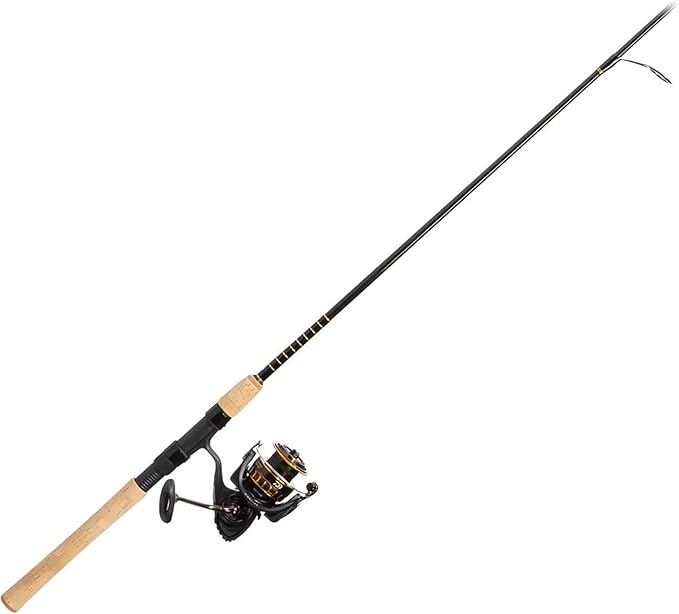
Daiwa BG Spinning Combo
Heavy-duty saltwater combo with Daiwa BG reel. Excellent for inshore and pier fishing.
As an Amazon Associate, we earn from qualifying purchases. Prices may vary.
North Carolina vs. 4 Neighboring States
North Carolina borders four states, each with different fishing license requirements. Here's how North Carolina compares:
North Carolina vs. South Carolina
- Resident annual: $25 inland (NC) vs. $10 (SC)
- Non-resident annual: $45 inland (NC) vs. $35 (SC)
- License year: 365 days from purchase (NC) vs. Calendar year (SC)
- Senior exemption: Discounted (NC) vs. Free at 64+ (SC)
- Youth exemption: Under 16 (both)
- Trout permit: Included (NC) vs. $10 separate (SC)
- Key difference: South Carolina has much cheaper licenses overall but requires separate trout stamp; NC includes trout with base license
North Carolina vs. Virginia
- Resident annual: $25 inland (NC) vs. $23 (VA)
- Non-resident annual: $45 inland (NC) vs. $47 (VA)
- License year: 365 days from purchase (NC) vs. Calendar year (VA)
- Senior exemption: Discounted (NC) vs. Free at 65+ (VA)
- Youth exemption: Under 16 (both)
- Trout permit: Included (NC) vs. $23 separate (VA)
- Key difference: Very similar pricing; both share Kerr Lake; VA offers free senior fishing and requires separate trout license
North Carolina vs. Tennessee
- Resident annual: $25 inland (NC) vs. $33 (TN)
- Non-resident annual: $45 inland (NC) vs. $49 (TN, no trout)
- License year: 365 days from purchase (NC) vs. March 1 - Feb 28 (TN)
- Senior exemption: Discounted (NC) vs. $49 lifetime at 65+ (TN)
- Youth exemption: Under 16 (NC) vs. Under 13 (TN)
- Trout permit: Included (NC) vs. $10 separate (TN)
- Key difference: NC has cheaper resident license and includes trout; both share Great Smoky Mountains National Park
North Carolina vs. Georgia
- Resident annual: $25 inland (NC) vs. $15 (GA)
- Non-resident annual: $45 inland (NC) vs. $50 (GA)
- License year: 365 days from purchase (NC) vs. Calendar year (GA)
- Senior exemption: Discounted (NC) vs. Free at 65+ (GA)
- Youth exemption: Under 16 (both)
- Trout permit: Included (NC) vs. $5 separate (GA)
- Key difference: Georgia has cheaper resident license and free senior fishing; NC includes trout with base license
Frequently Misunderstood North Carolina Fishing Rules
No Separate Trout Permit Required
Unlike many neighboring states, North Carolina does NOT require a separate trout permit. Your $25 inland fishing license includes trout fishing in all Public Mountain Trout Waters. Tennessee charges an additional $10 for trout, Kentucky charges $10, Virginia charges $23, and South Carolina charges $10. North Carolina's inclusion of trout with the base license is a significant cost savings for mountain anglers.
365-Day Validity from Purchase Date
North Carolina licenses are valid for 365 days from the date of purchase, not a calendar year. If you buy a license on June 15, 2026, it's valid through June 14, 2027. This is different from most neighboring states that use calendar year (January 1 - December 31) or fixed cycles like Tennessee's March 1 - February 28. The 365-day system gives you flexibility to buy whenever you start fishing.
Inland vs. Coastal License Confusion
North Carolina's dual license system confuses many anglers. Inland licenses cover all freshwater (lakes, rivers, streams, mountain trout waters). Coastal licenses cover saltwater (ocean, sounds, estuaries). Some areas are designated "joint waters" where both licenses are valid. The coastal/inland boundary is legally defined at specific bridges and markers on major rivers. When in doubt, purchase the unified license ($41 resident) to cover both environments.
Pier Fishing Doesn't Require Individual License
Most commercial ocean fishing piers in North Carolina (Jennette's Pier, Avalon Pier, etc.) purchase a blanket pier license that covers all anglers fishing from the pier. If you pay the daily pier admission fee (typically $12-15), you're covered and don't need an individual coastal license. However, this only applies to fishing from the pier structure itself—if you fish from the beach or a boat, you need a coastal license.
Lifetime License Exceptional Value
The lifetime inland fishing license ($250) pays for itself in 10 years compared to annual licenses ($25/year). If you're a North Carolina resident who plans to fish regularly for decades, it's an excellent investment. Many anglers don't realize this option exists and continue buying annual licenses. The lifetime license eliminates renewals forever and protects you from future price increases.
Kerr Lake Border Fishing
Kerr Lake (also called Buggs Island Lake) straddles the North Carolina-Virginia border. You need a license from whichever state's waters you're fishing. The state boundary runs through the middle of the lake. Many anglers mistakenly believe a North Carolina license covers the entire lake. If you plan to fish both sides, you'll need both state licenses ($25 NC + $23 VA = $48 total for residents).

Penn Battle III Spinning Reel
Full metal body and sideplate. HT-100 carbon fiber drag washers for smooth performance.
Affiliate link · Prices may vary
Conservation Impact: Where Your License Money Goes
North Carolina divides fishing license revenue between two agencies based on where you fish:
Inland Fishing License Revenue (NC Wildlife Resources Commission)
- Fish stocking programs: NCWRC operates multiple fish hatcheries that stock trout in mountain streams, striped bass in reservoirs, and catfish in community fishing lakes. Over 1 million trout are stocked annually in Public Mountain Trout Waters.
- Habitat improvement: Funding supports stream restoration, fish habitat structures, spawning bed creation, and water quality monitoring. Recent projects include habitat improvements on Lake Norman and Jordan Lake.
- Public access development: NCWRC maintains hundreds of boat ramps, fishing piers, and public access points across the state. New facilities are regularly added to improve angler access.
- Fisheries research: Biologists conduct population surveys, creel studies, and research on invasive species to protect North Carolina's native fish populations. This research informs bag limits, size limits, and seasonal regulations.
- Youth education: Free fishing clinics, school programs, and the "Fishing in Neighborhoods" program introduce thousands of children to fishing annually.
Coastal Fishing License Revenue (NC Division of Marine Fisheries)
- Artificial reef program: North Carolina has one of the most extensive artificial reef programs on the East Coast, with over 50 reef sites providing habitat for fish and diving opportunities.
- Red drum and flounder management: Funding supports research and management of North Carolina's premier inshore species, including tagging studies and population assessments.
- Coastal access: Development and maintenance of public boat ramps, fishing piers, and beach access points along the coast.
- Enforcement: Marine patrol officers ensure compliance with fishing regulations and protect coastal fish populations.
North Carolina's fishing license fees fund world-class fisheries management from the mountains to the coast, ensuring exceptional fishing opportunities for current and future generations.
Understanding the Coastal/Inland Boundary
North Carolina's rivers present unique challenges because many transition from inland fresh water to coastal tidal water. The state maintains specific, legally defined geographic boundary lines (often at specific bridges or river markers on major coastal rivers like the Neuse or Roanoke). Above this marker, you need an Inland License; below it, you need a Coastal license.
If you are vacationing in the Outer Banks and plan to surf fish at Cape Hatteras, you must hold the Coastal Recreational Fishing License. If you decide to drive inland a few hours to bass fish on Jordan Lake, you need the Inland license. The unified license ($41 resident, $77 non-resident) eliminates this confusion by covering both environments.
Mountain Trout Fishing
If you head to the western mountains around Asheville or Boone to target trout, your standard Inland Fishing license covers you completely—no additional trout permit required. This is a significant advantage over neighboring states. North Carolina's Public Mountain Trout Waters include hundreds of miles of streams with rainbow, brown, and native brook trout.
Be aware of the local signage when trout fishing in NC. The state utilizes a color-coded signage system (Hatchery Supported, Wild Trout, Catch-and-Release/Artificial Lures Only) and the regulations change depending on the exact stretch of river and the time of year. Always check current regulations before fishing.