 FishKillFlea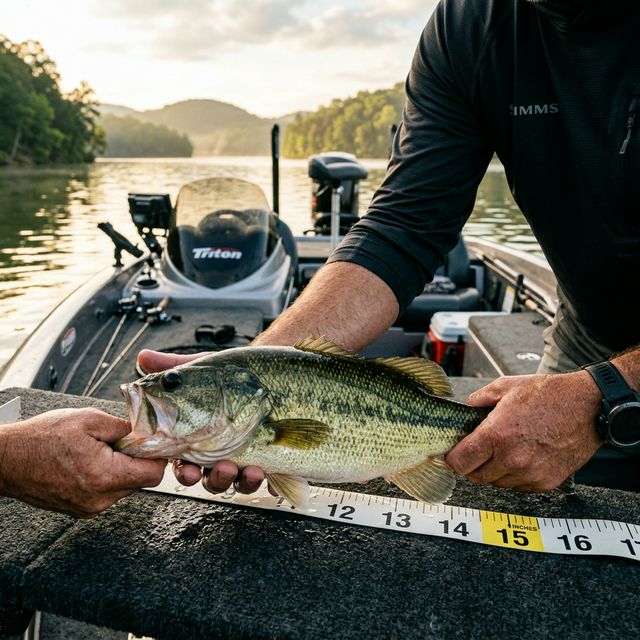
You pull a largemouth off a ledge on Chickamauga Reservoir, flip it over the gunwale, and reach for the ruler. Fourteen and a half inches — close, but is it legal? On most Tennessee reservoirs, the answer is no: the statewide minimum is 15 inches. But on Chickamauga specifically, the rules for bass changed in August 2025, and the species matters more than the length. Is it a largemouth? A spotted bass? One of the Alabama bass hybrids that have colonized the reservoir? Each has different rules now — and getting it wrong means a citation from a TWRA officer who knows the difference even if you don’t.
Tennessee’s fishing regulations are a patchwork of statewide defaults and reservoir-specific exceptions. The state manages over 25 major TVA reservoirs, hundreds of miles of trout tailwaters, and unique fisheries like paddlefish snagging — each with their own rulebook. Here’s how to stay legal on every water.
Black Bass: Statewide Rules and Reservoir Exceptions
Statewide Default
| Species | Daily Limit | Minimum Length |
|---|---|---|
| Black Bass (all species combined) | 5 fish | No statewide minimum |
This covers largemouth, smallmouth, spotted, Alabama, Coosa bass, and all hybrids. The 5-fish limit is a combined total — you can’t keep 5 largemouth plus 5 smallmouth.
⚠️ Important: While the statewide default has no minimum length, most major reservoirs impose their own 15-inch minimum for largemouth bass. Always check your specific water body’s regulations. The statewide “no minimum” primarily applies to streams and rivers without special designations.
2025-2026 Rule Changes: The Hybrid Problem
Effective August 1, 2025, TWRA simplified the bass rules on three reservoirs where Alabama bass, spotted bass, and smallmouth bass are hybridizing extensively. The previous species-specific rules were impossible to enforce because anglers (and even biologists) couldn’t reliably distinguish the species from their hybrids.
Chickamauga, Nickajack, and Guntersville Reservoirs (new rules):
| Species Group | Daily Limit | Length Limit |
|---|---|---|
| All Black Bass combined | 5 fish | — |
| Largemouth Bass | (within the 5) | 15-inch minimum |
| Smallmouth, Spotted, Alabama Bass & hybrids | (within the 5) | No minimum length, BUT only 1 fish over 16 inches per day |
This means you can keep small spotted/Alabama bass but are limited to just one trophy-class fish from the smallmouth/spotted/Alabama group per day.
Other Notable Reservoir Exceptions
| Reservoir | Species | Daily Limit | Length Limit |
|---|---|---|---|
| Davy Crockett Lake | Largemouth | No limit | No minimum (but only 1 over 18”) |
| Marrowbone Lake | Largemouth | 10 | No minimum |
| Parksville | Smallmouth/Spotted/Alabama | No limit | No minimum (live transport prohibited) |
| Tellico River | Smallmouth | 5 | 15” (now statewide standard, changed 2025) |
Pro Tip: Before every trip, check the TWRA’s reservoir-specific regulations page for your destination. There are over 30 reservoirs with unique bass rules, and the statewide default doesn’t always apply.
Trout Regulations: A System Within a System
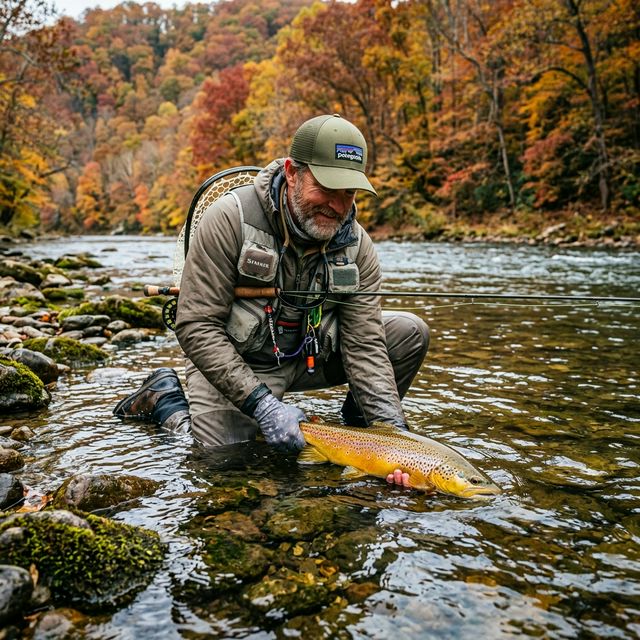
Tennessee’s trout fishery is nationally significant — the state manages dozens of coldwater tailwaters, mountain streams, and stocked community lakes. The regulations reflect this complexity.
Statewide Trout Default
| Species | Daily Limit | Minimum Length |
|---|---|---|
| Trout (all species combined) | 7 fish | No minimum |
| Lake Trout | 2 (within the 7) | No minimum |
Note: Of your 7-trout daily limit, a maximum of 2 may be lake trout. This restriction applies statewide.
License Requirement
A Trout Supplemental License ($21) or All-Species License is required to fish for trout in:
- All designated trout waters from March 15 through Labor Day
- Class A Wild Trout Streams year-round
- TWRA community lakes during winter trout stocking (November–March)
Key Tailwater Regulations
Tennessee’s most famous trout fisheries each have unique rules:
Caney Fork River (Center Hill Dam to Cumberland River):
- Total daily limit: 5 trout (all species combined)
- Rainbow/Brook/Cutthroat: Protected Length Range (PLR) 14-20 inches — only 1 over 20”
- Brown Trout: 1 per day, 24-inch minimum
South Holston River (Dam to Boone Reservoir):
- Daily limit: 7 trout (all species)
- PLR: 16-22 inches — only 1 over 22”
Elk River (Tims Ford Dam to I-65 bridge):
- Daily limit: 7 trout (all species)
- Brown Trout: 1 per day, 20-inch minimum
Clinch River (Norris Dam to Hwy 61 bridge, including tributaries):
- Daily limit: 7 trout (all species combined)
- PLR: 14-20 inches on all trout
- Only 1 trout over 20 inches per day
Hiwassee River (Appalachian Powerhouse to L&N Railroad Bridge):
- March 1 through September 30: Daily limit 7 trout, only 2 may be brown trout
- October 1 through February 28: Delayed harvest regulations apply (catch-and-release only in designated sections)
Watauga River Quality Trout Fishing Area (Smallings bridge to CSX railroad bridges):
- Daily limit: 2 trout
- Minimum length: 14 inches
- Bait restriction: Use or possession of any bait is prohibited; artificial lures only
- Trout under 14 inches may not be in possession
Fort Patrick Henry Reservoir (Boone Dam to Louis Milhorn Bridge):
- Daily limit: 7 trout
- Rainbow/Brown PLR: 16-22 inches — only 1 over 22”
Understanding Protected Length Ranges (PLR)
The PLR system is unique to Tennessee and confuses many visiting anglers. A PLR of “14-20 inches” means:
- You may keep fish under 14 inches
- You must release fish between 14 and 20 inches (the protected window)
- You may keep fish over 20 inches (but only 1 per day)
This protects the prime breeding-size fish while allowing harvest of both small stockers and true trophies.
Community Lake Winter Stocking
TWRA stocks rainbow trout in designated community lakes from November through March. During stocking periods:
- Daily limit: 5 trout, no size limit
- Trout license required
- Lakes include: Cameron Brown Lake, Cedar Hill Park Pond, Camp Jordan, Pistol Creek/Green Belt Lake, Fountain City Lake, and others listed on TWRA’s community stocking schedule

Crab & Lobster Measurer
Stainless steel gauge ensures your catch meets minimum size regulations.
Affiliate link · Prices may vary
Catfish: The Liberally Managed Fishery
Tennessee takes an unusually liberal approach to catfish management:
Statewide Rules
| Size Category | Daily Limit | Notes |
|---|---|---|
| Catfish under 34 inches | No limit | Unlimited harvest |
| Catfish over 34 inches | 1 per day | Trophy protection |
This applies to channel catfish, blue catfish, and flathead catfish statewide. The 34-inch rule protects the largest breeder-class fish while allowing essentially unlimited harvest of eating-size cats.
Lake-Specific Exceptions
| Lake | Species | Daily Limit | Length Limit |
|---|---|---|---|
| Travis McNatt Lake | Channel/Blue (combined) | 5 | 16” minimum |
| Acorn Lake | Channel/Blue (combined) | 5 | No minimum |
| Fall Creek Falls Lake | Channel/Blue (combined) | 5 | 16” minimum |
| Indian Boundary Lake | All catfish | 5 | No minimum |
| Campbell Lake (Maury Co.) | All catfish | 5 | 14” minimum |
Crappie, Walleye, Sauger, and Other Species
| Species | Daily Limit | Minimum Length | Notes |
|---|---|---|---|
| Crappie (black & white) | 30 combined | No minimum (statewide) | Some lakes have 10” minimums |
| Walleye | 5 | 15” | — |
| Sauger | 10 | 15” | — |
| Striped Bass | 2 | 15” | Varies significantly by reservoir |
| Hybrid Striped Bass | 2 | 15” | — |
| Muskie/Tiger Muskie | 1 | 36” | Catch-and-release on some waters |
| Paddlefish | Varies | Varies | Snagging season only, specific rivers |
| Bluegill/Sunfish | 50 combined | No minimum | — |
| Yellow Perch | 50 | No minimum | — |
Paddlefish: Tennessee’s Unique Fishery
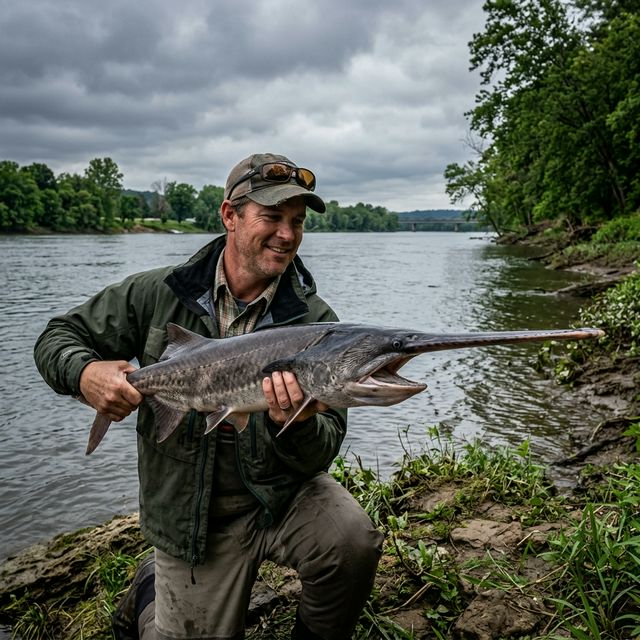
Tennessee is one of only a handful of states offering a paddlefish snagging season. This unusual fishery targets the American paddlefish — a prehistoric filter-feeder with a distinctive paddle-shaped snout — using heavy tackle and large treble hooks:
- Season: Varies by year (typically spring, March–April)
- Method: Snagging only (intentional foul-hooking)
- Location: Designated reaches of the Tennessee and Cumberland Rivers
- Special permit: Required — check TWRA for current availability
- Daily limit: Typically 2 fish per day during open season

Rapala Stainless Steel Fishing Pliers
Stainless steel construction. Side cutter and split ring tool. Corrosion resistant.
As an Amazon Associate, we earn from qualifying purchases. Prices may vary.
Prohibited Methods and Gear
Tennessee prohibits several fishing methods entirely:
- ❌ Explosives, electrical devices, or poisons for taking fish
- ❌ Firearms for taking fish (except bowfishing for non-game species)
- ❌ Snagging (except during designated paddlefish seasons)
- ❌ Gill nets, seines, or trammel nets without a commercial fishing license
- ❌ Trotlines in public reservoirs without proper tags (must include owner name/address)
- ❌ Live transport of black bass from Parksville Reservoir
Legal Methods Include
- ✅ Rod and reel (up to 2 rods per angler)
- ✅ Trotlines and limblines (with proper marking — name and address on each)
- ✅ Bowfishing for non-game species (rough fish)
- ✅ Cast nets for collecting bait (check size restrictions)
- ✅ Jug fishing (with proper marking)
Possession Limits and Transportation
- Possession limit = 2x daily creel limit (for most species)
- While actively fishing: Cannot possess more than the daily creel limit
- At home/in storage: May possess up to twice the daily limit
- Fish must be identifiable: Cannot fillet or alter fish beyond recognition while on the water or in transit

Plano 3700 Tackle Storage Box
Adjustable dividers. Durable construction. Perfect for organizing lures and tackle.
Affiliate link · Prices may vary
2025-2026 Season Changes Summary
Key regulatory changes effective this season:
- Chickamauga/Nickajack/Guntersville bass hybrid rules — Simplified smallmouth/spotted/Alabama bass regulations (no minimum, but only 1 over 16”)
- Tellico River smallmouth — Now aligns with statewide standards (5 fish, no minimum)
- Parksville Reservoir — Live transport of black bass prohibited
Note on fees: The Tennessee Fish and Wildlife Commission initially approved a 28% increase for most licenses (12% for Sportsman/Lifetime), effective July 1, 2025. However, TWRA withdrew the proposal in June 2025. All license fees remain unchanged from 2024 levels.
For license types and pricing, see the non-resident guide or senior guide.
Enforcement: What Happens If You’re Caught
TWRA officers are active on all major reservoirs and tailwaters. Common violations and their consequences:
- Fishing without a license: Class C misdemeanor under T.C.A. §70-2-101(e), fines of $10–$25 plus court costs
- Exceeding creel limits: Class C misdemeanor, potential license revocation for at least 1 year
- Size limit violations: Fines per fish, potential vehicle and equipment seizure for egregious violations
- Fishing in closed waters: Fines plus potential license suspension
- Trespassing while fishing: Upgraded to Class B misdemeanor (legislation effective 2024), fines up to $500 per violation
Important: Tennessee participates in the Interstate Wildlife Violator Compact with all 50 states. A license revocation in Tennessee suspends your fishing privileges in every other state until the Tennessee violation is resolved. Non-resident violators who fail to appear in court will have their home-state license suspended. For complete license details, see the renewal & replacement guide.
Three Things That Trip Up Tennessee Anglers
Reservoir rules override statewide rules — Never assume the statewide default applies to the reservoir you’re fishing. Check TWRA’s reservoir-specific pages every time. Bass rules alone vary across 30+ individual water bodies.
The trout PLR is a protected WINDOW, not a floor — On Caney Fork, a 17-inch rainbow must be released (it’s in the 14-20” protected range), even though it looks like a great keeper. The PLR protects mid-size breeding fish, not small stockers.
Catfish are almost unlimited — but not entirely — You can keep unlimited catfish under 34 inches statewide, but that one-over-34-inch rule is strictly enforced. A trophy blue cat destined for the wall is legal; two in the cooler is a citation. For license requirements for children, see the age requirements guide.