 FishKillFlea
The tide is pushing hard into the spartina grass behind Edisto Island, and you can spot the unmistakable V-wake of a redfish cruising the flooded flat. You’re holding a spinning rod rigged with a popping cork and a live mud minnow, waiting for the fish to turn broadside before you cast. Before you drop that bait into the tidal flow, you are subject to the jurisdiction of the South Carolina Department of Natural Resources (SCDNR) Marine Resources Division.
Unlike many inland states that manage a single, unified fishing permit, South Carolina rigidly segments its aquatic management. If the water tastes like salt, or even slightly brackish below the official dividing lines, your standard freshwater license is legally worthless. You must hold a designated South Carolina Recreational Saltwater Fishing License to legally target anything from flounder in the surf to mahi-mahi in the Gulf Stream.

2026 Saltwater License Types and Prices
The SCDNR offers a distinct fee schedule for saltwater privileges, governed by a July 1 to June 30 fiscal year calendar. Anyone 16 years of age or older must possess this license unless explicitly operating under an exemption.
South Carolina Resident Saltwater Prices
To qualify for these rates, you must have been domiciled in South Carolina for at least 180 consecutive days prior to purchase.
- Annual Saltwater: $15.00
- 3-Year Saltwater: $45.00
- 14-Day Saltwater: $10.00
Non-Resident Saltwater Prices
- Annual Saltwater: $75.00
- 7-Day Saltwater: $35.00
- 1-Day Saltwater: $10.00
You can purchase these instantly via the Go Outdoors SC mobile app or website, and the digital barcode displayed on your phone is immediately valid for use on the water.

Yo-Zuri Crystal 3D Minnow
Holographic finish attracts fish. Great for inshore saltwater species.
Affiliate link · Prices may vary
Two Massive Exemptions: When You CAN Skip the License
South Carolina’s coastal economy relies heavily on tourism, and the SCDNR has structed two major exemptions that allow casual vacationers to fish without navigating the licensing system.
1. The Charter Boat Exemption
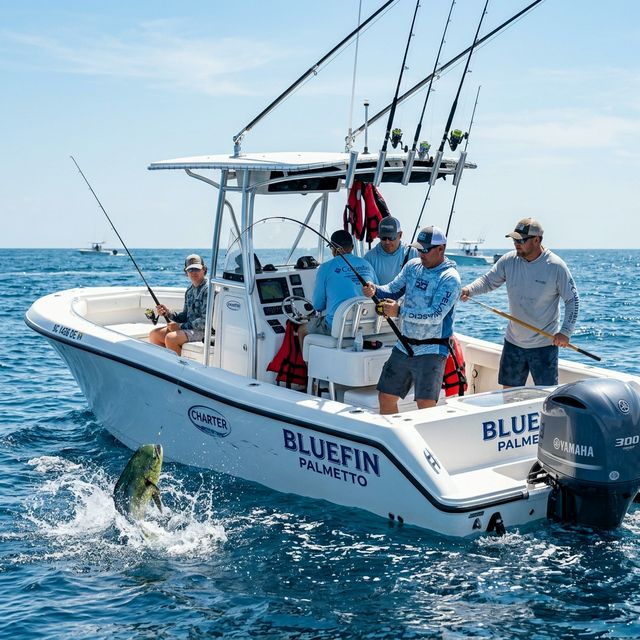
If you book an offshore trolling trip out of Georgetown, or an inshore redfish guide out of Hilton Head, you do not need to buy a saltwater fishing license.
Legally licensed South Carolina charter captains operate under a master vessel license. This umbrella covers every paying passenger on the boat for the duration of the trip. The captain is responsible for the licensing; you are only responsible for reeling in the fish.
2. The Commercial Public Pier Exemption
South Carolina is famous for its massive oceanfront fishing piers, such as the Folly Beach Pier, Myrtle Beach State Park Pier, and the Apache Pier.
These facilities purchase an annual Commercial Public Pier License from the state. Because the pier itself is licensed, anglers fishing from the structure do not need an individual recreational saltwater license. (You will, however, have to pay the pier’s daily admission/fishing fee).
Critical Warning: This exemption applies only to licensed commercial piers. If you are fishing from a public boat ramp dock, a private neighborhood dock, or standing on the beach casting into the surf, you absolutely must possess your own individual saltwater license.

Penn Battle III Surf Spinning Combo
10-foot surf rod with Penn Battle III reel. Built for beach casting stripers and bluefish.
As an Amazon Associate, we earn from qualifying purchases. Prices may vary.
The Saltwater / Freshwater Dividing Line
One of the most frequent citations issued to inland residents vacationing on the coast happens in brackish tidal rivers.
Many anglers assume that because they are in a “river,” their annual freshwater license covers them. This is false. South Carolina has established highly specific Saltwater/Freshwater Dividing Lines.
Generally, US Highway 17 serves as the seaward boundary. If you are fishing seaward (downriver/ocean-side) of Highway 17 on coastal rivers like the Edisto, Ashley, or Cooper, you are in saltwater jurisdiction. If you are fishing inland (upriver) of the line, you are in freshwater jurisdiction.
If you plan to launch a boat and drift across this line during a day of fishing, you are legally required to hold both a freshwater and a saltwater license.

Penn Battle III Spinning Reel
Full metal body and sideplate. HT-100 carbon fiber drag washers for smooth performance.
Affiliate link · Prices may vary
Specialized Saltwater Gear Regulations
Your standard $15 or $75 saltwater license covers basic rod-and-reel hook-and-line fishing. However, if you dive deeper into coastal harvesting, you must understand specific gear rules:
- Shrimping for Bait: If you are throwing a cast net to catch live shrimp strictly for use as bait while you are fishing, your standard recreational saltwater license covers you.
- Shrimping for Food (Shrimp Baiting): If you are setting poles and using bait balls to harvest a cooler full of shrimp for a Lowcountry boil, you need a specific Shrimp Baiting License ($25 for residents, $500 for non-residents) in addition to your saltwater license.
- Crabbing: You do not need a license to catch blue crabs using three or fewer drop nets, hand lines, or fold-up traps. However, if you want to soak commercial-style wire crab pots (recreational limit is two per person), you must have a recreational saltwater license, and your pots must be marked with a yellow float bearing your SCDNR Customer ID.
- Gigging: Gigging for flounder (striking them with a pronged spear in the shallows at night) is legal, but it requires the standard recreational saltwater license.

Key Takeaways for the SC Coast
- If you don’t book a charter or fish off a commercial pier, you must buy a saltwater license to fish the beach or the creeks.
- Be hyper-aware of the Saltwater/Freshwater dividing lines (usually US Hwy 17) if you are fishing tidal rivers.
- For out-of-state vacationers, the $10 single-day or $35 7-day non-resident saltwater licenses are perfectly scaled for a beach trip.
- Review the South Carolina bag limits and size restrictions before you launch — especially the incoming slot limit changes for red drum.
- Ensure you have the free Go Outdoors SC app downloaded. Game wardens patrol the creeks heavily, and a digital barcode is the fastest way to prove you’re legal and get back to fishing.