 FishKillFlea
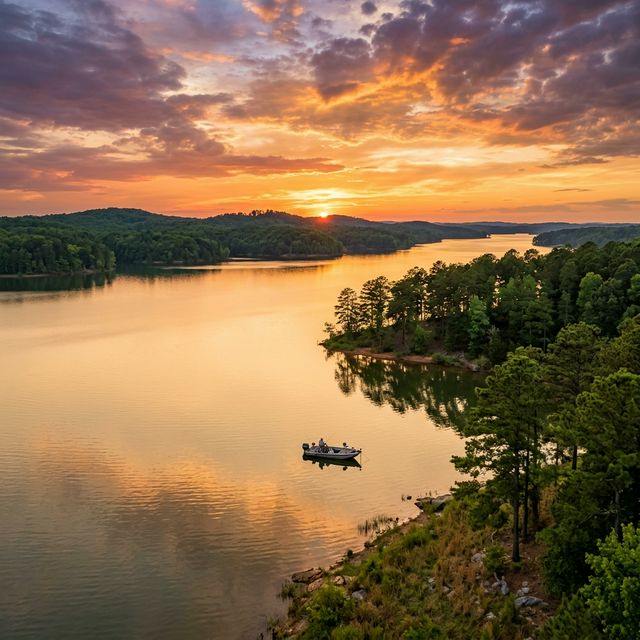
Your GPS says 45 minutes to Lake Murray dam, but the Spanish moss draped over every live oak along I-26 keeps pulling your eyes off the road. You’ve driven down from Charlotte for a long weekend of largemouth fishing — a buddy who grew up in Irmo swears the hydrilla beds along the Saluda River arm are holding 6-pounders right now. The boat’s already in the water at Dreher Island State Park marina, and your friend texted a photo of his first catch at dawn. There’s just one thing left between you and that first cast: figuring out the right South Carolina license for an out-of-state angler.
South Carolina’s licensing system has a feature that surprises many visitors: freshwater and saltwater licenses are entirely separate products. Unlike states that bundle everything into a single fishing permit, the Palmetto State asks you to decide up front whether you’re heading for the lakes or the coast — and charges accordingly. For visiting anglers planning a trip that spans both worlds, understanding this split is worth every minute you spend reading before launch.
Non-Resident License Types & 2026 Pricing
South Carolina’s non-resident fee schedule, effective July 1, 2025 through June 30, 2026, is managed by the South Carolina Department of Natural Resources (SCDNR). The state runs on a July-to-June fiscal year rather than a calendar year, so plan your purchases accordingly.
Freshwater Licenses
| License Type | 2026 Fee | Validity |
|---|---|---|
| Annual Freshwater Fishing | $35.00 | July 1 – June 30 |
| 3-Year Freshwater Fishing | $105.00 | 3 consecutive fiscal years |
| 14-Day Freshwater Fishing | $11.00 | 14 consecutive days |
Saltwater Licenses
| License Type | 2026 Fee | Validity |
|---|---|---|
| Annual Saltwater Fishing | $75.00 | July 1 – June 30 |
| 7-Day Saltwater Fishing | $35.00 | 7 consecutive days |
| 1-Day Saltwater Fishing | $10.00 | Single calendar day |
Non-Game Freshwater Permits (Require Freshwater License)
| Permit Type | Fee | Details |
|---|---|---|
| Jug Permit | $50.00 | Up to 50 jugs |
| Set Hook Permit | $50.00 | Up to 50 hooks |
| Eel Pot Tag | $50.00 | Limit 2 pots per licensee |
| Gill Net Tag | $50.00 | Up to 100 yards total |
| Hoop Net Tag | $50.00 | Annual permit |
When Each License Saves Money
The split licensing system creates interesting break-even math for anglers planning mixed freshwater-saltwater trips:
Freshwater only — At $11 for 14 days, the short-term permit is exceptional value. Even two separate 14-day visits ($22 total) cost less than the annual ($35). The annual only wins if you’re fishing three or more freshwater trips per license year.
Saltwater only — The 1-day license at $10 breaks even against the 7-day ($35) after just 3.5 days. If your inshore redfish trip spans a full week, the 7-day is the obvious choice. The annual ($75) justifies itself after 8 single-day trips or three separate week-long visits.
Both waters — If you’re combining a Lake Jocassee trout trip with a Hilton Head flounder run, budget $35 + $75 = $110 for both annuals. South Carolina does not offer a combined freshwater-saltwater non-resident license.

Piscifun Fishing Tackle Backpack
Large capacity fishing backpack with tackle boxes. Waterproof rain cover included.
Affiliate link · Prices may vary
How to Buy Your South Carolina License
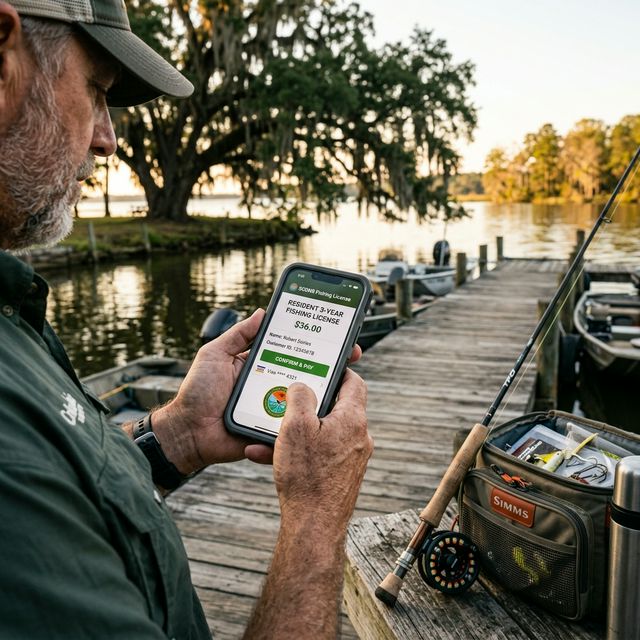
The SCDNR consolidated all license sales through the Go Outdoors SC platform, the same system that handles boat titling, lottery hunt applications, and wildlife management area permits.
Option 1: Go Outdoors SC Mobile App (Recommended) Available free on iOS and Android. Create your account, select your license type, enter payment, and the digital license appears instantly. Game wardens across the state accept the on-screen display as valid proof.
Option 2: GoOutdoorsSouthCarolina.com The web portal mirrors the app’s functionality. Purchase from any device, download the PDF confirmation, and store it on your phone or print a copy.
Option 3: In-Person Vendors Walmart locations statewide, Dick’s Sporting Goods, Bass Pro Shops, Academy Sports, and hundreds of local tackle shops and gas stations near popular fishing areas sell licenses through the Go Outdoors point-of-sale system.
Option 4: SCDNR Regional Offices Walk into any of the four SCDNR regional offices (Charleston, Clemson, Columbia, Florence) during business hours for in-person assistance.
Pro Tip: Create your Go Outdoors SC account well before your trip. The system requires a valid email address and basic identification — having this set up in advance means you can purchase your license at 5 AM from the boat ramp parking lot without fumbling through a registration process.

Plano Guide Series Rod Tube Case
Hard-shell rod tube protects rods during travel. Airline-approved for checked baggage.
As an Amazon Associate, we earn from qualifying purchases. Prices may vary.
The Savannah River: South Carolina’s Most Important Border Water
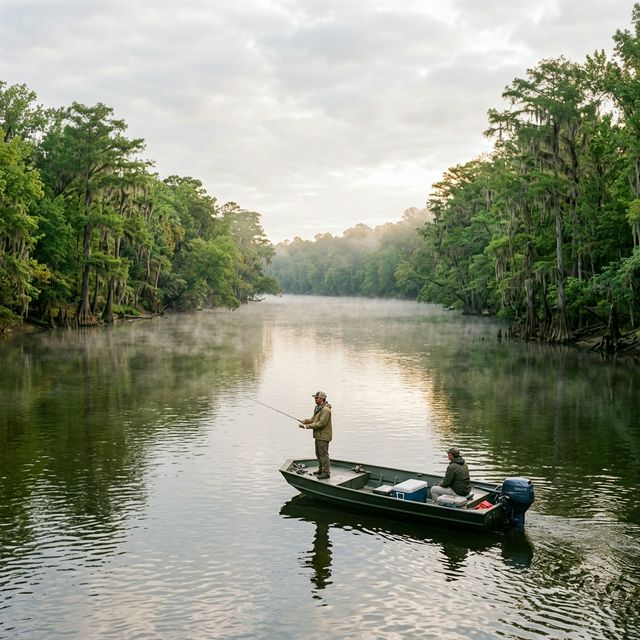
The Savannah River defines 250 miles of the South Carolina-Georgia border, and it’s one of the most productive fisheries in the Southeast — striped bass, largemouth, catfish, and American shad all run through its system. For non-residents, the border creates a practical licensing question at every bend in the river.
Under a longstanding reciprocal agreement between the SCDNR and the Georgia Department of Natural Resources:
Either a valid South Carolina or Georgia fishing license allows you to fish the main channel of the Savannah River.
What This Means in Practice
- You can fish the main river channel with either state’s license — no need to purchase both.
- You must follow the regulations of the state whose license you hold. If you’re fishing on a Georgia license, Georgia bag limits and size restrictions apply even though you may be closer to the South Carolina bank.
- Tributaries are different. If you paddle up a creek that feeds into the Savannah from the South Carolina side, you need a South Carolina license. The reciprocal agreement covers only the main river channel.
- The Strom Thurmond Reservoir (Clarks Hill Lake) sits on the upper Savannah and follows the same reciprocal principle — either state’s license is valid on the lake itself.
Other Border Waters
The Chattooga River (SC-Georgia border, federally designated Wild and Scenic River) requires the license of the state from which you access the river. If you put in at a South Carolina access point, you need a SC license regardless of where the trout takes you.
For Lake Hartwell and Lake Russell on the upper Savannah system, the reciprocal agreement applies — either South Carolina or Georgia licenses are accepted.

KastKing Blackhawk II Telescoping Rod
Portable telescoping design collapses to 17 inches. Perfect for travel fishing.
Affiliate link · Prices may vary
Regional Non-Resident Price Comparison
South Carolina sits in the heart of the coastal Southeast. A well-planned road trip can hit Lowcountry redfish, Piedmont largemouth, and mountain trout across multiple states in a single week.
| State | Annual Non-Resident Freshwater | Daily/Trip Option | License Year |
|---|---|---|---|
| South Carolina | $35.00 | $11 / 14-day | July 1 – June 30 |
| North Carolina | $45.00 | $9 / 10-day trip | July 1 – June 30 |
| Georgia | $50.00 | $3.50 / day | Calendar year (Jan 1 – Dec 31) |
| Tennessee | $99.00 | $30.50 / 3-day | Calendar year (March 1 – Feb 28) |
| Virginia | $60.00 | $16 / 5-day trip | Calendar year (Jan 1 – Dec 31) |
The takeaway: South Carolina offers the cheapest annual non-resident freshwater license in the entire region. At $35, it costs less than a single day on Tennessee waters. If you’re planning a multi-state Southern fishing road trip, the SC freshwater license is almost always worth buying outright rather than micro-managing daily permits.
Best Multi-State Route Combinations
The Carolina Loop (4–7 days): Launch at Lake Murray in South Carolina ($35 SC freshwater), drive up I-77 to Lake Norman or High Rock Lake in North Carolina ($45 NC freshwater or $9/10-day trip), then detour west to the Chattooga River for mountain trout. Two licenses, three dramatically different fisheries, one long week.
The Lowcountry-to-Golden Isles Saltwater Run (3–5 days): Start with inshore redfish and flounder in the ACE Basin near Beaufort, SC ($75 SC saltwater annual or $35/7-day), then drive south across the Savannah River to fish the Georgia coast around Jekyll Island and St. Simons ($50 GA coast fishing). The red drum slot limits differ between states, so study regulations before crossing the border.
The Upstate Mountain Trail (3–4 days): Chase rainbow and brown trout in the Chattooga River system (SC side), cross into northeastern Georgia’s Toccoa River tailrace, then push north to the Great Smoky Mountains in Tennessee. Budget $35 (SC) + $50 (GA) + $99 (TN) = $184 for all three — or use short-term permits to reduce costs for quick stops.
South Carolina-Specific Rules That Catch Visitors Off Guard
Before your first cast in the Palmetto State, several regulations differ meaningfully from neighboring states:
- Separate freshwater/saltwater licensing: This is the biggest surprise for anglers coming from states with unified permits. If you drift from Lake Marion’s freshwater channels into brackish Santee-Cooper water, understand where the legal boundary lies.
- Age 16 threshold: Anyone under 16 fishes free — no junior license, no paperwork. This is younger than North Carolina (under 16) and Georgia (under 16) but older than some Midwest states.
- Fishing from public piers and docks: In many coastal areas, fishing from a licensed public pier means the pier’s license covers you — you do not need your own saltwater license. But this applies only to certain commercial piers, not private docks.
- Live bait netting: Cast nets for shrimp (for personal bait use) require a separate saltwater fishing license — not just a freshwater license. If you’re planning to throw a cast net for bait before driving to a freshwater lake, you need both.
- Stringer and livewell laws: All fish kept on a stringer or in a livewell count toward your daily bag limit, even if you’re still actively fishing. There’s no “culling” exemption outside of organized tournament situations.
Key Takeaways for Visiting Anglers
- Budget for two licenses if fishing both waters. The freshwater ($35 annual) and saltwater ($75 annual) are separate — no combo exists for non-residents.
- The 14-day freshwater license ($11) is the best value in the Southeast for a quick weekend or week-long trip.
- Savannah River reciprocity saves money. Either a SC or GA license covers the main channel and major reservoirs — you don’t need both.
- Download Go Outdoors SC before you leave home. Cell service in the Francis Marion National Forest, parts of the rural Lowcountry, and mountain lake access roads can vanish.
- Under 16 = free fishing. Bring the kids without paperwork.
- Study the South Carolina bag limits and size restrictions before your trip — especially the red drum slot limit changes expected in 2026.
- Resident anglers 64+ get a $9 lifetime license — if you’re relocating to the Palmetto State, this is the best deal in American fishing.