 FishKillFlea
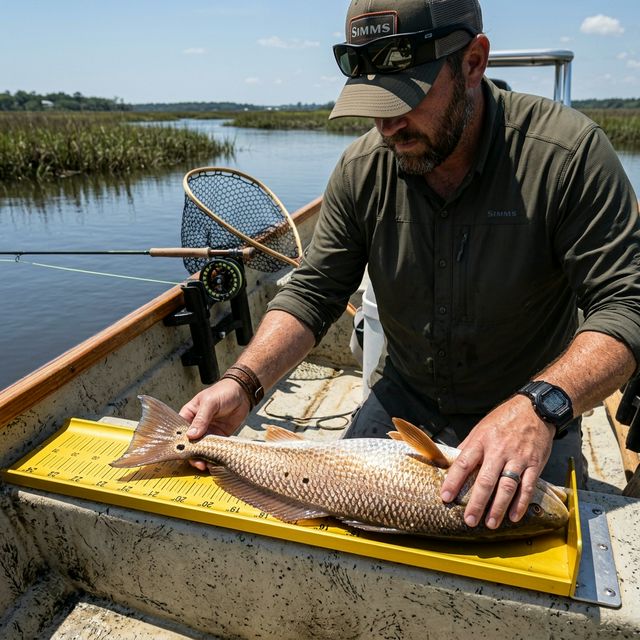
You’ve been drifting a live mud minnow along a spartina grass edge near Beaufort for two hours when the cork violently disappears. The drag screams, the rod doubles over, and ten minutes later, you slide the net under a gorgeous bronze redfish. You pull out your bump board and lay the fish flat. It measures exactly 24 inches. Is it a keeper?
Before you slide that red drum into the cooler, you need to be absolutely certain you are looking at the most current South Carolina Department of Natural Resources (SCDNR) regulations. South Carolina is currently undergoing significant legislative shifts regarding coastal game fish, while simultaneously managing complex, lake-specific rules for its world-class freshwater striped bass fisheries.
Here is the exact framework of rules, bag limits, and size restrictions you must follow for the 2025–2026 fishing season.
The Biggest Change for 2026: Red Drum (Redfish) Overhaul
If you fish the South Carolina Lowcountry, this is the most critical regulatory update in a decade. Driven by concerns over fishing pressure and population health, the state legislature (via SC S0219 / Bill 961) is actively modifying the rules for red drum.
These changes are expected to take full effect by July 1, 2026. Until then, the legacy rules remain valid, but ethical anglers are already adapting to the proposed conservation limits.
Current vs. 2026 Proposed Redfish Rules
| Regulation | Current Rule | 2026 Proposed Rule |
|---|---|---|
| Daily Bag Limit | 2 per person per day | 1 per person per day |
| Boat Limit | Max 6 per boat | Max 2 per boat |
| Slot Limit | 15–23 inches | 18–25 inches |
| Gear Requirement | General hooks permitted | Mandatory non-offset circle hooks (for natural bait >= 4/0) |
The circle hook mandate is designed specifically to reduce gut-hooking and release mortality, as redfish fall entirely outside the new slot limit more often than not.

Crab & Lobster Measurer
Stainless steel gauge ensures your catch meets minimum size regulations.
Affiliate link · Prices may vary
Freshwater Game Fish: Limits and Special Rules
Unlike the coast, South Carolina’s freshwater lakes are highly localized. A striped bass regulation on Lake Hartwell does not apply to Lake Murray.
However, there is a general statewide aggregate rule: You may not possess more than 40 game fish total in any one day, regardless of species combinations.
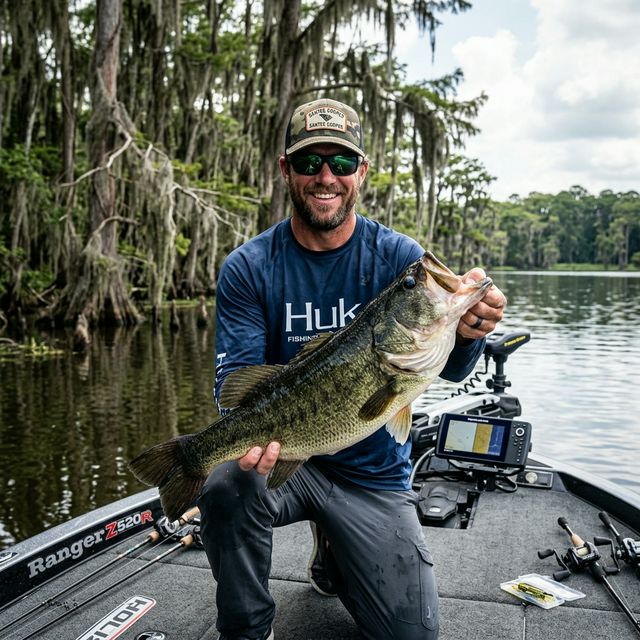
Largemouth Bass
- Statewide Limit: 5 per person per day.
- Notable Minimum Lengths: Lakes Marion, Moultrie, and the upper Santee River have a strict 14-inch minimum length limit.
- Requirement: All largemouth bass must be landed with the head and tail intact to allow for legal measurement by game wardens.
Crappie (Black and White)
- Statewide Limit: 20 per person per day.
- Statewide Minimum Length: 8 inches.
Striped Bass and Hybrids (The Most Complex Rules in SC)
Striped bass regulations are entirely dependent on the calendar and the specific body of water you are floating on.
- Lake Murray & Middle Saluda River:
- Summer (June 1 – Sept 30): 5 fish per day, no minimum length.
- Winter (Oct 1 – May 31): 5 fish per day, strict 21-inch minimum length.
- Santee River System (Oct 1 – June 15): 3 fish per day. You cannot possess a striper between 23 and 25 inches (a protective slot limit). Only one fish in your daily limit may exceed 26 inches.
- Lakes Hartwell & Thurmond: 10 fish per day, but only 3 may be over 26 inches.
- Lower Savannah River: 2 fish per day, and both must be a minimum of 27 inches.
If you are fishing for striper, you must check the specific SCDNR regulation page for your exact lake before every trip.
Trout Regulations
South Carolina manages rainbow, brown, and brook trout primarily in the Upstate mountain waters.
- General Limit: 5 trout per day.
- Using Trout as Bait: This is highly restricted. You may only use trout as bait in specific border waters: Lakes Hartwell, Russell, Thurmond, Tugaloo, Yonah, Stevens Creek Reservoir, and the Savannah River. Using them as bait anywhere else in the state is illegal.

Rapala Stainless Steel Fishing Pliers
Stainless steel construction. Side cutter and split ring tool. Corrosion resistant.
As an Amazon Associate, we earn from qualifying purchases. Prices may vary.
Freshwater / Saltwater Dividing Lines
Because South Carolina requires separate licenses for freshwater and saltwater, the state has legally established “dividing lines” across its coastal rivers.
Generally speaking, US Highway 17 serves as the rough boundary line, but it varies slightly depending on the specific river (e.g., the Edisto or the Ashley).
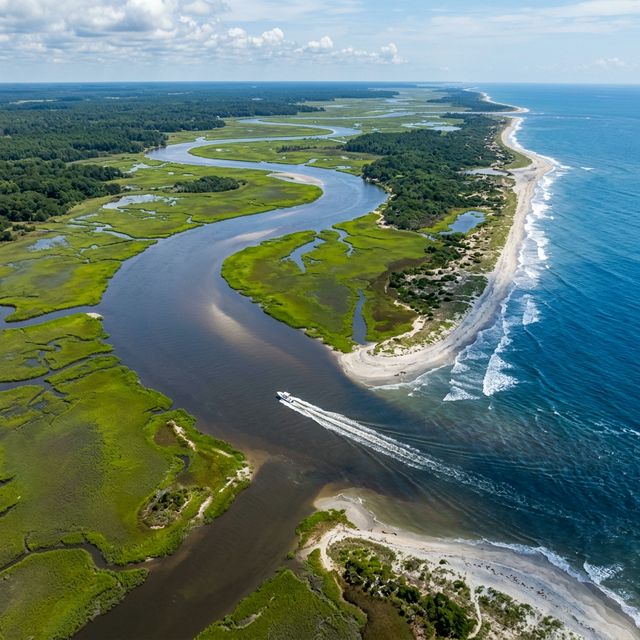
If you are fishing upriver of the dividing line, you must follow freshwater regulations and hold a freshwater license. Downriver, saltwater rules apply. If you plan to fish a transitional tidal river in a single day, you should carry both licenses to be safe.

Plano 3700 Tackle Storage Box
Adjustable dividers. Durable construction. Perfect for organizing lures and tackle.
Affiliate link · Prices may vary
Gear Restrictions and “Gotchas”
Even well-intentioned anglers routinely get ticketed in South Carolina for violating obscure gear laws:
- The Culling Ban: In South Carolina, the moment you put a fish in a livewell, on a stringer, or in a cooler, it counts toward your daily limit. You cannot legally swap a smaller fish out for a larger one caught later in the day. (Tournament anglers operates under specific, permitted exemptions).
- Bush Hooks & Trotlines: If you use “nongame devices” like jugs or trotlines, you must affix a waterproof tag to each device bearing your SCDNR Customer ID number. They must be checked at least once every 24 hours.
- No Game Fish in Traps: If you pull up an eel pot or a minnow trap and there is a small bass or crappie inside, you must release it immediately. Game fish can only be legally harvested using traditional hook-and-line (or rod and reel) methods.
The SCDNR Slam Programs
South Carolina encourages conservation and exploration through its official recognition programs.
- The SC Black Bass Slam: Awarded to anglers who document catching all four black bass species (Largemouth, Smallmouth, Spotted, and Bartram’s/Redeye) within the state.
- The Saltwater Grand Slam: Awarded for catching three specific inshore species (typically Red drum, Spotted seatrout, and Flounder) in a single day.
These programs do not cost money to enter, but earning the patch and certificate requires adhering strictly to all state regulations and submitting photographic proof to the SCDNR.