 FishKillFlea
South Carolina Fishing License Guide (2026)
Complete guide to South Carolina fishing licenses — saltwater, freshwater limits, and FAQs.
Overview of South Carolina Fishing Licenses
South Carolina is a prime destination for anglers, offering deep-water reservoirs like Lake Murray and expansive coastal marshlands teeming with redfish around Charleston and Beaufort. The South Carolina Department of Natural Resources (SCDNR) requires anyone 16 years of age or older to hold a valid license while fishing in state waters.
South Carolina strictly divides its jurisdictions into Freshwater and Saltwater fishing. The state clearly defines the saltwater/freshwater dividing line (usually U.S. Highway 17 along much of the coast). If you fish north of the line, you need a freshwater license; south of the line requires a saltwater recreational license.
Real-World Application: Pier and Charter Fishing
If you are a tourist visiting Myrtle Beach and you want to fish from one of the iconic public fishing piers (like Springmaid or Cherry Grove), you are in luck. Almost all commercial fishing piers in South Carolina hold a valid state commercial pier license. By paying the daily entrance fee to the pier operator, your individual saltwater fishing license requirement is waived for that day.
The same rule applies to hiring an offshore charter boat or an inshore redfish guide. As long as the captain holds a valid SCDNR charter vessel license, the passengers fishing onboard are completely covered and do not need to purchase individual saltwater licenses.

Penn Battle III Surf Spinning Combo
10-foot surf rod with Penn Battle III reel. Built for beach casting stripers and bluefish.
Affiliate link · Prices may vary
Freshwater Regulations and Cane Poles
If you are fishing inland waters—such as chasing largemouth bass on Lake Marion—you must hold a standard Freshwater Fishing License. However, South Carolina retains a deeply traditional exemption: residents who are fishing exclusively with a simple cane pole (or natural pole) and natural bait from the bank in their home county do not need a fishing license.
For visitors, South Carolina offers excellent short-term flexibility, including 14-day non-resident licenses for both fresh and saltwater, making it incredibly easy to stay compliant during a typical two-week summer vacation.
2026 South Carolina Fishing License Prices
| License Type | Resident | Non-Resident | Validity |
|---|---|---|---|
| Annual Freshwater | $10.00 | $35.00 | 365 days from purchase |
| 3-Year Freshwater | $30.00 | $105.00 | 3 years from purchase |
| 14-Day Freshwater | $5.00 | $11.00 | 14 consecutive days |
| Annual Saltwater | $15.00 | $75.00 | 365 days from purchase |
| 7-Day Saltwater | N/A | $35.00 | 7 consecutive days |
| 14-Day Saltwater | $10.00 | $10.00 | 14 consecutive days |
| Combination (Hunting + Freshwater) | $25.00 | N/A | 365 days from purchase |
| Senior (65+) Lifetime | $10.00 | N/A | Lifetime |
| Lifetime Freshwater (Adult) | $300.00 | N/A | Lifetime |
| Lifetime Saltwater (Adult) | $300.00 | N/A | Lifetime |
License Validity: South Carolina fishing licenses are valid for 365 days from the date of purchase, NOT on a calendar year basis.
Youth Exemption: Anyone 15 years of age or younger may fish without a license in South Carolina.
Residency Requirement: To qualify for resident pricing, you must be domiciled in South Carolina for at least 30 days and provide proof of residency.
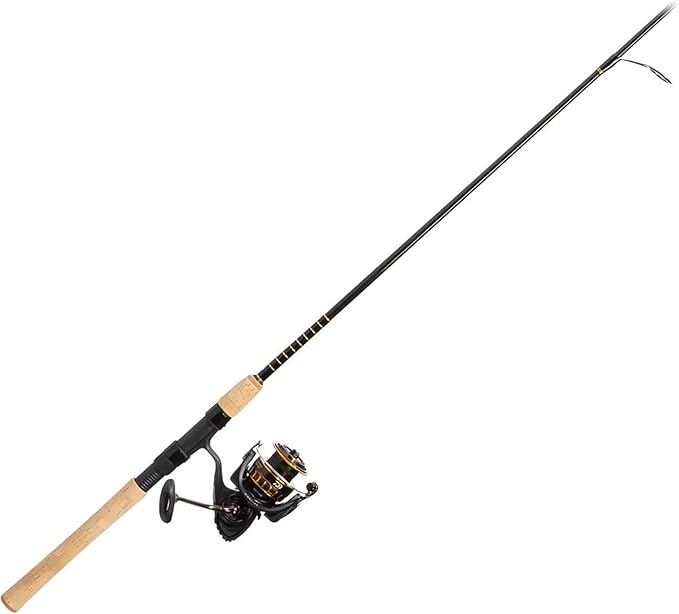
Daiwa BG Spinning Combo
Heavy-duty saltwater combo with Daiwa BG reel. Excellent for inshore and pier fishing.
As an Amazon Associate, we earn from qualifying purchases. Prices may vary.
Real-World Scenarios: When You Need (or Don't Need) a South Carolina License
Scenario 1: Santee Cooper Lakes Bass Fishing
You're a 35-year-old North Carolina resident planning a weekend largemouth bass fishing trip to Lake Marion (Santee Cooper) in May 2026.
Required: Non-Resident Annual Freshwater License = $35. Lake Marion is freshwater, so you need the freshwater license. The annual license is valid for 365 days from purchase, making it useful for multiple trips throughout the year.
Scenario 2: Charleston Harbor Redfish Fishing
You're a 42-year-old South Carolina resident fishing for redfish in Charleston Harbor from your boat in June 2026.
Required: Resident Annual Saltwater License = $15. Charleston Harbor is saltwater, requiring the saltwater license. At $15, South Carolina offers one of the most affordable resident saltwater licenses in the Southeast.
Scenario 3: Myrtle Beach Pier Fishing
You're a 28-year-old Georgia resident visiting Myrtle Beach and want to fish from the Cherry Grove Pier in July 2026.
Required: NOTHING if fishing from a licensed commercial pier. The pier's daily entrance fee covers your fishing license requirement. You do NOT need to purchase an individual saltwater license. This exemption applies to all licensed commercial fishing piers in South Carolina.
Scenario 4: Charter Boat Offshore Fishing
You're a 50-year-old Florida resident booking an offshore charter out of Hilton Head for king mackerel in August 2026.
Required: NOTHING. As long as the charter captain holds a valid SCDNR charter vessel license, all passengers are covered. You do NOT need to purchase an individual saltwater license.
Scenario 5: Lake Murray Striper Fishing
You're a 45-year-old Tennessee resident planning a 10-day fishing trip to Lake Murray for striped bass in April 2026.
Required: Non-Resident 14-Day Freshwater License = $11. The 14-day license saves you $24 compared to the annual license ($35) and covers your entire trip.
Scenario 6: Cane Pole Exemption
You're a 60-year-old South Carolina resident fishing with a cane pole and worms from the bank of a pond in your home county in September 2026.
Required: NOTHING. South Carolina's traditional cane pole exemption allows residents to fish with a hand-operated pole (no reel), natural bait, from shore, in their home county without a license. This is one of the most unique exemptions in the United States.
Scenario 7: Lake Hartwell Border Fishing
You're a 38-year-old Georgia resident fishing Lake Hartwell, which straddles the South Carolina-Georgia border, in October 2026.
Required: Either a Georgia OR South Carolina freshwater license. Lake Hartwell has reciprocal agreements — you can fish anywhere on the lake with either state's license. A Georgia license ($15 resident) is cheaper than a South Carolina non-resident license ($35).
Scenario 8: Senior Lifetime License
You're a 65-year-old South Carolina resident who fishes frequently and wants lifetime coverage.
Required: Consider purchasing the Senior Lifetime License = $10 one-time fee. This covers freshwater fishing for life. If you fish for just 1 year, it pays for itself compared to the annual license ($10). This is one of the best senior fishing license values in the nation.
Scenario 9: Edisto River Kayak Fishing
You're a 32-year-old South Carolina resident kayak fishing the Edisto River for redbreast sunfish in May 2026.
Required: Resident Annual Freshwater License = $10. The Edisto River is freshwater, requiring the freshwater license. At $10, this is one of the most affordable resident licenses in the United States.
Scenario 10: Multi-Species Angler
You're a 40-year-old South Carolina resident who fishes both Lake Murray (freshwater) and the coast (saltwater) regularly.
Required: Both Resident Annual Freshwater ($10) + Resident Annual Saltwater ($15) = $25 total. South Carolina doesn't offer a combined freshwater/saltwater license, so you must purchase both separately. However, at $25 total, this is still very affordable.
Top 5 Fishing Destinations in South Carolina
1. Santee Cooper Lakes (Lake Marion and Lake Moultrie)
Location: Central South Carolina (Santee, Summerton, Moncks Corner)
Size: Lake Marion: 110,600 acres; Lake Moultrie: 60,400 acres
Target Species: Largemouth bass, striped bass, catfish, crappie, bream
Why It's Special: The Santee Cooper Lakes are South Carolina's premier freshwater fishing destination and among the best bass fisheries in the Southeast. Lake Marion is the largest lake in South Carolina and famous for producing trophy largemouth bass exceeding 10 pounds. The lakes feature diverse habitat including cypress swamps, open water, and submerged timber. Santee Cooper is renowned for its catfish fishing, with blue catfish exceeding 50 pounds caught regularly. The Diversion Canal connecting the two lakes creates unique fishing opportunities. Excellent public access with numerous boat launches and fishing piers.
License Required: Freshwater License ($10 resident, $35 non-resident)
2. Lake Murray
Location: Central South Carolina (Columbia, Lexington, Irmo)
Size: 50,000 acres
Target Species: Striped bass, largemouth bass, spotted bass, crappie, catfish, bream
Why It's Special: Lake Murray is located near Columbia and offers excellent urban fishing opportunities with easy access. The lake is famous for its striped bass fishery, with fish exceeding 40 pounds caught regularly. Lake Murray features clear water, rocky structure, and deep basins (maximum depth 200 feet). The lake's "Towers" area (submerged cooling towers) is legendary for striper fishing. Excellent year-round fishing with spring and fall striper runs being particularly productive. The lake's proximity to Columbia provides excellent amenities and services.
License Required: Freshwater License ($10 resident, $35 non-resident)
3. Charleston Harbor and Coastal Marshes
Location: Lowcountry South Carolina (Charleston, Mount Pleasant, Folly Beach)
Target Species: Redfish (red drum), spotted seatrout, flounder, black drum, sheepshead, tarpon
Why It's Special: Charleston Harbor and the surrounding coastal marshes offer world-class inshore saltwater fishing. The area is famous for sight-casting to tailing redfish in shallow grass flats. The extensive marsh system provides exceptional habitat for multiple species. Charleston Harbor's deep ship channel attracts tarpon in summer months. Excellent year-round fishing with fall being particularly productive for redfish and trout. Numerous guide services and easy access from Charleston make this a premier destination. The scenic Lowcountry backdrop adds to the experience.
License Required: Saltwater License ($15 resident, $75 non-resident); NOT required if fishing from licensed commercial piers or charter boats
4. Lake Hartwell
Location: Upstate South Carolina/Georgia border (Anderson, Clemson, Seneca)
Size: 56,000 acres
Target Species: Largemouth bass, spotted bass, striped bass, hybrid striped bass, crappie, catfish
Why It's Special: Lake Hartwell straddles the South Carolina-Georgia border and is one of the premier bass tournament lakes in the Southeast. The lake features clear water, rocky structure, and excellent spotted bass fishing. Hartwell is famous for producing trophy largemouth bass and consistent catches of quality fish. The lake's 960 miles of shoreline provide diverse habitat. Reciprocal licensing agreements allow anglers with either South Carolina or Georgia licenses to fish the entire lake. Excellent public access with numerous boat launches and marinas. The lake's location in the scenic Blue Ridge foothills adds to its appeal.
License Required: Freshwater License ($10 SC resident, $35 SC non-resident) OR Georgia license (reciprocal agreement)
5. Edisto River
Location: Central/Coastal South Carolina (Orangeburg, Walterboro, Edisto Island)
Target Species: Redbreast sunfish, largemouth bass, catfish, bowfin, gar
Why It's Special: The Edisto River is one of the longest free-flowing blackwater rivers in North America and offers exceptional wilderness fishing. The river is famous for its redbreast sunfish (shellcracker) fishing, with fish exceeding 1 pound common. The Edisto flows through pristine cypress swamps and provides a true wilderness experience. Excellent kayak and canoe fishing opportunities with numerous access points. The river's dark tannic water and diverse habitat support healthy fish populations. The lower Edisto near Edisto Island transitions to brackish water, offering unique fishing opportunities. Scenic beauty and solitude make this a special destination.
License Required: Freshwater License ($10 resident, $35 non-resident) for upper river; Saltwater License ($15 resident, $75 non-resident) for lower brackish sections

Penn Battle III Spinning Reel
Full metal body and sideplate. HT-100 carbon fiber drag washers for smooth performance.
Affiliate link · Prices may vary
Penalties for Fishing Without a License in South Carolina
South Carolina enforces fishing license requirements through South Carolina Department of Natural Resources (SCDNR) law enforcement officers. Violations can result in significant penalties under South Carolina Code Title 50.
Fishing Without a License
Violation: Fishing without possessing a required valid license (SC Code 50-9-10)
Penalty: Classified as a misdemeanor. Fines range from $50 to $500, or imprisonment up to 30 days, or both. First-time offenses typically result in fines of $100-$200.
Classification: Misdemeanor offense with potential criminal record.
Point System and License Suspension
South Carolina uses a point system for fish and game violations. Each violation carries a certain number of points. When a license holder accumulates 18 points, their hunting or fishing license is automatically suspended for one year. Fishing without a license typically carries 3-5 points.
Additional Violations
- Exceeding daily bag limits: $50-$500 fine, 3-5 points
- Possessing undersized fish: $50-$500 fine, 3-5 points
- Fishing during closed seasons: $50-$500 fine, 3-5 points
- Using illegal gear or methods: $50-$500 fine, 3-5 points
- Fishing in restricted areas: $50-$500 fine, 3-5 points
- Providing false information when purchasing license: $100-$1,000 fine, potential criminal charges
- Serious violations (repeat offenses, commercial violations): $500-$2,500 fines, up to 6 months imprisonment
Enforcement
SCDNR law enforcement officers actively patrol popular fishing areas throughout the state, particularly at Santee Cooper, Lake Murray, Charleston Harbor, and coastal areas. Officers have authority to check licenses, inspect catches, measure fish, and issue citations. The SCDNR operates Operation Game Thief (1-800-922-5431) for reporting violations.
Important: South Carolina requires anglers to carry their physical or digital fishing license while fishing. Officers may request to see your license at any time. Claiming you "have a license at home" is not a valid defense and will result in a citation.
Comparison with Neighboring States
| State | Resident Annual | Non-Resident Annual | License Year | Key Differences |
|---|---|---|---|---|
| South Carolina | $10 (freshwater) $15 (saltwater) | $35 (freshwater) $75 (saltwater) | 365 days from purchase | Separate fresh/saltwater; cane pole exemption; pier/charter exemptions |
| North Carolina | $20 (inland) $17 (coastal) | $35 (inland) $35 (coastal) | July 1 - June 30 | Unique license year; similar non-resident pricing |
| Georgia | $15 | $50 | 365 days from purchase | Single license covers all waters; lower non-resident price |
| Tennessee | $34 | $50.50 | March 1 - Feb 28/29 | Higher resident price; single license |
Key Observations
- SC Has Lowest Resident Freshwater Price: At $10, South Carolina offers the most affordable resident freshwater license among neighboring states, tied with Arkansas.
- Separate Licenses Add Cost: South Carolina's separate freshwater ($10) and saltwater ($15) licenses total $25 for anglers fishing both, which is still competitive with neighboring states.
- Non-Resident Freshwater is Competitive: SC's $35 non-resident freshwater license matches North Carolina and is lower than Georgia ($50) and Tennessee ($50.50).
- Pier and Charter Exemptions are Unique: South Carolina's exemptions for licensed commercial piers and charter boats are more generous than most neighboring states.
- 365-Day Validity is Convenient: Unlike calendar-year or fiscal-year licenses, SC's 365-day validity from purchase date provides maximum flexibility.
Where Your License Money Goes: Conservation Impact
South Carolina fishing license revenue directly funds critical fisheries management and conservation programs administered by the South Carolina Department of Natural Resources:
- Fish Stocking Programs: SCDNR stocks millions of fish annually including striped bass, catfish, and trout in lakes, rivers, and coastal waters.
- Fisheries Research: Population surveys, water quality monitoring, habitat assessments, and genetic studies ensure sustainable fish populations.
- Habitat Restoration: Coastal marsh restoration, artificial reef construction, fish passage improvements, and riparian restoration enhance fish habitat.
- Public Access: Maintenance and improvement of boat launches, fishing piers, and shore fishing access points throughout the state.
- Artificial Reef Program: South Carolina maintains one of the most extensive artificial reef programs in the Southeast, creating offshore fishing habitat.
- Youth Education: Fishing clinics, school programs, and youth fishing events introduce new anglers to the sport.
- Law Enforcement: SCDNR law enforcement officers patrol waters and enforce fishing regulations to protect fish populations.
- Aquatic Invasive Species Control: Programs to prevent and manage invasive species like flathead catfish and blue catfish in coastal rivers.
South Carolina's fishing license program is partially funded through the federal Sport Fish Restoration Program (Dingell-Johnson Act), which matches state license revenue with federal excise taxes on fishing equipment.
6 Frequently Misunderstood South Carolina Fishing Rules
1. Pier and Charter License Exemptions
The Rule: You don't need an individual fishing license when fishing from a licensed commercial pier or on a licensed charter boat.
Why It's Confusing: Anglers sometimes assume they need a license everywhere, or they're unsure which piers qualify.
The Reality: Almost all commercial fishing piers in South Carolina (Myrtle Beach, Charleston, Hilton Head) hold state pier licenses. Your entrance fee covers your fishing license requirement. Similarly, licensed charter boats cover all passengers. However, this exemption does NOT apply to public piers, bridges, or private docks — you need a license for those.
2. Cane Pole Exemption Limitations
The Rule: Residents can fish without a license using a cane pole with natural bait from shore in their home county.
Why It's Confusing: Anglers are unsure what qualifies as a "cane pole" or what "home county" means.
The Reality: The exemption requires ALL of these conditions: (1) hand-operated pole with NO reel, (2) natural bait only (no artificial lures), (3) fishing from shore (not boat), (4) fishing in your county of residence. If you use a spinning reel, fish in a different county, or use artificial lures, you need a license. This is a very specific exemption.
3. Freshwater vs. Saltwater Boundary
The Rule: South Carolina has a defined freshwater/saltwater boundary, typically along U.S. Highway 17.
Why It's Confusing: The boundary isn't always obvious, and some waters transition from fresh to brackish.
The Reality: Generally, waters north/inland of Highway 17 are freshwater (requiring freshwater license), and waters south/seaward are saltwater (requiring saltwater license). However, specific boundaries vary by location. The Edisto River, for example, transitions from freshwater to brackish. When in doubt, check the SCDNR regulations or carry both licenses.
4. Lake Hartwell Reciprocity
The Rule: Lake Hartwell has reciprocal agreements allowing anglers with either South Carolina or Georgia licenses to fish the entire lake.
Why It's Confusing: Anglers assume reciprocity applies to all border waters or that they can fish anywhere with just one state's license.
The Reality: Reciprocity is specific to Lake Hartwell (and a few other border waters). It does NOT apply to all South Carolina-Georgia waters. If you're fishing the Savannah River outside of Lake Hartwell, you need the license for the state you're fishing in. Always check specific reciprocity agreements before fishing border waters.
5. 365-Day License Validity
The Rule: South Carolina fishing licenses are valid for 365 days from the date of purchase.
Why It's Confusing: Many states use calendar-year or fiscal-year licenses, leading anglers to assume SC does the same.
The Reality: If you purchase a license on June 15, 2026, it expires on June 14, 2027 — exactly 365 days later. This is different from calendar-year states where a license purchased in December expires on December 31. SC's system provides maximum value regardless of purchase date.
6. Senior Lifetime License Value
The Rule: South Carolina residents age 65 and older can purchase a lifetime fishing license for $10.
Why It's Confusing: Anglers wonder if this is a good value compared to annual licenses.
The Reality: At $10 for lifetime coverage, this is one of the best senior fishing license values in the nation. The annual resident freshwater license also costs $10, so the lifetime license pays for itself after just ONE year. If you're 65 and plan to fish for even one more year, the lifetime license is an incredible deal. This covers freshwater only — saltwater requires a separate license.