 FishKillFlea
· Guides · 6 min read
How to Catch Bass: 10 Tips That Actually Work for Beginners (2026)
Reviewed by FishKillFlea Editorial Team
Largemouth bass are the #1 sport fish in America. Here are 10 proven tips to catch more bass from shore, dock, or boat — no expensive gear required.
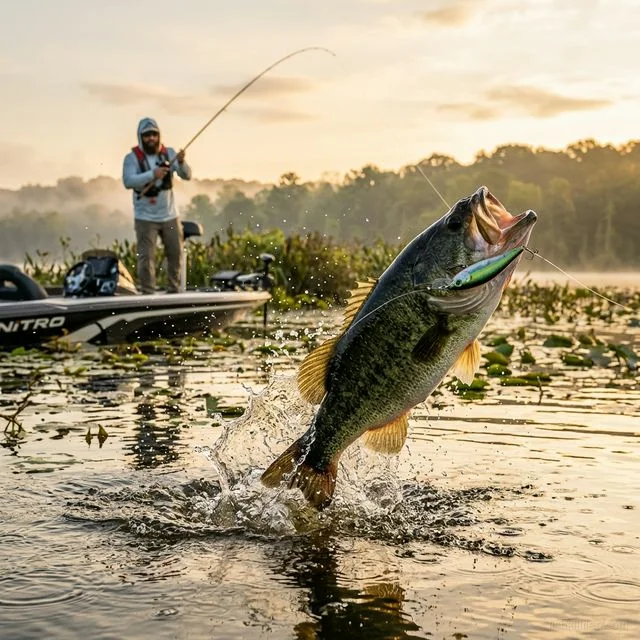
Largemouth bass are in almost every lake, pond, and river in the continental US. They’re aggressive, fight hard, and aren’t that difficult to catch once you understand what they want. These 10 tips are based on what actually works — not tournament theory, just practical advice for catching more bass.
Tip #1: Fish Near Cover (This Is the #1 Rule)
Bass hide near structure — they’re ambush predators. Cast your bait near:
| Cover Type | Why Bass Are There | How to Fish It |
|---|---|---|
| Fallen trees / laydowns | Shade, ambush cover, attracts baitfish | Cast parallel along the trunk; let bait bump the branches |
| Docks | Shade, underwater pilings, baitfish hiding | Skip bait under the dock; fish the shady side |
| Weed edges | Concealment for ambush; oxygen-rich water | Cast to the edge where weeds meet open water |
| Rocky banks / riprap | Crawfish habitat; bass feed on rocks | Cast tight to the rocks; use crawfish-pattern lures |
| Lily pads | Classic bass cover; shade and insects | Frog lures over the top; plastic worms through gaps |
| Submerged brush piles | Invisible cover that holds big bass | Use electronics to find them; jig straight down |
If there’s nothing near your bait, move. Bass don’t cruise open water very often. They sit next to cover and wait for food to come to them. Cast INTO the cover, not near it.
Tip #2: Use Plastic Worms (The Most Effective Bass Bait)
If you only buy one bass lure, get a bag of 7-inch plastic worms in a natural color (green pumpkin, watermelon, or black/blue).
The Texas Rig (simplest, most effective bass rig):
- Thread a bullet sinker (1/4 oz) onto your line
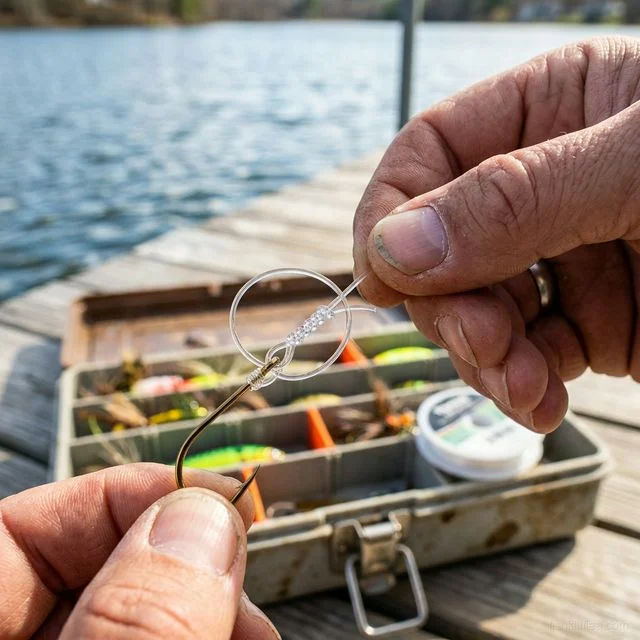
- Tie a 3/0 wide gap hook (use a Palomar knot)
- Thread the worm onto the hook — push the hook point through the head, out the side, then skin-hook the point back into the worm body
- Cast near cover, let it sink to the bottom, then hop it slowly
This one rig catches more bass than any other setup in fishing. Professionals and beginners both rely on it. It’s weedless (won’t snag on cover) and mimics a natural food source.

Pflueger President Spinning Reel
Smooth 10-bearing system. Great value for freshwater fishing.
Affiliate link · Prices may vary
Tip #3: Fish Early Morning and Late Evening
| Time | Bass Activity | Strategy |
|---|---|---|
| Dawn – 9 AM | ⭐⭐⭐⭐⭐ Peak feeding | Topwater, spinnerbaits, any moving bait |
| 9 AM – 4 PM | ⭐⭐ Slow; bass in deeper water or thick cover | Slow presentations — worms, jigs, deep crankbaits |
| 4 PM – Dusk | ⭐⭐⭐⭐ Second feeding window | Same as morning; moving baits work well |
| Night | ⭐⭐⭐ Good in summer | Dark-colored topwater lures; slow presentation (see Night Fishing Guide) |
Tip #4: Match the Season
| Season | Where Bass Are | Best Approach |
|---|---|---|
| Spring (pre-spawn) | Moving shallow toward spawning areas | Crankbaits, jerkbaits along transition banks |
| Spring (spawn) | Shallow water (2–6 feet), visible on beds | Sight fishing; drop a bait ON the bed |
| Summer | Deep during day, shallow at dawn/dusk | Fish EARLY or LATE; deep worms/jigs during midday |
| Fall | Following baitfish (shad) in creeks and coves | Crankbaits and spinnerbaits; fast and aggressive |
| Winter | Deep, slow; near the bottom | Ultra-slow jigs; blade baits; patience required |

Ugly Stik Elite Spinning Rod
Premium Ugly Stik with improved sensitivity and lighter weight.
As an Amazon Associate, we earn from qualifying purchases. Prices may vary.
Tip #5: Start with These 3 Budget Lures
| Lure | Cost | When to Use | How |
|---|---|---|---|
| Plastic worm (Texas rig) | $3/pack | Any time, any season — the do-everything bait | Slow hop along bottom near cover |
| Spinnerbait (1/4 oz, white or chartreuse) | $4–$6 | Spring and fall; murky water | Steady retrieve past cover; blade vibration draws bass |
| Buzzbait or topwater frog | $5–$7 | Early morning in summer; over lily pads | Reel across the surface; watch for explosive surface strikes |
Total investment: under $15 for three lures that cover every bass fishing situation. You don’t need a tackle box full of $10 lures.
Tip #6: Use the Right Rod and Line
| Component | Beginner Recommendation | Price |
|---|---|---|
| Rod | 6’6”–7’ medium-heavy baitcaster or medium spinning rod | $25–$50 |
| Reel | Spinning reel (easier for beginners) | Comes with combo |
| Line | 10–12 lb monofilament or 15–20 lb fluorocarbon | $5–$10/spool |
Spinning vs. Baitcaster:
| Spinning | Baitcaster | |
|---|---|---|
| Ease of use | ✅ Much easier for beginners | ⚠️ Takes practice to avoid backlash |
| Casting distance | Good | Better with practice |
| Accuracy | Good | Excellent with practice |
| Best for | Light lures (1/8–3/8 oz) | Heavier lures (3/8–1 oz+) |
| Recommendation | Start here | Upgrade after you’re comfortable |

Penn Pursuit IV Spinning Combo
Rod and reel combo ready to fish out of the box. Great value for new anglers.
Affiliate link · Prices may vary
Tip #7: Pay Attention to Water Color
| Water Clarity | Lure Color | Lure Type |
|---|---|---|
| Clear water | Natural, translucent colors (green pumpkin, watermelon, shad pattern) | Finesse baits; smaller profiles |
| Stained water | Brighter colors (chartreuse, orange, firetiger) | Medium presentations |
| Muddy water | Dark, bold colors (black/blue, junebug) + noise makers | Spinnerbaits, rattling crankbaits, Colorado-blade baits |
The color rule: In clear water, match the forage (natural colors). In dirty water, go dark and loud — bass find food by vibration and silhouette, not sight.
Tip #8: Set the Hook Hard
Bass have bony mouths. When you feel a bite:
- Reel down — take up slack in the line
- Sweep the rod hard to the side (not straight up)
- Keep tension — don’t give slack while the fish is running
- Reel steadily — don’t horse the fish, but keep pressure
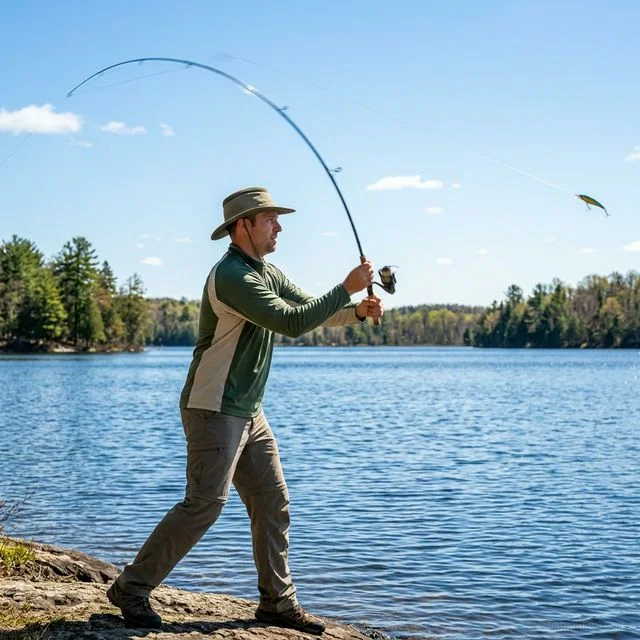
The #1 beginner mistake is setting the hook too softly. A gentle hook-set won’t penetrate a bass’s tough jaw. Sweep hard and fast.
Tip #9: Fish from Shore (You Don’t Need a Boat)
| Shore Spot | Why It Works |
|---|---|
| Public park ponds | Stocked, manageable size, easy shore access |
| Pond dams | Deep water access from shore; bass stack up near dams |
| Bridge pilings | Cast from the bank near bridge supports |
| Dock edges | Walk the bank and cast alongside docks (with permission) |
| Creek inlets | Where a creek enters a lake = baitfish magnet = bass magnet |
80% of bass are caught within 10 feet of shore. Especially in ponds and smaller lakes. You don’t need to cast to the middle of the lake.
Tip #10: Practice Catch and Release
Bass populations stay healthy when anglers release most of what they catch — especially larger fish:
| Practice | Why |
|---|---|
| Handle with wet hands | Dry hands remove the fish’s protective slime coating |
| Support the belly | Don’t hold bass vertically by the jaw; support the body |
| Minimize air time | Keep the fish in water as much as possible while unhooking |
| Use barbless hooks | Easier to remove; less damage to the fish’s mouth |
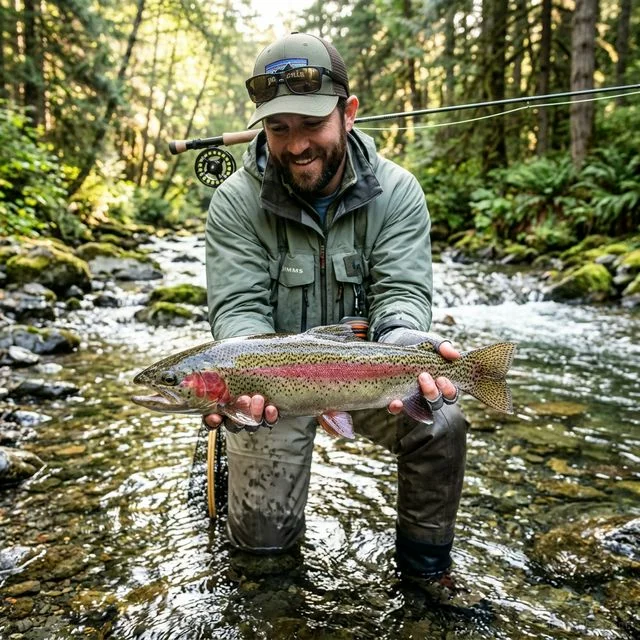
| Release quickly | Revive the fish by gently moving it forward in the water until it swims away |
Frequently Asked Questions
What is the best bait for largemouth bass? A 7-inch plastic worm in green pumpkin or watermelon on a Texas rig is the single most effective bass bait. For live bait, large shiners or crawfish are top choices. See our Best Bait Guide.
Can I catch bass from shore? Absolutely — most bass are caught within 10 feet of the bank. Ponds, park lakes, and reservoir banks are excellent shore fishing spots. See Best Fishing Spots Near You.
What time of day is best for bass fishing? Early morning (dawn to 9 AM) and late evening (5 PM to dusk) are the best windows. Bass feed aggressively during low-light conditions. Midday fishing works but requires slower, deeper tactics.
Do I need a fishing license to catch bass? Yes — you need a valid fishing license in all 50 states. See our Cost Guide for prices or Where to Buy for options.
What size bass should I keep? Check your state’s size and bag limits — they vary. Many states have a 12–14 inch minimum size and 5–6 fish daily bag limit for bass. When in doubt, catch and release.
For gear setup, see What You Need to Go Fishing. For knots, see our Fishing Knots Guide. For cleaning your catch, see How to Clean a Fish.