 FishKillFlea
· Guides · 6 min read
How to Cast a Fishing Rod: Step-by-Step for Spinning & Baitcasting Reels (2026)
Reviewed by FishKillFlea Editorial Team
Can't cast? You're not alone. Here's exactly how to cast a spinning reel and a baitcaster — with troubleshooting for the most common beginner problems.
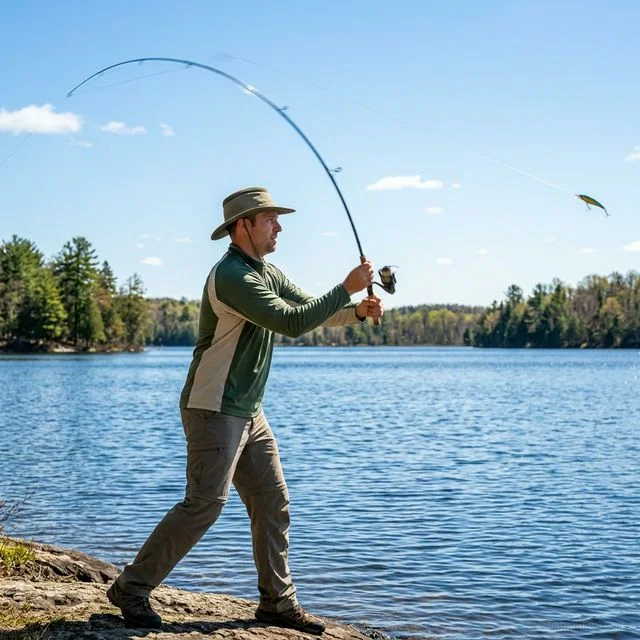
Casting is the #1 thing that intimidates new anglers. But it takes about 5 minutes to learn and 30 minutes of practice to get decent. This guide covers both spinning reels (easiest) and baitcasting reels (more advanced).
How to Cast a Spinning Reel (Beginner Method)
Spinning reels are the easiest to cast and what most beginners should start with.
Step-by-Step
Step 1: Check your line. Make sure you have 6–12 inches of line hanging from the rod tip with your bait/lure attached. Too much line = poor control. Too little = can’t cast.
Step 2: Hold the rod correctly. Grip the rod handle with the reel seat (the metal foot of the reel) between your middle and ring fingers. Your hand wraps around the rod with the reel hanging below.
Step 3: Hook the line with your index finger. Reach forward and press the fishing line against the rod with the pad of your index finger. This is what holds the line when you open the bail.
Step 4: Open the bail. Flip the bail arm (the thin wire that wraps around the spool) to the open position. The line should now be held only by your finger — if you release your finger, line will fall freely.
Step 5: Aim. Point the rod tip at your target (the spot in the water where you want your bait to land).
Step 6: Cast. In one smooth motion:
- Bring the rod back over your shoulder (about the 10 o’clock position)
- Sweep the rod forward toward your target
- Release your index finger when the rod reaches the 2 o’clock position (pointing slightly above your target)
- The bait should arc through the air and land near your target
Step 7: Close the bail. Once the bait hits the water, flip the bail closed with your hand (or turn the reel handle — most reels auto-close the bail).
Done. You just cast.

Pflueger President Spinning Reel
Smooth 10-bearing system. Great value for freshwater fishing.
Affiliate link · Prices may vary
How to Cast a Baitcasting Reel (Intermediate)
Baitcasting reels are more accurate and powerful, but they take practice. The main risk: the dreaded “bird’s nest” (backlash).
Step-by-Step
Step 1: Adjust the spool tension. With a lure attached, press the thumb bar and let the lure drop. It should fall slowly and stop — not free-fall. Tighten the spool tension knob until the lure drops slowly when you press the thumb bar.
Step 2: Set the brakes. Start with brakes on HIGH (full magnetic or centrifugal). This prevents backlash while you learn. You’ll reduce brakes as you improve.
Step 3: Hold the rod. Grip the handle with the reel on top of the rod (opposite of a spinning reel). Your thumb rests on the spool.
Step 4: Press the thumb bar. This disengages the spool so it can spin freely. Keep your thumb pressed firmly on the spool — if you lift your thumb, line will pour out.
Step 5: Cast. In one smooth motion:
- Bring the rod back to about 2 o’clock
- Sweep forward smoothly (NOT with force — smooth and controlled)
- Lift your thumb slightly to release the spool as the rod passes the 10 o’clock position
- Keep your thumb lightly touching the spool throughout the cast — this is called “thumbing” and prevents backlash
Step 6: Stop the spool. When the lure hits the water, press your thumb firmly on the spool to stop it. If you don’t, the spool keeps spinning and creates a bird’s nest.

Ugly Stik Elite Spinning Rod
Premium Ugly Stik with improved sensitivity and lighter weight.
As an Amazon Associate, we earn from qualifying purchases. Prices may vary.
Troubleshooting Common Casting Problems
| Problem | Cause | Fix |
|---|---|---|
| Bait goes straight up in the air | Releasing the line too early (spinning reel) | Release your finger later — when the rod is pointing at about 2 o’clock (slightly above target) |
| Bait slams into the water right in front of you | Releasing the line too late | Release earlier — when the rod is at about 11 o’clock |
| Line tangles on every cast (spinning reel) | Line twist from overfilling the spool | Re-spool with new line; don’t overfill past the spool lip |
| Bird’s nest / backlash (baitcaster) | Spool spins faster than line comes off | Tighten spool tension; increase brakes; thumb the spool |
| Can’t cast far enough | Not enough rod loading; too heavy a sinker | Use a smoother, faster casting motion; match lure weight to rod rating |
| Line wraps around the rod tip | Too much line hanging from tip before casting | Keep 6–12 inches of line between the rod tip and lure |
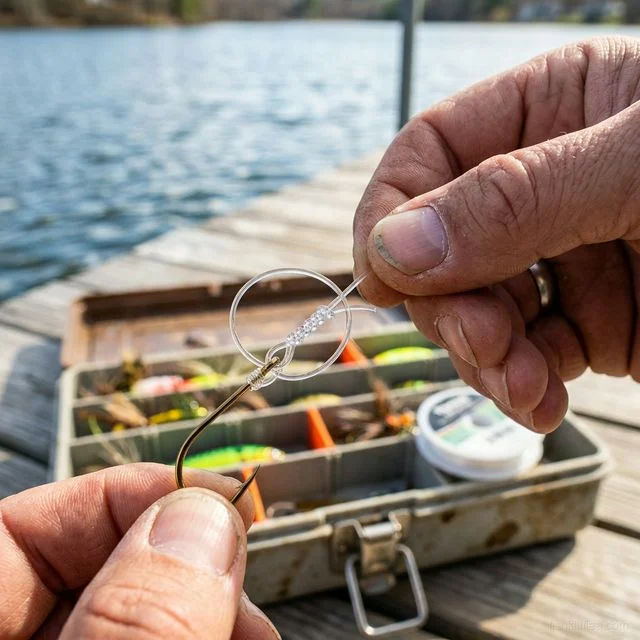
| Bait flies off during cast | Bad knot | Retie with a stronger knot — Palomar or Clinch |

Penn Pursuit IV Spinning Combo
Rod and reel combo ready to fish out of the box. Great value for new anglers.
Affiliate link · Prices may vary
Casting Techniques for Specific Situations
Overhand Cast (Standard)
The basic cast described above. Best for open areas with room behind you.
| Pros | Cons |
|---|---|
| Longest casting distance | Needs clearance behind and above |
| Easiest for beginners | Not accurate in tight spaces |
Sidearm Cast
Same mechanics as overhand, but sweep the rod horizontally (parallel to the water).
| Pros | Cons |
|---|---|
| Works under low-hanging branches and trees | Less distance than overhand |
| Keeps bait low to the water | Slightly harder to control |
Pitching (Short Range, Quiet)
For placing bait quietly into nearby cover (docks, brush piles):
- Let out enough line so the bait hangs at reel height
- Hold the bait in your off-hand
- Lower the rod tip
- Swing the rod forward and release the bait simultaneously
- The bait should arc underwhand and land quietly
| Pros | Cons |
|---|---|
| Very quiet entry — doesn’t spook fish | Short range (15–30 feet) |
| Ultra-accurate for tight spots | Takes practice |
Flipping (Ultra Short Range)
For dropping bait straight down into cover (lily pads, dock pilings):
- Pull line from the reel with your off-hand
- Swing the bait like a pendulum
- Release line to lower the bait into the target spot
| Pros | Cons |
|---|---|
| Surgical precision | Very short range (10–20 feet) |
| Zero splash | Boat technique mainly |
Practice Tips
| Tip | Details |
|---|---|
| Practice in your yard first | Tie a practice plug (a rubber casting plug or a weight without hooks) and practice casting into a bucket on your lawn |
| Start with a spinning reel | Master spinning before trying a baitcaster |
| Focus on accuracy before distance | Hit targets at 30 feet before trying to bomb 80-foot casts |
| Use the right weight | Match your practice lure/weight to your rod’s rating (printed on the rod) |
| Casting into wind | Use a sidearm cast and heavier lure when casting into the wind |
Frequently Asked Questions
How do I cast a fishing rod for the first time? Start with a spinning reel. Open the bail, hook the line with your index finger, point the rod at your target, sweep forward, and release your finger. The bait should arc through the air toward your target. Practice in your yard with a hookless weight first.
Why does my line keep tangling when I cast? For spinning reels: line twist is the most common cause. Replace old, twisted line with fresh line. Don’t overfill the spool. For baitcasters: tighten the spool tension and increase the brakes until you stop getting backlash.
How far should a beginner cast? 30–50 feet is plenty for most fishing situations. Focus on accuracy (hitting your target) before distance. Most fish — especially bass — are caught within 30 feet of shore.
What’s easier to cast — spinning or baitcasting? Spinning reels are much easier for beginners. Baitcasting reels offer more control and accuracy but require practice and cause backlash (tangled line) if not thumbed properly. Start with spinning.
Why does my bait keep flying off when I cast? Your knot is breaking. Retie with a Palomar Knot or Improved Clinch Knot — these are the two strongest basic fishing knots. Always moisten the knot before tightening.
For complete beginner setup, see What You Need to Go Fishing. For knots, see Fishing Knots Guide. For species, see How to Catch Bass and How to Catch Catfish.