 FishKillFlea
· Guides · 6 min read
5 Fishing Knots Every Angler Needs to Know (With Step-by-Step Instructions)
Reviewed by FishKillFlea Editorial Team
You only need 5 knots to handle 99% of fishing situations. Here's how to tie each one — from the beginner clinch knot to the bulletproof Palomar.
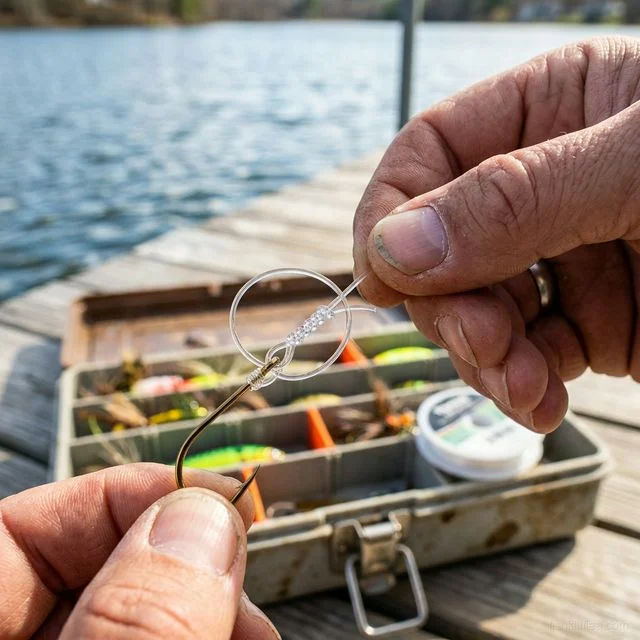
You don’t need to know 50 knots. In 20+ years of fishing, most experienced anglers use the same 5 knots for everything. Learn these 5 and you’ll never lose a fish to a bad knot again.
The Only 5 Knots You Need
| # | Knot | What It’s For | Difficulty | Strength |
|---|---|---|---|---|
| 1 | Improved Clinch Knot | Tying line to a hook, lure, or swivel | ⭐ Easy | 95% |
| 2 | Palomar Knot | Tying line to a hook (strongest basic knot) | ⭐ Easy | 98% |
| 3 | Uni Knot | Tying line to a hook OR joining two lines | ⭐⭐ Medium | 90% |
| 4 | Surgeon’s Knot | Joining two lines of different sizes (leader to main line) | ⭐ Easy | 85% |
| 5 | Loop Knot | Giving a lure free action (doesn’t cinch tight) | ⭐⭐ Medium | 85% |
Start with knot #1 or #2. If you’re a total beginner, learn the Improved Clinch Knot or the Palomar Knot first. Either one will handle 80% of your fishing situations.
Knot #1: Improved Clinch Knot
Use for: Tying your line directly to a hook, lure, or swivel. This is the most common fishing knot in the world.
Step-by-Step
- Thread 6 inches of line through the hook eye
- Wrap the tag end (free end) around the standing line 5–7 times
- Thread the tag end through the small loop near the hook eye
- Thread the tag end through the big loop you just created
- Moisten the knot with saliva (reduces friction and heat damage)
- Pull the standing line to cinch the knot tight against the hook eye
- Trim the tag end close to the knot
Tips:
- Use 5 wraps for thick line (15+ lb), 7 wraps for thin line (4–8 lb)
- ALWAYS wet the knot before pulling tight — dry line weakens the knot
- Test the knot by giving it a firm pull before casting

Pflueger President Spinning Reel
Smooth 10-bearing system. Great value for freshwater fishing.
Affiliate link · Prices may vary
Knot #2: Palomar Knot
Use for: Tying line to a hook or lure. The strongest and most reliable basic knot. Many pros use this exclusively.
Step-by-Step
- Double 6 inches of line to form a loop
- Thread the loop through the hook eye (you’re pushing a doubled line through)
- Tie a simple overhand knot with the doubled line — don’t tighten yet
- Pass the hook through the loop
- Moisten and pull both the standing line and tag end to cinch
- Trim the tag end
Tips:
- The Palomar is nearly impossible to tie wrong — that’s why pros love it
- Works best with braided line (braid can slip through clinch knots)
- The doubled line through the hook eye makes this knot extremely strong
The Palomar is the one knot rule. If you could only learn one fishing knot for the rest of your life, this is it. It’s strong (98% line strength), simple, and works with all line types.
Knot #3: Uni Knot
Use for: An incredibly versatile knot — ties line to hooks AND can join two lines together (double uni).
Step-by-Step (Line to Hook)
- Thread 6 inches of line through the hook eye
- Form a loop by laying the tag end alongside the standing line
- Wrap the tag end through the loop and around both lines 5–6 times
- Moisten and pull the tag end to tighten the wraps
- Slide the knot down to the hook eye by pulling the standing line
- Trim the tag end
Double Uni (Joining Two Lines)
- Overlap the two lines by 6 inches
- Tie a Uni Knot with line A around line B (5 wraps)
- Tie a Uni Knot with line B around line A (5 wraps)
- Moisten and pull both standing lines to slide the two knots together
- Trim both tag ends
Tips:
- The Double Uni is the best knot for connecting braided line to fluorocarbon leader
- Use 3 wraps with braid, 5 wraps with mono/fluoro

Ugly Stik Elite Spinning Rod
Premium Ugly Stik with improved sensitivity and lighter weight.
As an Amazon Associate, we earn from qualifying purchases. Prices may vary.
Knot #4: Surgeon’s Knot
Use for: Quickly joining two lines of different diameters — like tying a leader to your main line.
Step-by-Step
- Overlap the two lines by 6 inches
- Tie an overhand knot with both lines together (treating them as one)
- Pass the tag ends through the loop a second time (double overhand)
- Moisten and pull all 4 line ends to cinch tight
- Trim both tag ends
Tips:
- This is the fastest knot for adding a leader — takes under 10 seconds
- Not the strongest knot for heavy fishing, but perfect for bass, trout, and panfish
- Works well with lines of very different diameters
Knot #5: Loop Knot (Non-Slip Loop)
Use for: Giving a lure free action. Unlike the clinch knot, this one doesn’t cinch down on the hook eye — it creates a small loop that lets the lure swing freely.
Step-by-Step
- Tie an overhand knot in the line about 6 inches from the end — don’t tighten it
- Thread the tag end through the hook eye
- Thread the tag end back through the overhand knot (entering from the same side it exited)
- Wrap the tag end around the standing line 3–5 times
- Thread the tag end back through the overhand knot
- Moisten and pull tight
Tips:
- Use this with jerkbaits, swimbaits, and any lure that needs to move naturally
- The loop should be small — about 1/4 inch is perfect
- Not ideal for bait fishing — use clinch or Palomar instead

Penn Pursuit IV Spinning Combo
Rod and reel combo ready to fish out of the box. Great value for new anglers.
Affiliate link · Prices may vary
Which Knot Should I Use?
| Situation | Best Knot |
|---|---|
| Tying a hook for bait fishing (worms, live bait) | Improved Clinch or Palomar |
| Tying on a lure | Palomar (strong) or Loop Knot (more action) |
| Connecting braided main line to fluorocarbon leader | Double Uni |
| Quick leader connection for trout/bass | Surgeon’s Knot |
| Fishing with braided line | Palomar (braid slips through clinch knots) |
| Teaching a kid to tie a knot | Palomar (easiest to learn) |
Common Knot Mistakes
| Mistake | What Happens | Fix |
|---|---|---|
| Not wetting the knot | Friction generates heat that weakens the line | Always moisten with saliva before pulling tight |
| Too few wraps | Knot slips under load | Use at least 5 wraps (7 for thin line) |
| Not testing the knot | Fails when you hook a big fish | Give every knot a firm pull before casting |
| Tag end too short | Knot unravels | Leave at least 1/8 inch of tag end after trimming |
| Cinching too fast | Knot seats poorly; line damage | Pull slowly and steadily — let the knot seat evenly |
Frequently Asked Questions
What is the strongest fishing knot? The Palomar Knot retains about 98% of your line’s rated strength, making it the strongest basic fishing knot. The Improved Clinch Knot is nearly as strong at 95%.
What knot should a beginner learn first? Learn the Palomar Knot first — it’s the easiest to tie correctly and the strongest. If you struggle with threading a doubled line through a small hook eye, start with the Improved Clinch Knot instead.
Do I need different knots for braided line? Yes — braided line is slippery and can pull through some knots. The Palomar Knot works great with braid. If using a clinch knot with braid, add extra wraps (8–10). For connecting braid to a fluorocarbon leader, use the Double Uni Knot.
How do I practice fishing knots? Use a thick rope or shoelace to learn the motions, then switch to actual fishing line. Tie the line to a pen or pencil as a “hook.” Practice at home — it’s much easier than trying to learn on the water.
Why does my knot keep breaking? Three common causes: (1) not wetting the knot before tightening, (2) too few wraps, or (3) damaged/old line. Replace your line at least once a year and always wet your knots.
For gear recommendations, see What You Need to Go Fishing. For fishing spots, see Best Spots Near You. For licensing, see our Cost Guide.