 FishKillFlea
· Guides · 7 min read
Stocked Pond Fishing License: Do You Need One? Private Pond & Pay Lake Rules (2026)
Reviewed by FishKillFlea Editorial Team
Whether you need a fishing license for a stocked pond depends on who owns the pond and whether it connects to public water. Here's the state-by-state breakdown for private ponds, pay lakes, and stocked waters.
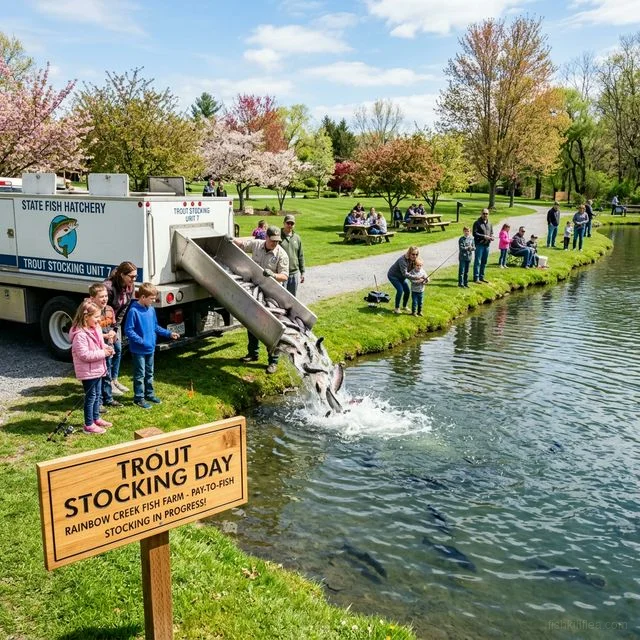
Do you need a fishing license for a stocked pond? It depends on three things: who owns the pond, whether it’s connected to public water, and what state you’re in. If you own the pond and it’s fully on your property with no connection to public waterways, you usually don’t need a license. But if you’re fishing at a pay lake, a community pond, or a stocked public lake — you almost certainly do need one.
Quick Answer: 3 Types of Stocked Ponds
| Pond Type | License Needed? | Why |
|---|---|---|
| Your own private pond (on your property, no public water connection) | ❌ Usually NO | You own the fish, state doesn’t regulate |
| Pay lake / fee fishing pond (commercial, open to public) | ✅ Usually YES | Open to public = public fishing rules apply |
| Public stocked lake/pond (city, county, or state stocked) | ✅ YES | Public water always requires a license |
| Neighborhood/HOA pond | ⚠️ Depends on state | Often requires a license because it’s not solely your property |
| Farm pond on someone else’s land (invited guest) | ⚠️ Depends on state | Some states exempt guests on private land, others don’t |

Pflueger President Spinning Reel
Smooth 10-bearing system. Great value for freshwater fishing.
Affiliate link · Prices may vary
Private Pond Rules by State
The rules for fishing on private ponds without a license vary significantly. Here’s how the major states handle it:
States Where Private Pond Fishing Is License-Free
In these states, you do NOT need a fishing license to fish on a private pond that you own (or that the landowner gives you permission to fish):
| State | Rule | Conditions |
|---|---|---|
| Texas | ❌ No license needed | Pond must be entirely on private property. Landowner + family + guests all exempt |
| Florida | ❌ No license needed | Pond must be 20 acres or less, entirely on your property, not connected to public water. Over 20 acres may require a license |
| Missouri | ❌ No license needed | Privately owned waters with no connection to running streams or public waters |
| Virginia | ❌ No license needed | Landowner + immediate family exempt on their own property |
| North Carolina | ❌ No license needed | Must be privately owned pond with no public water access point |
| Oklahoma | ❌ No license needed | Landowner + family members on private pond |
| Mississippi | ❌ No license needed | Resident landowners fishing on own land |
| Alabama | ❌ No license needed | Private ponds on deeded land |
| Georgia | ❌ No license needed | Landowners + immediate family on own property |
| Kentucky | ❌ No license needed | Landowner on own land; guests may need a license in some cases |
| Tennessee | ❌ No license needed | Landowner + spouse + children on own privately stocked pond |
| Indiana | ❌ No license needed | Landowner on own property with no public water connection |
| Ohio | ❌ No license needed | Private, wholly owned ponds that don’t connect to public streams |
| New York | ❌ No license needed | Landowner + family on own land. Farm pond exemption |
States With Restrictions on Private Pond Exemptions
| State | Rule | Important Detail |
|---|---|---|
| California | ⚠️ License usually required | Very limited private pond exemptions. If the pond has any connection to public water, license required |
| Pennsylvania | ⚠️ License required for some ponds | Exemption only for “registered artificial ponds” — must register with the state |
| Michigan | ⚠️ License required for most | Private pond exemption is very narrow — pond must meet specific criteria |
| Minnesota | ⚠️ License usually required | Most waters are considered public. Private pond exemptions are limited |
| Wisconsin | ⚠️ License usually required | Very few true “private ponds” — most connect to navigable waters |
| Colorado | ⚠️ Depends on water rights | Water rights law complicates private pond status |
The key question: Does the pond connect to any stream, creek, river, or lake that fish could swim into or out of? If yes, it’s likely considered “waters of the state” and you need a license — even if the pond is on private land.

Ugly Stik Elite Spinning Rod
Premium Ugly Stik with improved sensitivity and lighter weight.
As an Amazon Associate, we earn from qualifying purchases. Prices may vary.
Pay Lakes & Fee Fishing
Pay lakes (also called fee fishing lakes or put-and-take ponds) are commercial operations where you pay an entry fee and fish for stocked fish (usually trout, catfish, or bass).
Do You Need a License for Pay Lakes?
| Situation | License Needed? | Explanation |
|---|---|---|
| Most pay lakes | ✅ Yes | Open to the public = state fishing regulations apply |
| Some pay lakes in TX, MO | ❌ Sometimes no | Texas exempts certain commercial aquaculture/fee fishing operations |
| Trout at a pay lake | ✅ Yes + trout stamp | Some states require a trout stamp even at pay lakes |
Why it’s confusing: Some pay lake operators will tell you “no license needed” because they’ve obtained a commercial aquaculture permit. This does NOT always mean you’re exempt — it depends on how the state classifies the operation. When in doubt, get a license. It’s cheaper than the fine.
Pay Lake vs. Private Pond: What’s the Difference?
| Feature | Private Pond | Pay Lake |
|---|---|---|
| Ownership | You own it (or the landowner invited you) | Commercial business open to public |
| Access | Limited to owner, family, guests | Anyone who pays the fee |
| Stocking | Privately stocked or naturally occurring | Commercially stocked (regular schedule) |
| License requirement | Usually exempt | Usually required |
| Catch limits | Usually no state limits apply | State limits usually apply |
| Price to fish | Free | $5–$50+ per day/per fish |

Penn Pursuit IV Spinning Combo
Rod and reel combo ready to fish out of the box. Great value for new anglers.
Affiliate link · Prices may vary
Public Stocked Ponds and Lakes
City parks, county parks, and state parks often stock ponds and small lakes with fish for public recreation. A fishing license is always required to fish in public stocked waters — the fact that fish were stocked doesn’t create an exemption.
Common Types of Public Stocked Waters
| Type | License Required? | Common Stocked Species | Example |
|---|---|---|---|
| City park pond | ✅ Yes | Catfish, bass, bluegill | City of Houston stocked ponds |
| State park lake | ✅ Yes | Trout, bass, catfish | State park fishing in all 50 states |
| Community fishing program | ✅ Yes | Trout, catfish | Arizona Community Fishing waters |
| ”Kids fishing pond” | ⚠️ Check ages | Catfish, bluegill | Some exempt children under age limits |
| Neighborhood retention pond | ⚠️ Check ownership | Bass, bluegill | HOA-managed ponds are gray areas |
Many state wildlife agencies promote community fishing programs by stocking urban ponds. These are fantastic places to fish — but you still need a license. Check for free fishing days when licenses are waived.
HOA and Neighborhood Ponds
This is one of the most-asked questions: Do I need a fishing license to fish in my neighborhood pond?
| Scenario | License Needed? | Explanation |
|---|---|---|
| HOA-owned retention pond | ✅ Usually yes | HOA property ≠ your private property. State regulations typically apply |
| Private community, gated | ⚠️ Varies | Some states may consider gated community ponds “private waters” |
| Apartment complex pond | ✅ Usually yes | Property management ≠ personal ownership |
| Your backyard pond (you own the land) | ❌ Usually no | This is your private pond — personal property exemption applies |
The safest approach: If you didn’t dig the pond yourself on your own deed, assume you need a license. HOA ponds are almost never considered “private ponds” for licensing purposes, even though they feel private.
How to Know If YOUR Pond Qualifies for a License Exemption
Ask these 3 questions:
| Question | If YES | If NO |
|---|---|---|
| 1. Do you personally own the land the pond sits on? | Likely exempt | License probably needed |
| 2. Is the pond completely self-contained (no inlet/outlet to public waterways)? | More likely exempt | License likely required |
| 3. Did you (or the landowner) stock the fish privately? | Supports exemption | Supports needing a license |
If you answered YES to all three → you probably don’t need a license in most states. If you answered NO to any → check your state’s specific regulations or just buy the license ($10–$30 in most states).
Frequently Asked Questions
Do you need a fishing license for a stocked pond? It depends on who owns the pond. If you own the pond on your private property and it has no connection to public waterways, most states say no license is needed. If the stocked pond is public (city park, state park, etc.) or a commercial pay lake, you need a license.
Do you need a fishing license for a private pond? In most states, landowners and their families don’t need a fishing license to fish on their own private pond — as long as the pond is entirely on their property with no connection to public water. Guests may or may not need a license depending on the state. See also our private property fishing guide.
Do you need a fishing license for a pay lake? In most states, yes — pay lakes are open to the public, so state fishing regulations (including licensing) apply. A few states like Texas have exemptions for certain commercial aquaculture operations, but this varies. Always check or just buy a license.
Do kids need a fishing license for a stocked pond? The same age exemptions that apply to all fishing apply to stocked ponds. In most states, children under 16 don’t need a fishing license regardless of where they fish. But adults accompanying them may still need one.
Is the catch limit different at a private pond? If the pond is truly private (on your property, no public water connection), state catch limits generally don’t apply — you own the fish. At pay lakes and public stocked ponds, state catch and size limits apply as usual.
Can I stock my own pond with any fish I want? Most states require permits to stock certain species (especially non-native species) in private ponds. Contact your state wildlife agency before stocking. This is usually free or inexpensive but helps prevent invasive species from spreading.
Find your state’s complete fishing license requirements at our state pages, check how much a license costs, or learn about other private property fishing rules.