 FishKillFlea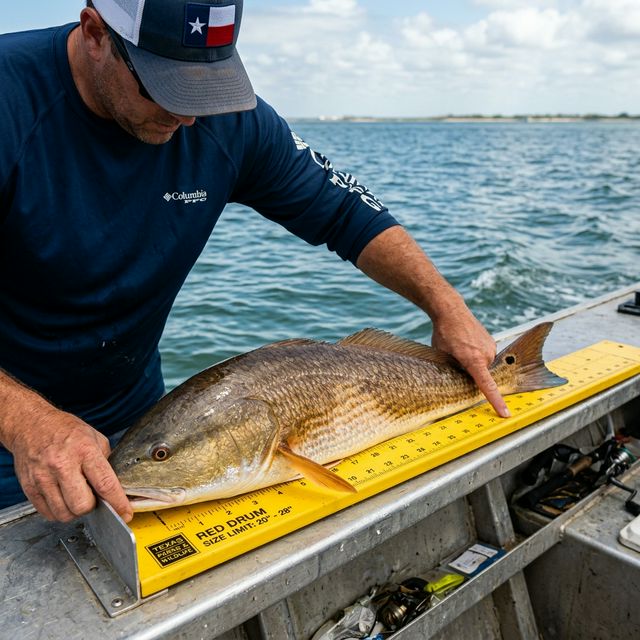
Texas operates one of the most complex fishing regulation systems in the United States. The state manages over 1,100 public reservoirs, 191,000 miles of rivers and streams, and 367 miles of Gulf Coast — each with the potential for localized rules that differ from statewide standards.
This guide covers every major regulation a Texas angler needs to know: the Red Drum and Spotted Seatrout tag systems (including the March 2025 emergency changes), statewide freshwater limits, Lake Fork’s unique protective slot, Special Management Waters, and the specific penalties for violations.
Saltwater Regulations: Red Drum (Redfish)
The Red Drum is one of the most tightly regulated species in Texas, managed through both slot limits and a unique physical tag system.
Statewide Red Drum Limits (2025–2026 Season)
| Regulation | Details |
|---|---|
| Daily Bag Limit | 3 per person, per day |
| Slot Size Limit | 20 to 28 inches |
| Possession Limit | 6 (double the daily bag) |
| Oversized Exception | One Red Drum over 28 inches per license year, via Red Drum Tag |
How the Tag System Works
When you purchase a Saltwater or All-Water Fishing Package, it includes a Red Drum Tag (physical paper tag or digital within the app). If you catch a Red Drum measuring over 28 inches:
- Physical tag: Immediately cut out the month and day on the paper tag, then securely attach it to the narrowest part of the fish’s tail using wire or string.
- Digital tag: Log the harvest immediately through the Texas Hunt & Fish app — recording the date, location, and length.
Once your single annual tag is used, you cannot keep another oversized Red Drum until the next license year (September 1).
Strategy Tip: If you catch a 29-inch Red Drum in October but your fishing season runs through August, consider whether to use your single tag now or release the fish and save the tag for a potential trophy later in the year.

Crab & Lobster Measurer
Stainless steel gauge ensures your catch meets minimum size regulations.
Affiliate link · Prices may vary
Saltwater Regulations: Spotted Seatrout (Speckled Trout)
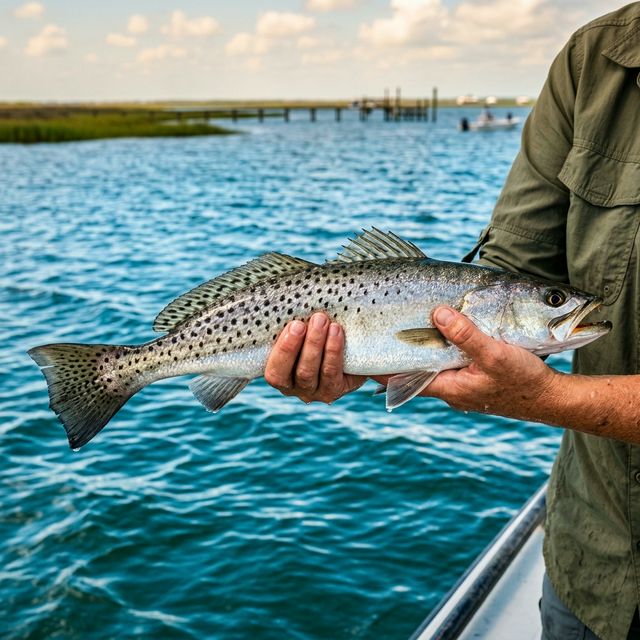
Spotted Seatrout regulations saw a major overhaul in March 2025 after population declines driven by severe winter freezes and sustained fishing pressure along the Gulf Coast. These changes represent one of the most significant tightenings in TPWD history.
Current Statewide Spotted Seatrout Limits (March 2025 Changes)
| Regulation | Previous Rule | Current Rule (March 2025+) |
|---|---|---|
| Daily Bag Limit | 5 per day | 3 per day |
| Slot Size Limit | 15–25 inches | 15–20 inches |
| Within-Bag Oversized | N/A | One fish over 25 inches counts toward the 3-fish bag |
| Tag Exception | Over 25 inches via tag | One over 28 inches via Spotted Seatrout Tag (in addition to bag) |
| Possession Limit | 10 | 6 (double the daily bag) |
Understanding the Two Oversized Tiers
This is where most anglers get confused. There are two separate provisions for keeping fish above the 20-inch slot maximum:
- 25+ inch fish (within bag): You may keep one Spotted Seatrout over 25 inches as part of your daily 3-fish bag limit. This fish simply counts as one of your three.
- 28+ inch fish (tag system): You may keep one Spotted Seatrout over 28 inches per license year by affixing a properly completed Spotted Seatrout Tag. This fish is counted in addition to your daily bag and possession limits.

Rapala Stainless Steel Fishing Pliers
Stainless steel construction. Side cutter and split ring tool. Corrosion resistant.
As an Amazon Associate, we earn from qualifying purchases. Prices may vary.
Freshwater Regulations: Black Bass
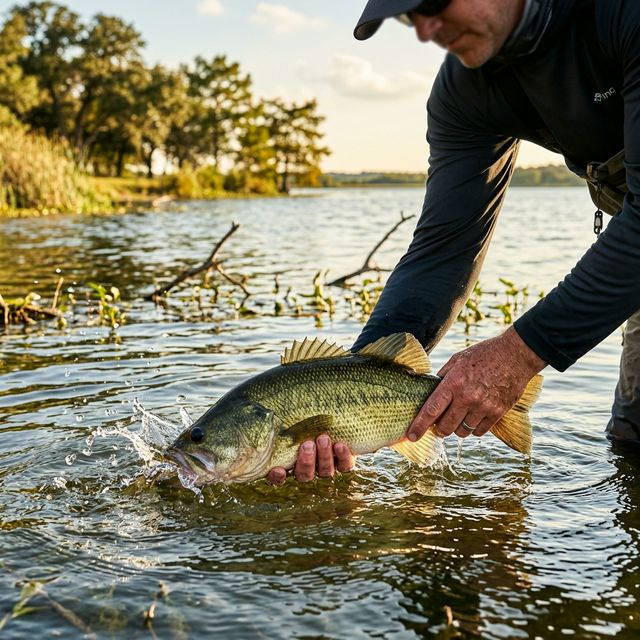
Texas manages all black bass species (largemouth, smallmouth, Alabama, Guadalupe, and spotted bass) under a combined limit.
Statewide Black Bass Limits
| Regulation | Details |
|---|---|
| Daily Bag Limit | 5 combined (all black bass species) |
| Minimum Size | 14 inches |
| Possession Limit | 10 (double the daily bag) |
Lake Fork Protective Slot — The Exception
Lake Fork Reservoir is one of the premier trophy bass lakes in the world, and TPWD manages it with a unique protective slot limit designed to safeguard breeding-age females:
- Slot: 16 to 24 inches — bass within this range must be released immediately
- Below 16 inches: May be kept (up to 5/day)
- 24 inches or larger: May be kept, but only one per day out of the 5-fish limit
- This protective slot is the primary reason Lake Fork consistently produces 13-pound bass — the breeding stock is protected during their most productive growth phase
Other Special Management Waters
Several Texas lakes and rivers operate under localized rules that override statewide standards:
- Purtis Creek State Park Lake and Lake Raven: Catch-and-release only for largemouth bass — no harvest permitted under any circumstances
- Lake Athens: 18-inch minimum length limit (higher than the statewide 14-inch standard)
- Canyon Lake: No minimum length, but a 5-fish bag limit applies
Critical Rule: Before launching your boat on any Texas lake, check the TPWD Outdoor Annual app for that specific body of water. Ignorance of a Special Management designation is not a valid defense.

Plano 3700 Tackle Storage Box
Adjustable dividers. Durable construction. Perfect for organizing lures and tackle.
Affiliate link · Prices may vary
Violation Penalties
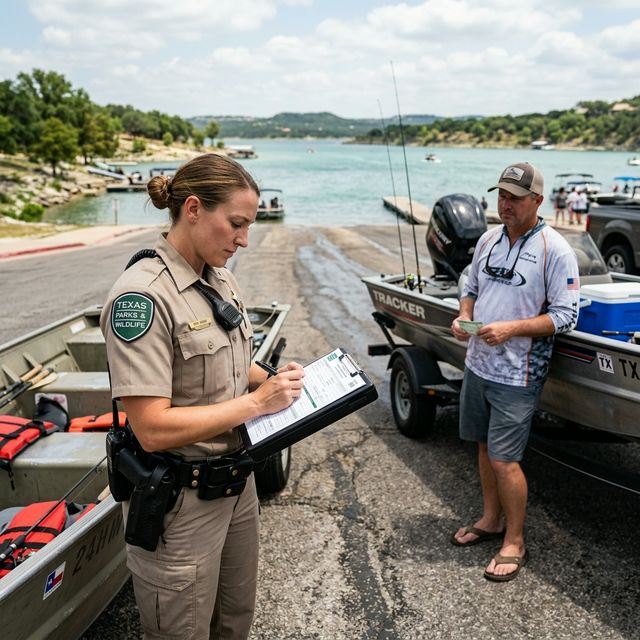
Texas fishing violations are criminal offenses, not civil fines. Game wardens are fully commissioned peace officers with arrest authority.
Penalty Tiers
| Violation Type | Classification | Fine Range |
|---|---|---|
| Fishing without a license | Class C misdemeanor | $25–$500 |
| Over the bag limit | Class C misdemeanor | $25–$500 per fish |
| Keeping undersized/oversized fish (no tag) | Class C misdemeanor | $25–$500 |
| Using illegal gear (gill nets, etc.) | Class A or B misdemeanor | Up to $4,000 + possible jail |
| Repeat offender / commercial poaching | Enhanced charges | Felony-level possible |
Additional consequences beyond fines:
- Automatic license suspension or revocation for up to 5 years
- Confiscation of gear (rods, reels, nets, and even boats used in the violation)
- Civil restitution charges for damage to wildlife resources
- Refusal by TPWD to issue future licenses until restitution is paid
When Regulations Update
TPWD publishes the Outdoor Annual on September 1st each year, coinciding with the new license year. However, emergency regulation changes can take effect mid-year — as demonstrated by the March 2025 Spotted Seatrout tightening. Always verify current rules through the Outdoor Annual app or the TPWD website before your trip.