 FishKillFlea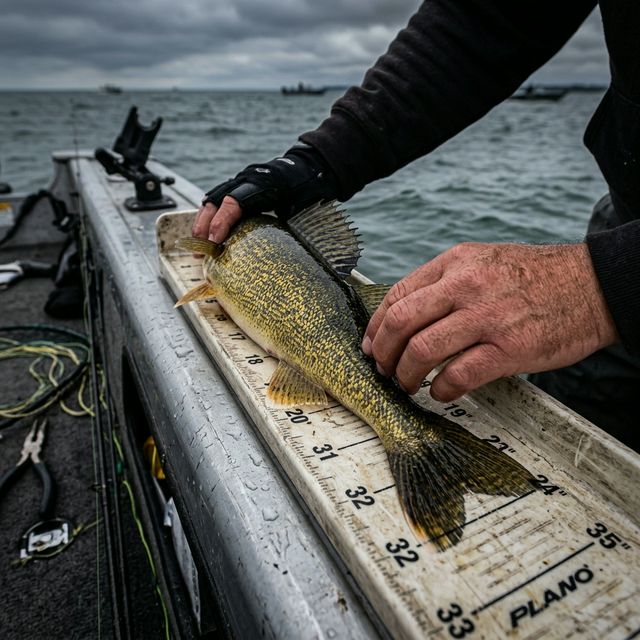
You’ve been on Saginaw Bay since 4 AM, drifting crawler harnesses across a flat in 14 feet of water. Your buddy has three walleye in the box — all between 14 and 16 inches. Yours are smaller. You lip the fourth fish and reach for the measuring board: 12.5 inches. Close, but this is Saginaw Bay. The minimum is 13 inches here, not 15 like on Lake Erie 200 miles south. You slide the fish back. Your buddy looks confused. “Isn’t walleye 15 inches everywhere?” It isn’t. Not in Michigan. And that’s the single most important thing to understand about fishing regulations in a state with 11,000 lakes, 36,000 miles of rivers, and hundreds of water-body-specific exceptions layered on top of the statewide rules.
Michigan’s fishing regulations are not a single ruleset. They’re a foundation of statewide defaults, overlaid with regional Great Lakes rules, further overlaid with county-specific exceptions, and finally with individual-lake-specific special regulations. You must check the rules for the specific water you plan to fish. The statewide defaults listed in this guide are your starting point — never your final answer.
Major Species: Statewide Default Regulations
Bass (Largemouth and Smallmouth)
| Rule | Detail |
|---|---|
| Catch-and-release season | Open year-round, statewide |
| Possession season (statewide) | Opens May 23, 2026 (third Saturday of May) |
| Possession season (Lake St. Clair, St. Clair River, Detroit River) | Opens June 20, 2026 (third Saturday of June) |
| Minimum size | 14 inches |
| Daily bag limit | 5 (any combination of largemouth and smallmouth) |
The June 20 trap: Lake St. Clair and the connecting waters (St. Clair River, Detroit River) have a bass possession opener that’s nearly four weeks later than the rest of the state. Tournament anglers have been disqualified for possessing bass on these waters before the third Saturday of June, even during catch-and-release events. If you’re fishing St. Clair in late May or early June, release immediately.
Walleye
Michigan’s walleye regulations are the most complex in the state, varying dramatically by water body:
| Water Body | Daily Bag Limit | Minimum Size | Season |
|---|---|---|---|
| Lake Erie | 6 | 15 inches | Open year-round |
| Lake St. Clair / St. Clair River / Detroit River | 6 | 15 inches | Open year-round |
| Saginaw Bay & Lower Saginaw River | 8 | 13 inches | Open year-round |
| Lower Peninsula Inland Waters | 5 (typical) | 15 inches (typical) | Opens April 25 |
| Upper Peninsula Waters | 5 (typical) | 15 inches (typical) | Opens May 15 |
| Houghton Lake | 5 | 13 inches | Opens April 25 |
Saginaw Bay’s 8-fish limit: The most generous walleye bag limit in the Great Lakes comes with a lower size minimum (13 inches). This makes Saginaw Bay the destination for anglers who want to take fish home for the table. But note: the 8-fish limit applies only within the Bay’s defined boundaries — waters beyond the outer boundary revert to the statewide default.
Trout and Salmon
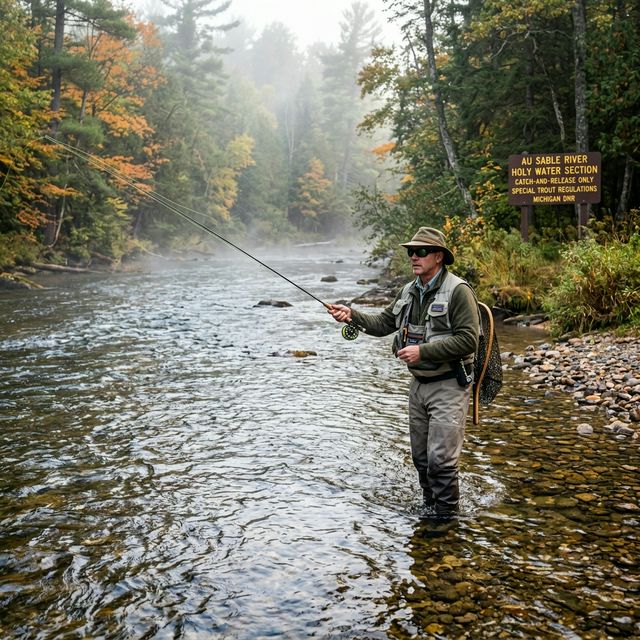
Michigan classifies trout streams into four types, each with increasingly restrictive regulations:
| Stream Type | Gear Allowed | Size/Bag Limits | Notes |
|---|---|---|---|
| Type 1 | All legal methods | Standard (varies by species) | General trout stream regulations |
| Type 2 | Artificial lures only | No-kill | Catch-and-release with artificials |
| Type 3 | Various (check specific water) | Reduced bag, larger size limits | Quality fishery management |
| Type 4 | Flies only | Catch-and-release only | The most restrictive — Au Sable Holy Water is Type 4 |
Key trout and salmon species limits (statewide defaults):
| Species | Minimum Size | Daily Bag Limit | Season Opens |
|---|---|---|---|
| Brook Trout | 10 inches (varies) | 5 (varies by stream) | April 25 |
| Brown Trout | 8–18 inches (varies widely) | 3–5 (varies) | April 25 |
| Rainbow Trout / Steelhead | 10–12 inches (varies) | 1–5 (varies) | April 25 |
| Chinook (King) Salmon | 10 inches | 3 | Year-round on Great Lakes |
| Coho Salmon | 8 inches | 5 | Year-round on Great Lakes |
| Lake Trout | 15 inches (Great Lakes) | 2–3 (varies) | Year-round on Great Lakes |
The trout complexity warning: These are statewide defaults. Individual streams have specific regulations that override these numbers. A Type 3 stream might have a 15-inch minimum for rainbow trout with a daily bag of 1, while the statewide default is 10 inches and 5 fish. Always check the Michigan DNR Inland Trout and Salmon Maps before fishing any trout water.
Pike and Muskie
| Species | Minimum Size | Daily Bag Limit | Season |
|---|---|---|---|
| Northern Pike (statewide) | 24 inches | 2 | Year-round (most waters) |
| Northern Pike (some UP lakes) | No minimum / increased bag | Varies | Check specific water |
| Muskellunge | 42 inches | 1 | Opens June 6, 2026 (first Saturday of June) |
| Tiger Muskie | 42 inches | 1 | Opens June 6, 2026 |
The pike exception: Several Upper Peninsula lakes have liberalized pike regulations (no minimum size, increased bag limits) as part of pike management programs. These lakes are specifically listed in the county exception tables. If you’re fishing pike in the UP, check before you keep.
Panfish
| Species | Minimum Size | Daily Bag Limit |
|---|---|---|
| Bluegill | No minimum | 25 |
| Black Crappie | No minimum (some exceptions) | 25 |
| Yellow Perch | No minimum | 25–50 (varies; 50 on some Great Lakes waters) |
| Rock Bass | No minimum | 25 |
Sturgeon — Michigan’s Most Protected Fish
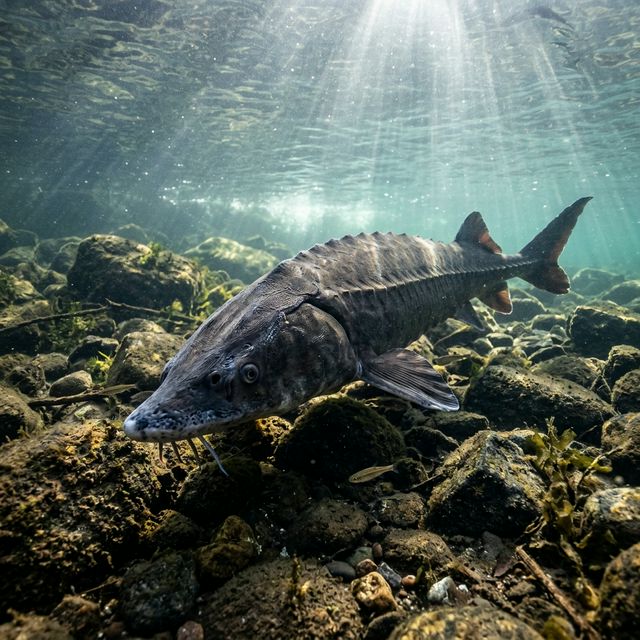
Lake sturgeon is Michigan’s most heavily regulated species. These ancient fish can live over 100 years and take 15-25 years to reach reproductive maturity:
| Rule | Detail |
|---|---|
| Harvest season | Limited to one day in February on select waters |
| Permit required | Yes — by lottery only (Black Lake, Burt Lake, Mullet Lake) |
| Permit cost | $5 (lottery entry fee) |
| Bag limit | 1 sturgeon per permit holder |
| Minimum size | Varies by water (typically 42-50 inches) |
| Penalty for illegal take | Up to $2,500 fine + equipment confiscation |
If you accidentally catch a sturgeon: Release it immediately and carefully. Sturgeon are catch-and-release at all times except during the designated one-day season on permitted waters. Report incidental catches to the DNR — this data helps management.

Crab & Lobster Measurer
Stainless steel gauge ensures your catch meets minimum size regulations.
Affiliate link · Prices may vary
Seasonal Calendar: When Things Open and Close
| Date | What Happens |
|---|---|
| April 1 | New license year begins |
| April 25 | Trout season opener (statewide) |
| April 25 | Walleye/northern pike season opener (Lower Peninsula inland) |
| May 15 | Walleye/northern pike season opener (Upper Peninsula) |
| May 23 | Bass possession season opens (statewide) |
| June 6 | Muskie season opens |
| June 13-14 | Free Fishing Weekend (summer) |
| June 20 | Bass possession opens (St. Clair, Detroit River) |
| February 14-15 | Free Fishing Weekend (winter) |
| Feb (one day) | Sturgeon season (select waters, lottery permit) |
| March 31 | License year ends |

Rapala Stainless Steel Fishing Pliers
Stainless steel construction. Side cutter and split ring tool. Corrosion resistant.
As an Amazon Associate, we earn from qualifying purchases. Prices may vary.
Gear Restrictions You Must Know
Two-Rod Rule
Michigan generally allows two lines simultaneously while fishing. Exceptions:
- Some special regulation waters limit you to one line
- Ice fishing allows up to three lines (including tip-ups), with a maximum of six hooks or lures total across all lines
- Sturgeon fishing: one line, one hook only
Prohibited Methods
The following are illegal in Michigan at all times:
- Spearing game fish in most waters (suckers and bowfin may be speared in some areas — check regulations)
- Using explosives, poisons, or electrical devices
- Snagging game fish (except during designated snagging seasons on specific waters)
- Using live bait in flies-only (Type 4) streams
- Using treble hooks on catch-and-release-only waters (some exceptions)
Bait Restrictions
Michigan takes invasive species seriously. Important bait rules:
- No live bait from one water body to another without knowing the water’s regulations
- Asian carp species are prohibited as bait
- Goldfish are illegal to use as bait
- Worms and leeches are generally legal everywhere
- Minnows have specific regulations by region — check before using imported bait

Plano 3700 Tackle Storage Box
Adjustable dividers. Durable construction. Perfect for organizing lures and tackle.
Affiliate link · Prices may vary
The “Exceptions by County” Factor
This is the single most important regulatory concept for Michigan anglers. The statewide rules listed above are defaults only. Michigan’s DNR maintains an extensive list of exceptions organized by county and specific water body. These exceptions can:
- Change minimum size limits for any species on any specific lake
- Modify bag limits up or down
- Create closed seasons on individual waters
- Establish gear restrictions not found in the statewide rules
- Create protected slot limits (e.g., must release fish between 18 and 23 inches)
How to Check
- Online: Visit Michigan.gov/Fishing and use the interactive regulation lookup
- DNR Hunt Fish App: Search by county or water body name for specific regulations
- Printed Guide: The annual Michigan Fishing Guide (free at license retailers) lists all exceptions
- Call the DNR: Regional fisheries offices can clarify rules for specific waters
2026 Regulation Changes to Watch
Key changes effective for the 2026 license year:
- Steelhead: Regulations on certain Type 3 and Type 4 streams have been modified, with some streams no longer requiring the 20-inch minimum size limit (daily possession limit remains 1)
- Upper Peninsula Trout Lakes: Type A trout lakes may have a lower minimum size of 10 inches and increased daily possession of up to 5 fish
- Big Manistique Lake and Milakokia Lake: DNR is considering a protected slot limit of 18-23 inches for walleye, with a reduced daily possession of 3 fish (one over 23 inches)
Stay updated: Michigan updates fishing regulations annually. Subscribe to DNR email alerts at michigan.gov/dnr for mid-season regulation changes.
For license information, see the non-resident guide or senior license guide. For age-related exemptions, see the age requirements guide.
Source: Michigan Department of Natural Resources, verified March 2026. Always verify water-specific regulations before fishing — the Exceptions by County list is updated annually.