 FishKillFlea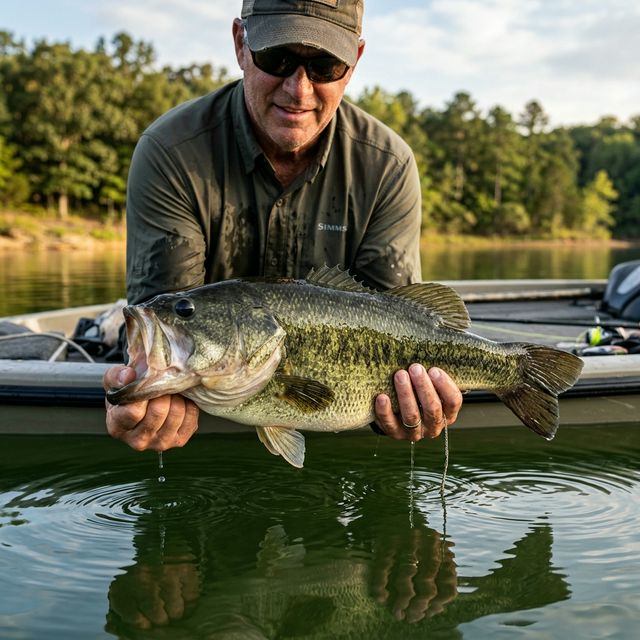
You lip a largemouth out of the water at Lake Cumberland’s Conley Bottom cove, and it looks like a solid keeper. Five pounds, maybe more. You pull out the tape — 14.75 inches. A quarter inch short of Cumberland’s 15-inch special regulation minimum. You slide her back and watch her fin away into the green water. That quarter inch matters. Kentucky conservation officers carry their own tape measures, and they don’t round up.
This moment — the one between the catch and the keep — is where most anglers get into trouble. Not from intent, but from not knowing that Kentucky’s regulations change by waterbody. The statewide bass minimum is 12 inches with a 6-fish daily limit — but on Kentucky’s biggest and most popular reservoirs, special regulations impose a 15-inch minimum and a 5-fish daily limit. The difference between a legal keep and a citation can depend entirely on which lake you’re on. Here’s the complete breakdown for the 2026-2027 season.
Black Bass Regulations
Kentucky is home to three black bass species — largemouth, smallmouth, and Kentucky (spotted) bass — each with different rules.
Largemouth Bass
Statewide Default Rule:
| Regulation | Statewide Default |
|---|---|
| Daily limit | 6 fish (combined with all black bass) |
| Minimum size | 12 inches |
| Possession limit | 12 fish |
Special Regulations on Major Reservoirs (15-inch minimum, 5 total bass limit):
These waters have stricter regulations than the statewide default:
| Water | Minimum Size | Daily Limit |
|---|---|---|
| Lake Cumberland | 15 inches (LMB); 18 inches (SMB) | 5 total black bass |
| Kentucky Lake | 15 inches | 5 total black bass |
| Lake Barkley | 15 inches | 5 total black bass |
| Dale Hollow Lake | 15 inches | 5 total black bass |
| Barren River Lake | 15 inches | 5 total black bass |
| Laurel River Lake | 15 inches | 5 total black bass |
| Cave Run Lake | 15 inches | 5 total black bass |
Why this matters: If you fish a small farm pond near Lexington, a 12-inch largemouth is legal to keep (statewide rule). But drive 40 minutes to Herrington Lake, and you might be subject to a special regulation requiring 15 inches. Always check the specific waterbody before fishing — download the KDFWR Fishing & Boating Guide from fw.ky.gov.
Additional exceptions with lower limits:
| Water | Minimum Size | Daily Limit | Notes |
|---|---|---|---|
| Paintsville Lake | 12 inches | 6 fish | Management study |
| Beaver Lake | 12-15” slot (protected) | 6 fish | Growth study |
| Boltz Lake | 12-15” slot (protected) | 6 fish | Growth study |
Smallmouth Bass
Kentucky manages its smallmouth bass populations with a distinctive protective slot limit system not seen in most neighboring states:
| Regulation | Statewide Rule |
|---|---|
| Daily limit | 2 fish (within the 5 total black bass limit) |
| Statewide minimum size | 12 inches |
The Protective Slot Limit (many waters):
On many of Kentucky’s best smallmouth waters — including the main stem of Elkhorn Creek — a 16-to-21-inch protective slot limit applies:
- You can keep one fish under 16 inches
- You can keep one fish over 21 inches
- All fish between 16 and 21 inches must be released immediately
- Maximum 2 smallmouth per day
This slot protects the prime spawning-age fish while allowing harvest of small fish and genuine trophies.
2026 change: A 15-inch minimum size limit for smallmouth bass has been implemented in the upper reaches of the Barren River, Kentucky River, and Cumberland River. Check the official guide for specific stream sections.
Kentucky (Spotted) Bass
- No statewide minimum size limit — you can keep spotted bass of any size
- Daily limit: included in the 5 total black bass combined limit
- Spotted bass are abundant in most Kentucky reservoirs and rivers
Crappie Regulations
Kentucky’s crappie fishing — especially the legendary spring run at Kentucky Lake — draws anglers from across the Midwest. Statewide rules and major reservoir rules are very different:
Statewide Default Rule:
| Regulation | Statewide Default |
|---|---|
| Daily limit | 20 fish (black and white crappie combined) |
| Minimum size | No statewide minimum |
| Possession limit | 40 fish |
Special Regulations on Major Reservoirs (10-inch minimum, 15-fish daily limit):
| Water | Minimum Size | Daily Limit |
|---|---|---|
| Kentucky Lake | 10 inches | 15 fish |
| Lake Barkley | 10 inches | 15 fish |
| Lake Cumberland | 10 inches | 15 fish |
| Barren River Lake | 10 inches | 15 fish |
| Dale Hollow Lake | 10 inches | 15 fish |
| Nolin River Lake | 10 inches (NEW for 2026) | 15 fish |
| Rough River Lake | 10 inches (NEW for 2026) | 15 fish |
| Laurel River Lake | 9 inches | 15 fish |
2026 change: The 10-inch minimum size limit was extended to Nolin River Lake and Rough River Lake for the 2026-2027 season, up from the previous 9-inch minimum on those waters.
Measuring tip: Crappie are measured from the tip of the closed mouth to the tip of the compressed tail. A 10-inch crappie is a quality fish — about 0.75 to 1 lb. If you’re releasing undersized fish, use barbless hooks or carefully flatten barbs to reduce handling damage.

Crab & Lobster Measurer
Stainless steel gauge ensures your catch meets minimum size regulations.
Affiliate link · Prices may vary
Catfish Regulations
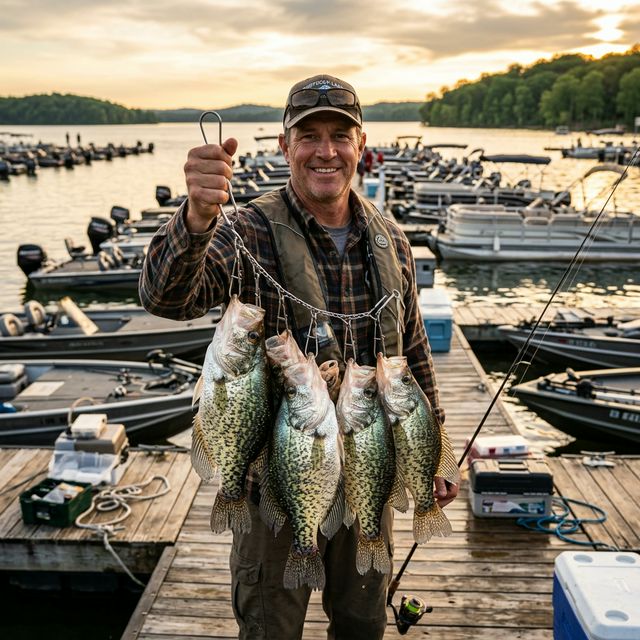
Kentucky’s catfish regulations distinguish between trophy-sized and non-trophy fish:
Trophy Catfish (daily limits apply)
| Species | Trophy Size Threshold | Daily Limit |
|---|---|---|
| Blue catfish | 35 inches or longer | 1 fish per day |
| Flathead catfish | 35 inches or longer | 1 fish per day |
| Channel catfish | 28 inches or longer | 1 fish per day |
Non-Trophy Catfish
For catfish under the trophy thresholds:
- No statewide daily or possession limit — you can keep as many sub-trophy catfish as you can catch
- Exception: Check individual waterbody regulations — some WMAs and special management areas have stricter limits
2026 change: The previous 4-fish daily catfish limit on Kentucky River WMA — Boone Tract has been removed. These waters are now under statewide regulations.
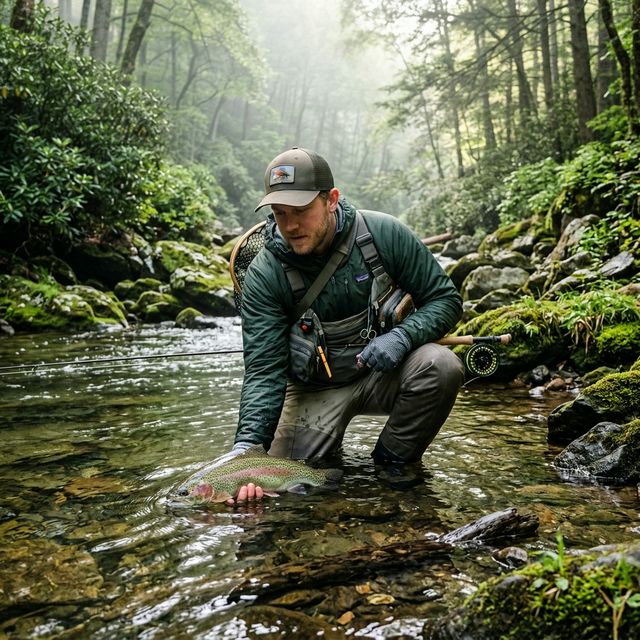
Trout Regulations
Kentucky manages 295.5 miles of trout fisheries across 46 streams and 14 tailwaters, stocking over 200,000 rainbow trout annually. Trout regulations are stricter than warmwater species:
Species-Specific Rules
| Species | Daily Limit | Possession Limit | Size Limit |
|---|---|---|---|
| Rainbow trout | 8 fish | 16 fish | No minimum |
| Brown trout | 1 fish | 2 fish | 16-inch minimum |
| Cutthroat trout | 1 fish | 2 fish | 20-inch minimum |
| Brook trout | Catch and release only | — | — |
Seasonal Rules on Designated Trout Streams
- April 1 – September 30 (harvest season): Trout may be harvested with any legal method. Trout Permit ($10.57) required to keep trout.
- October 1 – March 31 (catch-and-release season): ALL trout must be released immediately. Only artificial lures are permitted — no live bait, no scented baits.
Important: These seasonal restrictions apply to designated trout streams only. Trout stocked in lakes and reservoirs (like the Lake Cumberland tailwater) may have different rules — check the specific water’s regulations.
Premier Trout Waters
- Hatchery Creek (Rowan County) — Accessible trout stream near Morehead with wheelchair-accessible sections. Upper stretch has a 5-trout daily creel limit; lower section is catch-and-release only (artificial lures mandatory year-round)
- Cumberland River below Wolf Creek Dam — Year-round rainbow and brown trout tailwater. Trout permit required. Special regulations apply: check the KDFWR guide for specific reach rules
- Elkhorn Creek (Franklin County) — Dual smallmouth bass AND trout fishery
- War Fork Creek (Jackson County) — Remote mountain trout stream in Daniel Boone National Forest
- Casey Creek (Trigg County) — New brown trout stocking location for 2026

Rapala Stainless Steel Fishing Pliers
Stainless steel construction. Side cutter and split ring tool. Corrosion resistant.
As an Amazon Associate, we earn from qualifying purchases. Prices may vary.
Fishing Methods: What’s Legal and What’s Not
Permitted Year-Round
- Rod and reel (any type)
- Pole and line (cane pole, trotline, setlines in most waters)
- Bank fishing, wade fishing, boat fishing
- Artificial lures and live bait (except on catch-and-release trout waters Oct-Mar)
Prohibited Methods
- Explosives — Illegal to use any explosive device to take fish
- Electricity — Electrofishing is restricted to KDFWR personnel only
- Chemicals — Poison, bleach, or other chemicals in any water
- Snagging — Intentionally foul-hooking fish is illegal (except for paddlefish during designated seasons)
- Gill nets and seines — Restricted to licensed commercial fishermen
Trotline and Setline Rules
- Trotlines are legal in most Kentucky waters
- Must be marked with the owner’s name and address
- Must be checked and rebaited at least every 24 hours
- Not permitted in designated trout waters or tailwaters
2026-2027 Season: Key Regulation Changes
| Change | Details | Affected Waters |
|---|---|---|
| Crappie minimum increased | 9” → 10” minimum | Nolin River Lake, Rough River Lake |
| Smallmouth minimum added | New 15” minimum | Upper Barren, Kentucky, Cumberland rivers |
| Catfish limit removed | WMA-specific limit eliminated | Kentucky River WMA — Boone Tract |
| Brown trout stocking expanded | New stocking location | Casey Creek, Trigg County |
| Free Fishing Weekend | June 6-7, 2026 | All Kentucky waters |

Plano 3700 Tackle Storage Box
Adjustable dividers. Durable construction. Perfect for organizing lures and tackle.
Affiliate link · Prices may vary
Possession and Transportation
- Possession limit generally equals 2× daily limit (e.g., largemouth statewide: 6 daily / 12 possession; crappie statewide: 20 daily / 40 possession)
- On special regulation waters, possession limits follow the special daily (e.g., crappie on Kentucky Lake: 15 daily / 30 possession)
- Fish must remain identifiable — do not remove heads, tails, or skin until you reach your home or permanent camp
- Transportation across state lines — You may transport your legal catch to your home state, but the fish must be within Kentucky’s possession limits when leaving the state
Enforcement and Penalties
Kentucky Conservation Officers (KDFWR law enforcement) regularly patrol popular fishing spots, boat ramps, and campgrounds. Key enforcement facts:
- Officers may inspect your catch, license, and equipment without a warrant while you’re fishing or transporting fish
- Fishing without a required license is a Class A misdemeanor — fines up to $500 plus court costs
- Exceeding bag limits or keeping undersized fish can result in fines per fish above the limit
- Repeated violations may result in license revocation
For license details, see the non-resident guide or senior guide. For renewal information, see the renewal & replacement guide.
Source: Kentucky Department of Fish & Wildlife Resources (KDFWR), 2026-2027 Kentucky Fishing & Boating Guide, verified March 2026.