 FishKillFlea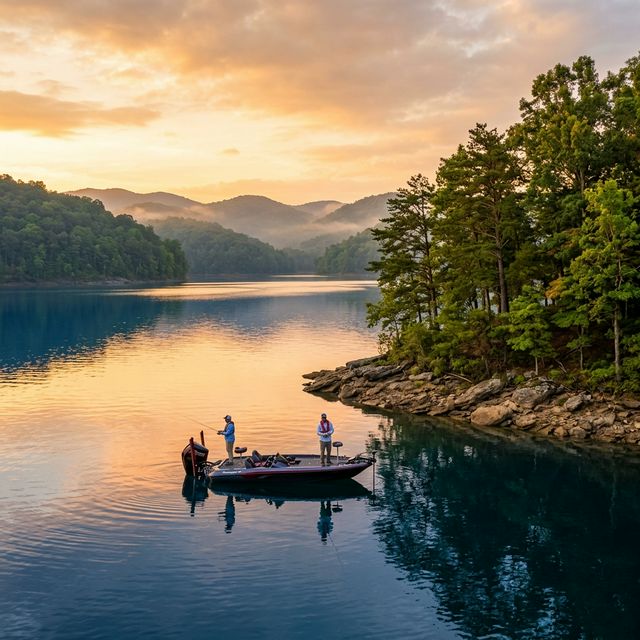
You ease the rental pontoon away from the Wolf Creek Marina dock at half-throttle, and within 90 seconds Lake Cumberland’s shoreline swallows every trace of civilization. The water is 40 feet deep and green-clear — you can see the rocky ledge dropping away beneath the hull. Your depth finder marks a school of suspended spots at 22 feet. A local at the gas dock said “throw a drop shot, 3-inch minnow, and let it pendulum.” You’re from Ohio. You drove three hours and crossed one state line. And you’re about to understand why Kentucky — a state most people associate with bourbon and horses — quietly holds some of the most underrated freshwater fishing in the eastern United States.
But before that first cast, you need the right license. Kentucky’s system is straightforward compared to neighboring states, but there’s one detail that trips up nearly every visiting angler: the Trout Permit is separate. If you plan to keep any trout — and Kentucky stocks over 200,000 rainbow trout annually — you’ll need the add-on. Here’s everything.
Kentucky’s License Year: March 1 to February 28
Unlike Tennessee’s rolling 365-day licenses or many states’ September-to-August cycles, Kentucky runs a fixed license year from March 1 through the last day of February. This matters for trip planning:
- A license purchased on March 2, 2026 expires February 28, 2027
- A license purchased on January 15, 2027 also expires February 28, 2027 — you’d only get six weeks of validity
- Best value window: Buy as close to March 1 as possible to maximize your annual license
Tip: Kentucky’s 2026-2027 licenses went on sale March 1, 2026. If you’re reading this in late fall or winter, a short-term license may be smarter than paying full annual price for a few months of validity.
Non-Resident License Types and Prices (2026-2027)
Fishing-Only Licenses
| License Type | Duration | Price | Per-Day Cost |
|---|---|---|---|
| 1-Day Fishing | 1 calendar day | $15.86 | $15.86 |
| 7-Day Fishing | 7 consecutive days | $37.00 | $5.29 |
| Annual Fishing | Mar 1 – Feb 28 | $58.14 | $0.16 |
Add-On Permits
| Permit | Price | Who Needs It |
|---|---|---|
| Trout Permit | $10.57 | Anyone keeping trout in designated trout waters |
The Trout Permit Decision
Kentucky’s Trout Permit is only required to harvest (keep) trout. If you’re purely catch-and-release on trout streams, you don’t need it. But here’s the practical calculation:
- Planning a Lake Cumberland or Kentucky River trip for bass and crappie only? Skip the Trout Permit and save $10.57
- Heading to Hatchery Creek, Elkhorn Creek, or any KDFWR-stocked stream? Add it — a $10.57 insurance policy against a citation is cheap
- The total cost with trout: Annual ($58.14) + Trout ($10.57) = $68.71 — still cheaper than Tennessee’s $98 all-species annual
Break-Even Analysis
| Your Trip | Best License | Cost | Why |
|---|---|---|---|
| One weekend trip | 1-Day × 2 | $31.72 | Cheapest for ≤2 days |
| One 4-5 day trip | 7-Day | $37.00 | Saves over buying daily |
| 2+ trips per year | Annual | $58.14 | Breaks even after 4 days |
| Trout-focused trip | Annual + Trout | $68.71 | Only if keeping trout |

Piscifun Fishing Tackle Backpack
Large capacity fishing backpack with tackle boxes. Waterproof rain cover included.
Affiliate link · Prices may vary
How to Buy Your Non-Resident License
Online (Fastest)
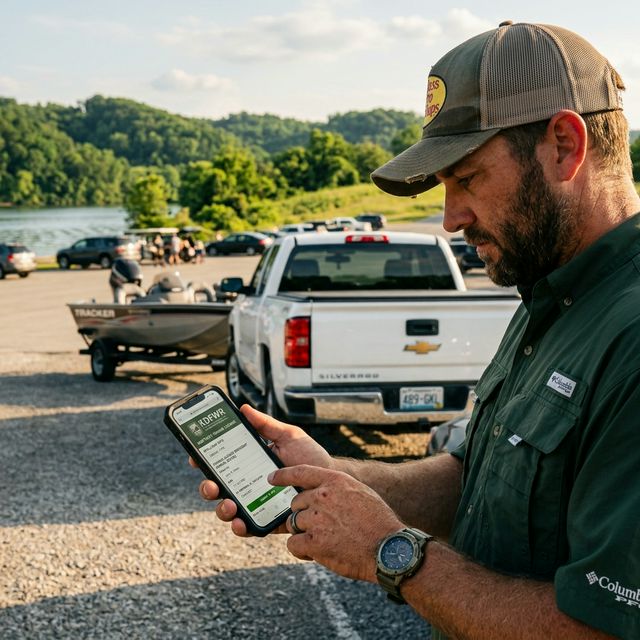
- Go to fw.ky.gov and navigate to License Sales
- Create an account (date of birth + Social Security Number required)
- Select your license type and add Trout Permit if needed
- Pay with Visa, Mastercard, American Express, Discover, or a Kentucky Fish & Wildlife gift certificate
- You’ll receive an authorization number — this is your legally valid license
Important: Kentucky does not mail a physical license for online purchases. Print your authorization or save a screenshot. Carry it with a photo ID on the water.
By Phone
Call 1-800-858-1549 during business hours (8:00 AM – 4:30 PM Eastern, Monday – Friday).
In-Person Retailers
Over 900 license vendors across Kentucky sell licenses:
- Walmart — Sporting goods counter
- Local bait and tackle shops — Especially near Lake Cumberland, Kentucky Lake, and Dale Hollow
- Gas stations and marinas near major lakes
- KDFWR headquarters — 1 Sportsman’s Lane, Frankfort, KY 40601
What You Need
- Date of birth (required for all purchases)
- Social Security Number (required by law)
- Photo ID (for in-person purchases)
- Non-U.S. citizens: Contact KDFWR at 1-800-858-1549 for SSN alternatives
The “Big Three” Kentucky Reservoirs Every Non-Resident Should Know
Kentucky’s fishing reputation rests on three massive reservoirs — each with a distinct personality.
Lake Cumberland (Russell, Wayne, Clinton, Pulaski Counties)
- Size: 65,530 acres — Kentucky’s largest reservoir by volume
- Target species: Striped bass (state record: 58 lbs 4 oz, Roger Foster, 1985), smallmouth bass, walleye, rainbow trout (below Wolf Creek Dam)
- Non-resident draw: Crystal-clear water, dramatic limestone cliffs, and year-round striped bass action. The tailwater below Wolf Creek Dam is one of Kentucky’s premier trout destinations
- Special regulations: Smallmouth bass have an 18-inch minimum size limit on Lake Cumberland — stricter than the statewide 12-inch minimum. Striped bass have a 22-inch minimum and 2-fish daily limit
- Key access: Wolf Creek Marina, Conley Bottom Resort, Jamestown Marina
Kentucky Lake / Lake Barkley (Western Kentucky)
- Size: 160,309 acres (Kentucky Lake alone) + 57,920 acres (Lake Barkley) — connected by a canal, forming the largest complex of man-made lakes east of the Mississippi
- Target species: Largemouth bass, crappie (spring crappie run is legendary), catfish, sauger
- Non-resident draw: The spring crappie migration draws thousands of anglers from late March through May, when water temperatures hit a stable 60-65°F and fish move shallow. Consistent 2-3 lb crappie, with 15-fish daily limits and a 10-inch minimum
- Border note: Kentucky Lake straddles the KY-TN state line. Fish in Kentucky waters with a Kentucky license; Tennessee waters require a Tennessee license. The state line is marked by GPS coordinates, not physical buoys
Dale Hollow Lake (Cumberland, Clinton Counties — KY-TN border)
- Size: 28,000 acres total (roughly split between Kentucky and Tennessee)
- Target species: Smallmouth bass (world record: 11 lbs 15 oz, set here in 1955 — still unbroken), walleye, musky
- Non-resident draw: The clearest lake in the region. Exceptional sight-fishing for smallmouth in spring and fall
- Border details: See the Border Water section below

Plano Guide Series Rod Tube Case
Hard-shell rod tube protects rods during travel. Airline-approved for checked baggage.
As an Amazon Associate, we earn from qualifying purchases. Prices may vary.
Border Water Rules: Kentucky’s Shared Waters
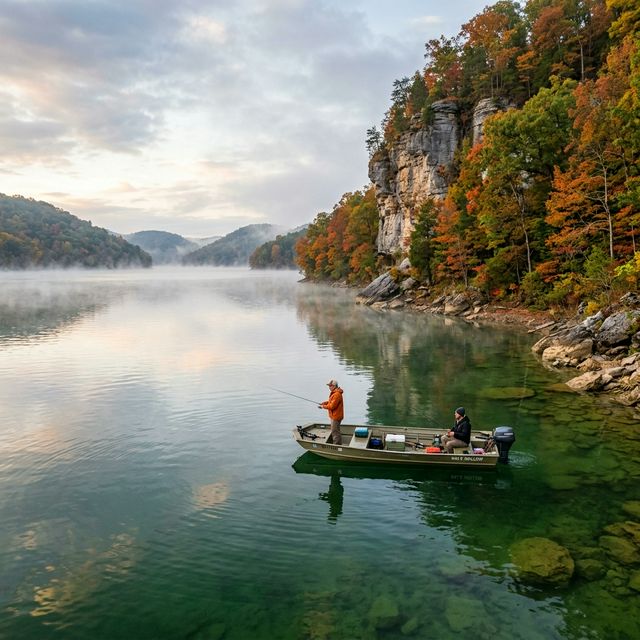
Kentucky borders seven states, and several of its premier fishing destinations sit on state lines. Here’s what you actually need:
Dale Hollow Lake (Kentucky-Tennessee)
The reciprocal agreement between Kentucky and Tennessee has a complicated recent history:
- The agreement expired March 2025 and was reinstated October 2025
- Coverage is limited: only the Wolf River arm (including Illwill Creek embayment) is covered
- Excluded areas: Natty Branch, Hendricks Creek, Pusley Creek, and Sulphur Creek (all in Kentucky) require a Kentucky license specifically
- From a boat: Follow the regulations of the state that issued your license
- From the bank: Follow the regulations of the state you’re physically in
Pro Tip: Before any Dale Hollow trip, verify the current agreement status at fw.ky.gov. If you’ll fish both sides extensively, carry both a Kentucky ($58.14 NR) and Tennessee ($49 NR no-trout) license.
Kentucky Lake / Lake Barkley (Kentucky-Tennessee)
- No blanket reciprocal agreement — the state line runs roughly through the center of both lakes
- You need the license of whichever state’s waters you’re occupying
- The state line is marked by GPS coordinates, not physical buoys — carry a GPS or use Fish Boat KY app
- Practical tip: If you’re launching from a Kentucky marina and staying on the Kentucky side, a Kentucky license is sufficient
Ohio River (Kentucky-Ohio-Indiana-West Virginia)
The Ohio River has a unique legal history: Kentucky’s boundary technically extends to the 1792 low-water mark on the northern bank (Indiana v. Kentucky, 1890; Ohio v. Kentucky, 1980). However, since the 1985 Supreme Court decision, Kentucky has shared jurisdiction with Ohio and Indiana, and reciprocal fishing agreements are in effect:
- From a boat on the main river: Either state’s license is valid — a Kentucky license, Ohio license, or Indiana license all work on the Ohio River mainstem
- From the bank: You must follow the fishing regulations of the state whose bank you’re standing on
- Embayments and tributaries are NOT covered by the reciprocal agreement — once you enter an embayment or tributary, you need the license of the state that tributary is located in
- Practical example: An Ohio angler launching from Cincinnati can fish the main Ohio River channel with just an Ohio license. But if they enter a Kentucky embayment or creek, they need a Kentucky license
- Commercial fishing: Different rules apply — check state-specific commercial regulations
Mississippi River (Kentucky’s far western border)
- The state line follows the center of the main channel
- Kentucky license for Kentucky waters, Tennessee/Missouri license for the other side
Cost Comparison: Kentucky vs. Neighboring States
Planning a multi-state trip through the Bluegrass region?
| State | Annual NR | Short-Term NR | Trout Add-On |
|---|---|---|---|
| Kentucky | $58.14 | $15.86 (1-day) / $37.00 (7-day) | $10.57 |
| Tennessee | $49.00 (no trout) / $98.00 (all species) | $20.00 (3-day) | $21.00 supplement |
| Virginia | $47.00 | $16.00 (5-day) | $23.00 supplement |
| West Virginia | $37.00 | $5.00 (1-day) | $17.00 stamp |
| Ohio | $44.00 | $14.00 (1-day) | N/A (included) |
| Indiana | $35.00 | $9.00 (1-day) | $11.50 stamp |
Multi-state strategy: The classic “Bourbon Trail to Bass Trail” route — starting at Kentucky Lake for spring crappie, then crossing to Tennessee’s Dale Hollow for smallmouth — requires a Kentucky Annual ($58.14) + Tennessee No-Trout ($49.00) = $107.14 total for two of the best freshwater fisheries in America.

KastKing Blackhawk II Telescoping Rod
Portable telescoping design collapses to 17 inches. Perfect for travel fishing.
Affiliate link · Prices may vary
Exemptions: Who Doesn’t Need a Non-Resident License
| Category | License Required? |
|---|---|
| Non-residents under 16 | ❌ Free — no license needed |
| Non-resident landowners fishing their own farm | ❌ Exempt on own property |
| U.S. military (KY resident, on furlough 3+ days) | ❌ With proper military ID |
| Non-resident fishing at a licensed pay lake | ❌ Operator provides free permit |
| Free Fishing Weekend (June 6-7, 2026) | ❌ No license for anyone |
| Non-resident seniors 65+ | ✅ No discount — senior prices are for KY residents only |
| Non-resident disabled veterans | ✅ No discount — disability benefits are for KY residents only |
For age-related details, see the Kentucky age requirements guide. For resident veteran benefits, see the veterans & disabled guide.
Three Things Most Non-Residents Get Wrong
Buying the annual license in January — Kentucky’s fixed March-to-February license year means a January purchase gives you less than two months of validity. Buy a 7-day license instead if you’re visiting late in the cycle.
Forgetting the Trout Permit at Wolf Creek Dam tailwater — The tailwater below Wolf Creek Dam on Lake Cumberland is stocked with rainbow trout year-round. If you’re fishing Cumberland and decide to try the tailwater, you need that $10.57 Trout Permit before you keep a trout. See the rules and regulations guide for trout water details.
Misunderstanding Ohio River reciprocal agreements — Since 1985, Kentucky shares jurisdiction on the Ohio River with Ohio and Indiana. Either state’s license works on the mainstem. However, the reciprocal agreement does not cover embayments or tributaries — enter a Kentucky creek from the Ohio River, and you need a Kentucky license. This is the detail that catches anglers off guard.
Source: Kentucky Department of Fish & Wildlife Resources (KDFWR), verified March 2026. Prices reflect 2026-2027 license year. Processing fees may apply for online purchases.