 FishKillFlea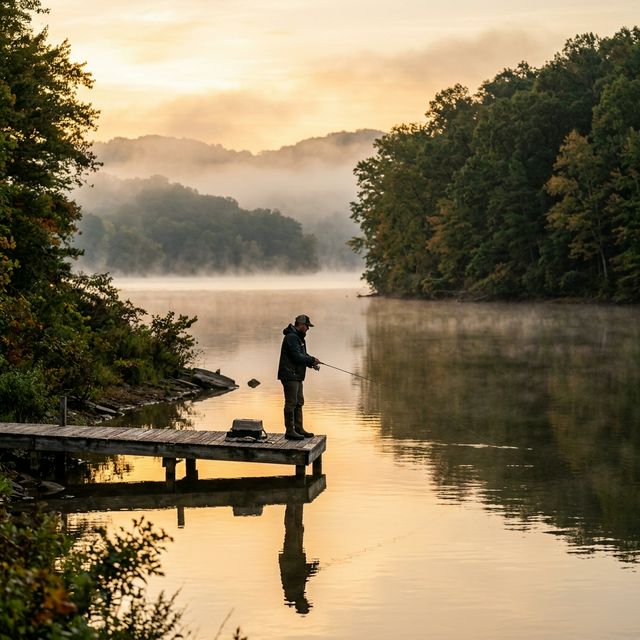
The sign at the state line on I-65 says “Welcome to Indiana — Crossroads of America,” and you’ve driven past it a hundred times without thinking about fishing. You’re from Illinois this time, hauling a boat south toward Bloomington because your college roommate finally convinced you that Lake Monroe holds largemouth bass that rival anything in Kentucky Lake. “It’s 10,750 acres of flooded timber and submerged creek channels,” he kept saying over text. “And nobody fishes it during the week.” You pull into the Paynetown boat ramp at 5:30 AM to find three trucks in a lot built for fifty. He wasn’t wrong.
Indiana is the Great Lakes state that doesn’t lead with the Great Lakes. While Michigan and Wisconsin market their shoreline, Indiana quietly offers one of the most diverse — and underpriced — freshwater experiences in the Midwest. You’ve got 45 miles of Lake Michigan shoreline in the northwest corner, the entire Ohio River border to the south, and over 800 publicly accessible lakes and reservoirs scattered across the state’s rolling interior. The non-resident license at $60 is one of the cheapest in the region, and the 1-day option at $15 makes Indiana one of the most affordable states in America for a spontaneous fishing trip.
Indiana’s License Structure: Base License + Optional Stamp
Unlike Michigan’s all-inclusive approach, Indiana uses a base license plus stamp system. Your non-resident fishing license covers all freshwater species in all Indiana public waters — bass, walleye, crappie, catfish, bluegill, pike, muskie — with one exception. Trout and salmon require a separate $11 stamp. This matters because Indiana’s Lake Michigan shoreline and several inland streams are stocked with steelhead, chinook salmon, and rainbow trout.
The exception to the exception: the 1-day non-resident license ($15) includes trout/salmon privileges automatically. This is the smartest deal in Indiana fishing if you’re making a single-day steelhead run to Trail Creek in Michigan City.
Non-Resident License Types and Prices (2026)
| License Type | Duration | Price | Trout/Salmon? | Total Cost with Stamp |
|---|---|---|---|---|
| Annual Non-Resident Fishing | April 1 – March 31 | $60.00 | Not included | $71.00 |
| 7-Day Non-Resident Fishing | 7 consecutive days | $35.00 | Not included | $46.00 |
| 1-Day Non-Resident Fishing | 1 calendar day | $15.00 | Included | $15.00 |
| Trout/Salmon Stamp (add-on) | Matches base license | $11.00 | — | — |
A $3 technology fee applies to all online purchases through GoOutdoorsIN.com. A $1 fee applies to mail-in purchases.
The Break-Even Math
The annual license costs $60 (or $71 with trout/salmon). The 7-day is $35. The daily is $15. Here’s the math:
- Annual vs. 7-day: If you fish more than 12 days spread across multiple trips, the annual wins.
- Annual vs. daily: At $15/day, the annual license pays for itself after just 4 days of fishing. For any trip longer than a long weekend, go annual.
- 7-day vs. daily: The 7-day breaks even at 2.3 days — if you’re fishing 3+ days on a single trip, the 7-day saves money.
- The trout/salmon wildcard: Daily licenses include the trout/salmon stamp for free. If you’re buying multiple daily licenses, you’re getting $11 worth of trout access each day at no extra cost. Two daily licenses ($30) give you two days of all-species-including-trout fishing for less than one 7-day license ($35) plus the trout stamp ($11).
What You’ll Actually Pay: Common Visitor Scenarios
| Your Plan | License Needed | Total Cost |
|---|---|---|
| Weekend bass trip to Lake Monroe | Two 1-Day licenses | $30.00 |
| Week-long vacation at Patoka Lake | 7-Day license | $35.00 |
| One-day steelhead run to Trail Creek | One 1-Day license | $15.00 |
| Multiple trips through the year | Annual license + Trout/Salmon stamp | $71.00 |
| Three-day catfish trip on the Ohio River | Three 1-Day licenses | $45.00 |
| Quick day trip from Cincinnati or Louisville | One 1-Day license | $15.00 |
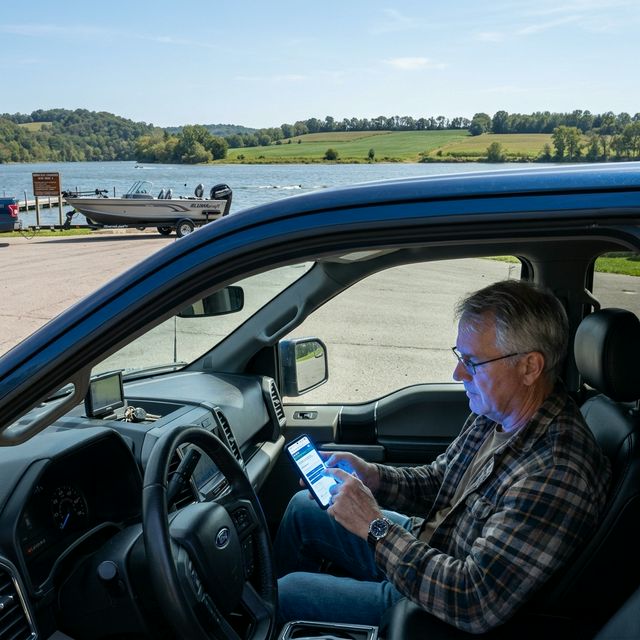
The $15 day-pass strategy: Indiana’s 1-day license is the best deal in the Midwest for anglers who live near the border. Drive from Cincinnati to Brookville Reservoir (45 minutes), buy a $15 license from your phone at the launch ramp, fish all day for trophy-class smallmouth, and drive home. Total investment: $15 plus gas. No other Midwest state offers a day license this affordable that includes trout access.

Piscifun Fishing Tackle Backpack
Large capacity fishing backpack with tackle boxes. Waterproof rain cover included.
Affiliate link · Prices may vary
How to Buy Your Non-Resident License
Online (Recommended — Available 24/7)
- Go to GoOutdoorsIN.com
- Create an account or log in (name, date of birth, mailing address)
- Select the appropriate non-resident fishing license type
- Add the Trout/Salmon Stamp if needed ($11)
- Pay with credit or debit card ($3 tech fee applies)
- Your license is valid immediately — save it digitally or print a copy
In-Person Retailers
- Walmart — sporting goods counter at most Indiana locations
- Rural King — common across southern and central Indiana
- Local bait and tackle shops — particularly around major reservoirs
- DNR Properties — state parks and fish & wildlife areas sell licenses directly
- Some gas stations and hardware stores in rural fishing areas
No app equivalent: Unlike Michigan, Indiana does not have a dedicated DNR fishing app. Your digital license from GoOutdoorsIN.com can be saved as a screenshot or PDF on your phone. Conservation officers accept digital proof.
Indiana’s Top Non-Resident Fishing Destinations
The Southern Reservoirs — Indiana’s Bass Belt
Lake Monroe — 10,750 acres in the Hoosier National Forest near Bloomington. This is Indiana’s largest inland lake and one of the best largemouth bass fisheries in the Midwest. Flooded timber, submerged creek channels, and deep coves create structure that holds quality bass year-round. Several 8+ pound largemouth are caught annually. The reservoir also produces excellent crappie and channel catfish.
Patoka Lake — 8,800 acres in Dubois and Orange counties. Less pressured than Monroe, with excellent largemouth bass, channel catfish, and hybrid striped bass. Patoka’s deep, clear water and extensive creek arm structure create ideal habitat for suspended bass and schooling hybrid stripers during summer months. The surrounding Patoka Lake State Park offers campgrounds directly on the water — ideal for multi-day fishing trips.
Brookville Reservoir — 5,260 acres in the Whitewater River valley near the Ohio border. This is Indiana’s hidden gem — a deep, clear reservoir that produces trophy smallmouth bass and excellent walleye. The drive from Cincinnati is under an hour, making it a favorite for Ohio anglers who’ve discovered the lower fishing pressure on Indiana’s side of the border.
Lake Michigan Shore — The Steelhead Coast
Indiana’s 45-mile Lake Michigan shoreline around Michigan City, Portage, and the Indiana Dunes is one of the most underrated steelhead and salmon fisheries in the Great Lakes region.
- Trail Creek — The premier steelhead stream in Indiana, running through Michigan City. Fall runs of chinook salmon (September–October) and winter/spring steelhead (November–April) draw fly anglers and drift boat guides
- East Branch Little Calumet River — Another stocked trout stream accessible from the Indiana Dunes
- Michigan City pier and breakwall — Shore fishing for coho salmon, steelhead, and perch directly from the harbor structures
- Charter boats — Michigan City marinas offer Lake Michigan charters for salmon, trout, and perch (every angler 18+ needs their own license)
The Ohio River Border — Catfish Highway
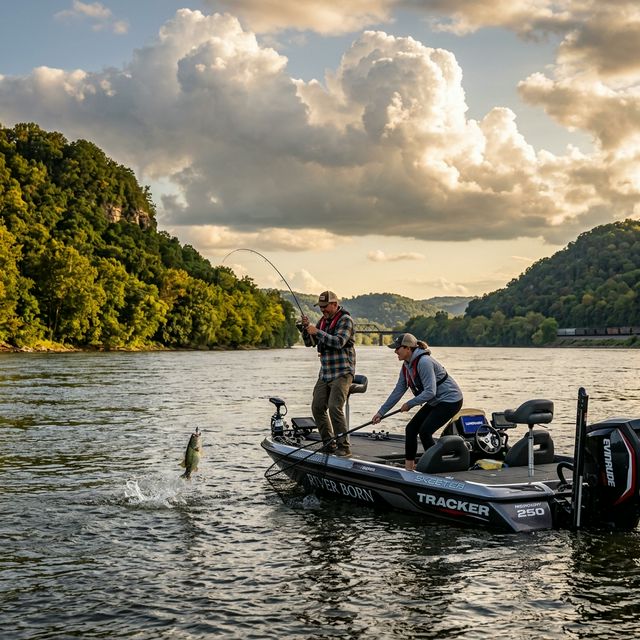
The Ohio River forms Indiana’s entire 381-mile southern border, flowing from Lawrenceburg in the southeast to Mount Vernon in the southwest. This is blue catfish country — Indiana’s Ohio River stretch produces flathead and blue catfish over 50 pounds regularly, with trophy fish exceeding 80 pounds. The tailwaters below Markland Dam, McAlpine Dam (Louisville), and Cannelton Dam are hotspots.

Plano Guide Series Rod Tube Case
Hard-shell rod tube protects rods during travel. Airline-approved for checked baggage.
As an Amazon Associate, we earn from qualifying purchases. Prices may vary.
Border Water Rules: Three Borders, Three Systems
Indiana shares water boundaries with four states and one Great Lake. Each boundary has its own rules:
Ohio River (Indiana-Kentucky Border)
- Kentucky owns the river to the low-water mark on the Indiana side — this is settled law from Handly’s Lessee v. Anthony (1820)
- Reciprocal agreement: Either Indiana or Kentucky license is valid on the main river for fishing purposes
- Tributaries are separate: Indiana creeks flowing into the Ohio require an Indiana license; Kentucky tributaries require a Kentucky license
- Bag limits: Follow the regulations of the state whose license you hold while on the main river
Lake Michigan (Indiana-Michigan-Illinois)
- Your Indiana license covers Indiana waters of Lake Michigan (roughly the southern 45 miles from the state line near Michigan City to the Illinois border)
- Michigan waters require a Michigan license; Illinois waters require an Illinois license
- The boundary lines run north-south from shore — if you’re trolling for salmon and drift east past the Michigan line, you need a Michigan license
- Indiana pier fishing: Michigan City’s public piers are on Indiana territory — your Indiana license covers you
Wabash River (Indiana-Illinois Border)
- The Wabash forms part of the Indiana-Illinois border in the southwest
- Each state’s license covers its own bank — if you’re standing on Indiana soil or anchored on the Indiana side, use your Indiana license
- The middle of the river can be ambiguous — carry the license of the state you launched from
Cost Comparison: Indiana vs. Midwest Neighbors (2026 Verified)
| State | Annual NR License | Daily License | Trout Add-On | Total (All-Access) |
|---|---|---|---|---|
| Indiana | $60.00 | $15.00 | $11.00 | $71.00 |
| Ohio | $76.96 | N/A | Included | $76.96 |
| Illinois | $31.50 | N/A | $6.50 | $38.00 |
| Michigan | $76.00 | $10.00 | Included | $76.00 |
| Kentucky | $58.14 | $15.86 | $10.57 | $68.71 |
| Wisconsin | $55.00 | $15.00 | $10.00 | $65.00 |
Indiana’s 2026 competitive position: Ohio’s non-resident license jumped from $50 to $76.96 in 2026 under House Bill 96 — making Indiana’s $60 annual significantly cheaper than both Ohio and Michigan for the first time. Illinois remains the cheapest at $38 total, but Indiana’s $15 daily license with included trout/salmon privileges is unmatched in the region. No other Great Lakes state lets you legally fish for steelhead for $15 a day.
Multi-State Trip Strategy
Indiana’s central location makes multi-state fishing trips practical. Some popular combinations:
| Trip | Licenses Needed | Total Cost | Best Season |
|---|---|---|---|
| Indiana reservoirs + Kentucky Lake (bass circuit) | IN annual ($60) + KY annual ($58.14) | $118.14 | March–June |
| Indiana + Michigan (steelhead/salmon run) | IN annual + trout stamp ($71) + MI annual ($76) | $147.00 | September–April |
| Ohio River catfish + Cincinnati day trip | IN 1-day ($15) + OH annual ($76.96) | $91.96 | June–September |
| Indiana + Wisconsin (walleye circuit) | IN annual ($60) + WI annual ($55) | $115.00 | April–October |

KastKing Blackhawk II Telescoping Rod
Portable telescoping design collapses to 17 inches. Perfect for travel fishing.
Affiliate link · Prices may vary
Exemptions: Who Fishes Free in Indiana
| Category | License Required? | Notes |
|---|---|---|
| Anglers under 18 (any state) | ❌ Free | No license needed; all regulations still apply |
| Indiana residents born before 4/1/1943 | ❌ Free | Must carry proof of age and Indiana residency |
| Free Fishing Days (residents only) | ❌ Free | 2025: June 7–8 & Sept. 27; 2026: June 6–7 & Sept. 26 |
| Non-resident seniors 65+ | ✅ Full NR price ($60) | No senior discount for non-residents |
| Disabled American Veterans (IN residents) | ✅ Discounted ($2.75/yr) | Residents only; requires VA documentation |
| Non-resident veterans | ✅ Full NR price ($60) | Veteran discounts are Indiana residents only |
For age-related details, see the Indiana age requirements guide. For veteran benefits, see the veterans & disabled guide.
Penalties for Fishing Without a License
Indiana Conservation Officers are active on major reservoirs, the Ohio River, and Lake Michigan tributaries during peak seasons. Enforcement is highest during:
- Opening weekend for walleye and bass (early May)
- Steelhead season on Trail Creek (November–March)
- Crappie spawning runs on southern reservoirs (April)
| Violation | Potential Penalty |
|---|---|
| Fishing without a license | Class C infraction — up to $500 fine |
| Fishing for trout/salmon without stamp | Class C infraction — up to $500 fine |
| Exceeding bag or size limits | Class B misdemeanor — up to $1,000 fine + possible equipment seizure |
| Taking fish from closed waters | Class B misdemeanor — up to $1,000 fine |
Enforcement reality: Indiana COs can check your license at any time — on the water, at boat ramps, at fish cleaning stations, and even at campgrounds. Having your license saved on your phone is fine, but make sure you have a charged phone. Officers can verify by name and date of birth through their system if your digital proof fails.
Five Mistakes Non-Residents Make in Indiana
Forgetting the Trout/Salmon Stamp — The annual and 7-day licenses do not include trout/salmon privileges. If you fish Trail Creek for steelhead or any designated trout stream without the $11 stamp, you’re in violation. The daily license ($15) is the only non-resident option that includes trout automatically — and that’s become a local secret among visiting anglers.
Treating the Ohio River as Indiana water — Kentucky legally owns the Ohio River to the low-water mark on Indiana’s bank. In practice, the reciprocal agreement means either license works on the main river, but the legal nuance matters if you step onto a Kentucky tributary or bank. When in doubt, carry both.
Assuming the license year is 365 days from purchase — Indiana’s license runs April 1 to March 31, period. Buy an annual on January 15, and it expires on March 31 — about 75 days later. For late-season trips (January–March), a 7-day or daily license is almost always the better financial decision.
Overlooking Lake Michigan access — Most non-residents think of Indiana as a reservoir and river state. But Indiana’s 45 miles of Lake Michigan shoreline in the Michigan City / Dunes area offer world-class steelhead and salmon fishing with a fraction of the pressure you’d face in Michigan or Wisconsin. Trail Creek steelhead fishing in January is genuinely uncrowded.
Skipping the southern reservoirs — Anglers driving through Indiana on I-65 to reach Kentucky Lake are missing Lake Monroe, Patoka Lake, and Cataract Lake — three reservoirs with exceptional bass fishing and dramatically lower pressure than Lake Cumberland or Dale Hollow. Brookville Reservoir smallmouth are among the best-kept secrets east of the Mississippi.
Source: Indiana Department of Natural Resources, verified March 2026. Prices reflect 2025–2026 license year (April 1, 2025 – March 31, 2026). A $3 technology fee applies to all online license purchases through GoOutdoorsIN.com.