 FishKillFlea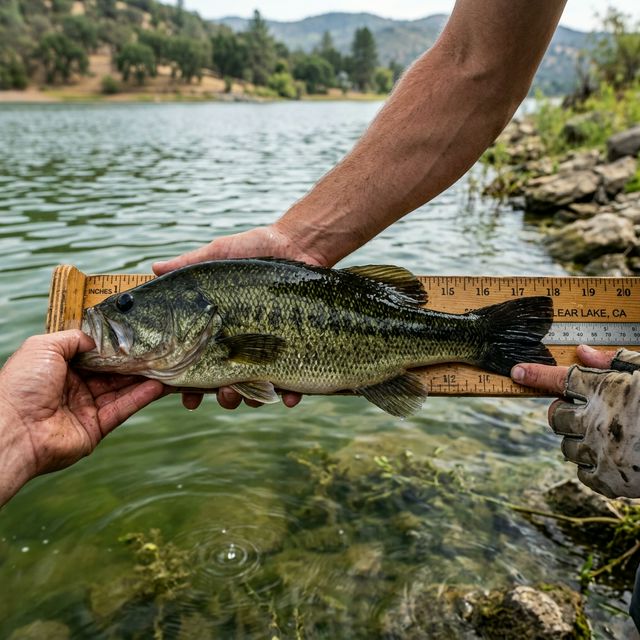
You’re anchored over a submerged brush pile at Clear Lake on a perfect May morning. The rod loads up, and after a solid fight you swing a chunky bass over the gunwale. It looks like a 3-pounder — definitely a keeper. You grab the tape measure: 11.75 inches. In most states, that’s an easy call — throw it back. But here’s the thing about California: Clear Lake has a 12-inch minimum on largemouth bass, and that fish is a quarter inch short. Meanwhile, at Don Pedro Reservoir 150 miles southeast, the minimum for the same species is 15 inches. And at Lake Berryessa next door, it’s back to 12 inches. Welcome to California fishing regulations — the most water-specific, species-complex rulebook west of the Mississippi.
California manages more distinct fisheries than any other state: high Sierra trout streams, Central Valley warmwater reservoirs, Delta tidal marshes, the Oregon-border steelhead rivers, 840 miles of Pacific coastline, and everything in between. The result is a regulatory system that can’t be summarized in a simple table — you need to know the rules for the specific body of water you’re fishing, not just the “statewide default.”
The General Framework: How California Regulations Work
California’s fishing regulations operate on a layered system:
- Statewide General Regulations — Default bag limits, size limits, and season dates that apply unless overridden
- Special Regulations — Water-specific rules that override the statewide defaults (published alphabetically in the CDFW regulations booklet, starting around page 65)
- Species-Specific Regulations — Rules that apply to a specific species everywhere
The critical habit: Before fishing any water in California, check whether it appears in the Special Regulations section of the current CDFW Freshwater Sport Fishing Regulations booklet. If it does, those rules override everything else.

Crab & Lobster Measurer
Stainless steel gauge ensures your catch meets minimum size regulations.
Affiliate link · Prices may vary
Major Freshwater Species: Bag Limits and Size Limits
Black Bass (Largemouth, Smallmouth, Spotted)
| Regulation | Statewide Default |
|---|---|
| Daily Bag Limit | 5 (all black bass species combined) |
| Minimum Size | 12 inches total length |
| Season | Year-round (most waters) |
| Possession Limit | 10 |
But: Many premier bass waters have stricter rules:
| Water | Minimum Size | Notes |
|---|---|---|
| Clear Lake (Lake County) | 12” | Statewide default applies |
| Don Pedro Reservoir | 15” | Special regulation |
| Lake Oroville | 12” | Statewide default applies |
| Castaic Lake | Varies by species | Black bass amendment for 2025 |
| San Vicente Reservoir | 15” | Special regulation |
| Lake Perris | 12” | Statewide default applies |
Trout (Rainbow, Brown, Brook, Golden)
| Regulation | Statewide Default |
|---|---|
| Daily Bag Limit | 5 trout |
| Possession Limit | 10 trout |
| Minimum Size | None (most waters) |
| Season | Last Saturday in April – November 15 (many waters), year-round on others |
| Gear Restrictions | None statewide (varies by water) |
California has hundreds of trout waters with special regulations. The most common special rules:
- Catch-and-release only — No trout may be kept (e.g., Hot Creek, upper McCloud River)
- Barbless hooks only — No barbed hooks allowed
- Artificial lures/flies only — No live bait, no prepared bait (e.g., PowerBait)
- Reduced bag limits — Often 2 trout per day instead of 5
- Trophy water minimums — 18-inch minimum sizes on certain waters
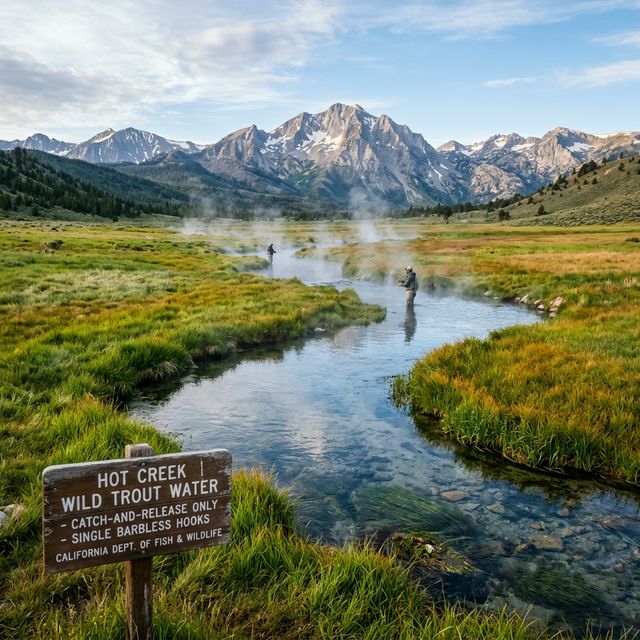
The Golden Trout: California’s state freshwater fish (Oncorhynchus mykiss aguabonita) is found only in high Sierra streams above 8,000 feet. The bag limit on golden trout waters is typically 5 per day, but many of these high-altitude streams are catch-and-release or restricted to barbless flies only. Check the specific drainage before planning a golden trout trip.
Striped Bass
| Regulation | Details |
|---|---|
| Inland Waters (Delta, Rivers) | 2 per day, 18” minimum |
| Ocean/Bay (north of Pt Conception) | 2 per day, 18” minimum |
| Ocean (south of Pt Conception) | 2 per day, no minimum size |
| Special Waters (certain reservoirs) | Up to 10 per day, no minimum |
The uniquely California situation: Some inland lakes (New Hogan, San Antonio, Santa Margarita) allow a 10-fish bag limit with no size restriction on striped bass. This is because those populations are stocked as put-and-take fisheries.
Catfish (Channel, Blue, Flathead, White)
| Regulation | Statewide Default |
|---|---|
| Daily Bag/Possession | No limit on most species |
| Minimum Size | None |
| Season | Year-round |
California is surprisingly generous with catfish regulations. Most warmwater reservoirs and the Delta have no catfish bag limits.
White Sturgeon (Catch-and-Release Only)
In response to population concerns, California enacted strict emergency protections for white sturgeon.
| Regulation | 2025–2026 Season Rules |
|---|---|
| Daily Bag Limit | 0 (Strictly Catch-and-Release) |
| Season | October 1 – June 30 |
| Gear Restriction | One single barbless hook |
| Handling Rule | Fish > 60 inches fork length CANNOT be removed from the water |
| Reporting | Free Sturgeon Report Card required for all anglers |
Note: Green sturgeon are a federally threatened species. It is illegal to target them, and any incidentally caught green sturgeon must be released immediately without leaving the water.

Rapala Stainless Steel Fishing Pliers
Stainless steel construction. Side cutter and split ring tool. Corrosion resistant.
As an Amazon Associate, we earn from qualifying purchases. Prices may vary.
Ocean Fishing: Key Species Regulations
| Species | Daily Bag Limit | Minimum Size | Season |
|---|---|---|---|
| California Halibut (south of Pt Sur) | 5 | 22” | Year-round |
| California Halibut (north of Pt Sur) | 2 | 22” | Year-round |
| Lingcod | 2 | 22” | Open seasonally (check current dates) |
| Rockfish (general) | 10 (combined) | Varies by species | Varies by zone |
| Kelp Bass | 5 | 14” | Year-round |
| White Seabass | 3 | 28” | Year-round |
| Yellowtail | 10 | 24” (south) | Year-round |
For complete ocean fishing regulations, see the California Saltwater License Guide.

Plano 3700 Tackle Storage Box
Adjustable dividers. Durable construction. Perfect for organizing lures and tackle.
Affiliate link · Prices may vary
Prohibited Gear and Methods
California bans several fishing methods that are legal in other states:
| Prohibited Method | Where |
|---|---|
| Snagging/foul hooking | Statewide — illegal for all species |
| Bow fishing (for game fish) | Illegal for trout, salmon, bass |
| Gill nets (recreational) | Statewide ban |
| Explosives/chemicals | Statewide ban |
| Chumming (ocean) | Varies — legal in some areas, banned in others |
| Treble hooks on certain waters | Banned on many Special Regulation trout streams |
The Barbed vs. Barbless Hook Rule
- Statewide default: Barbed hooks are legal
- Special Regulation waters: Many require barbless hooks only
- All steelhead waters: Barbless hooks required when using artificial lures/flies
- Practical advice: Pinch your barbs before fishing any new water. You’ll avoid accidental violations and improve your catch-and-release survival rates.
Special Regulation Waters: California’s Unique System
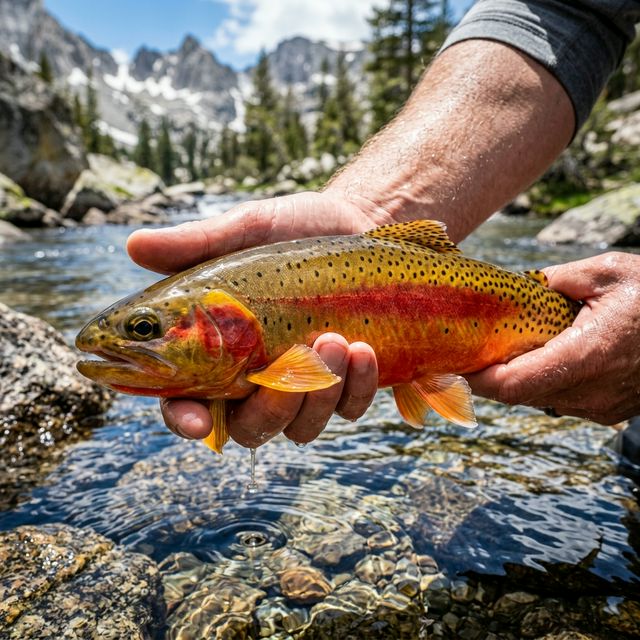
No other state has as many water-specific regulations as California. The CDFW maintains an alphabetical listing of every stream, river, lake, and reservoir with rules that differ from the statewide defaults. This listing runs dozens of pages in the annual regulations booklet.
Why Special Regulations Exist
- Wild trout protection — Many sierra streams contain genetically pure wild trout populations that can’t sustain harvest fishing
- Trophy fishery management — Size minimums maintain quality bass and trout fisheries
- Endangered species — Some waters have restrictions to protect threatened species (steelhead, chinook salmon, delta smelt)
- Dam tailwater management — Specific rules below major dams for flow-dependent species
- Marine protected areas — No-take zones along the coast
How to Check Special Regulations
- Download the current year’s CDFW Freshwater Sport Fishing Regulations booklet (free PDF)
- Search for your specific water by name (alphabetical listing)
- If your water appears, those rules override everything else
- If your water does NOT appear, statewide general regulations apply
2026 Regulatory Changes to Watch
- Striped bass: The Fish and Game Commission considered but did not implement a maximum size limit on striped bass in 2025. The debate continues in 2026 — check the CDFW website for any interim regulation changes
- Sand bass (Southern California): Daily bag reduced from 5 to 4 fish in recent years, with further restrictions under discussion
- Castaic Lake black bass: Amended minimum size limits took effect in 2025
For the latest regulatory updates, check the CDFW Regulation Changes page.
Penalties for Violations
California fishing violations are taken seriously. Common citations and their consequences:
| Violation | Typical Fine |
|---|---|
| Fishing without a license | $100–$1,000+ |
| Over-limit (possession over bag limit) | $250–$2,000 per fish |
| Undersized fish | $100–$1,000 per fish |
| Fishing in a closed area/season | $250–$2,000 |
| Using prohibited gear | $100–$500 |
| Fishing without required report card | $100–$250 |
| Removing oversize sturgeon from water | Up to $1,000 |
Repeat or egregious violations can result in misdemeanor charges, equipment confiscation, and loss of fishing privileges. CDFW wardens are active across the state — particularly on opening day trout streams, steelhead rivers, and popular delta spots.
For license types and pricing, see the non-resident guide. For details on saltwater fishing, see the saltwater guide. For age-specific exemptions, see the age requirements guide.