 FishKillFlea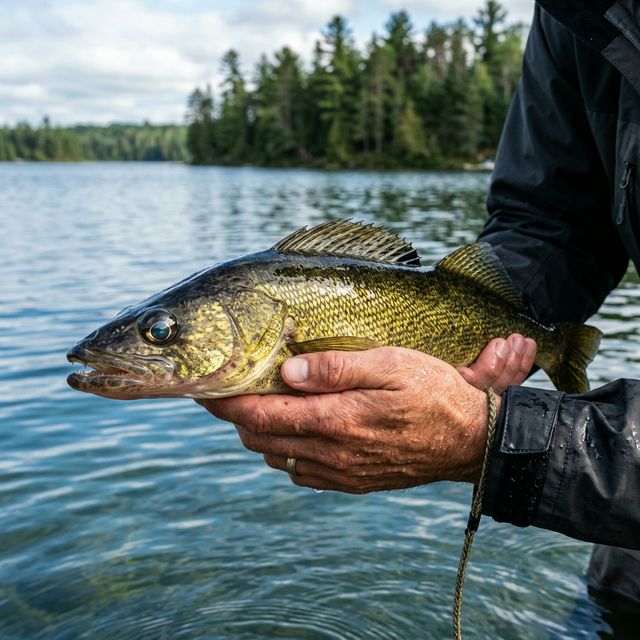
You’ve been working a weedline on Green Lake for two hours when the rod doubles over and the drag screams. It’s a walleye — a good one, maybe 22 inches. You slide the net under it, admire the golden flanks, and reach for your stringer. Then you remember your buddy mentioning something about a “slot limit” on this lake. You pull out your phone, pull up the specific regulations for Green Lake, and there it is: walleye between 20 and 24 inches must be released, and only one fish over 24 inches may be kept per day. That beautiful 22-incher goes back — and you just avoided a citation that could have cost you more than your entire fishing trip.
Wisconsin’s fishing regulations are comprehensive, water-specific, and unforgiving of ignorance. With 15,000 lakes, 84,000 miles of streams, and 1,100 miles of Great Lakes shoreline, the state manages one of the most diverse fisheries in North America — and that diversity requires equally diverse regulations. The general statewide rules provide a baseline, but hundreds of individual water bodies have specific exceptions for bag limits, size limits, seasons, and allowed methods. The number one rule for fishing in Wisconsin: always check the regulations for the specific water you plan to fish, not just the statewide defaults.
General Inland Fishing Season
The general inland fishing season for the 2025–2026 year:
| Category | Season | Notes |
|---|---|---|
| General inland opener | May 3, 2025 – March 1, 2026 | Panfish, walleye/sauger, northern pike, catfish |
| Bass harvest (Southern Zone) | May 3, 2025 – March 1, 2026 | LMB and SMB combined |
| Bass harvest (Northern Zone — LMB) | May 3, 2025 – March 1, 2026 | Largemouth bass |
| Bass harvest (Northern Zone — SMB) | June 21, 2025 – March 1, 2026 | Delayed smallmouth due to spawning |
| Bass catch-and-release | Year-round | Most inland waters |
| Muskellunge | May 24, 2025 – December 31, 2025 | 2026 season: May 2 – Dec 31 |
| Early trout (catch-and-release) | January 4, 2025 – May 2, 2025 | Inland trout streams |
| General inland trout | May 3, 2025 – October 15, 2025 | Streams, springs, spring ponds |
Source: Wisconsin DNR Fishing Regulations, verified March 2026.
Walleye and Sauger Regulations
Statewide Default Rules
| Parameter | Regulation |
|---|---|
| Daily bag limit | 3 walleye/sauger combined (inland) |
| Total daily bag (all waters fished) | 5 walleye/sauger |
| Possession limit | 10 walleye/sauger |
| Minimum length | 15 inches (general) |
| Season | May 3, 2025 – March 1, 2026 |
Water-Specific Variations (Common Examples)
Many of Wisconsin’s most popular walleye waters have regulations that differ significantly from the statewide default:
| Water | Bag Limit | Size Restriction | Special Rule |
|---|---|---|---|
| Lake Winnebago system | 3/day | 15” minimum | Standard rules, highest walleye production in WI |
| Green Lake | 3/day | 20-24” protected slot, 1 over 24” only | Slot limit protects spawning-age fish |
| Big Green Lake | 1/day | 18” minimum | More restrictive than statewide |
| Certain Northwoods lakes | Varies | 18” minimum, slot limits | Check each lake individually |
| Mississippi River | 5/day | 15” minimum | Interstate compact rules |
| St. Croix River | 3/day | 15” minimum | Reciprocal agreement with MN |
The slot limit trap: Many Wisconsin walleye waters use a protected slot — typically 20-24 inches — where fish cannot be kept. If you’re used to fishing states with simple minimum-length rules, check the Wisconsin DNR FishWI app or the printed regulation book for your specific water. A $200+ citation for keeping a slot-protected fish can ruin a trip.

Crab & Lobster Measurer
Stainless steel gauge ensures your catch meets minimum size regulations.
Affiliate link · Prices may vary
Muskellunge (Musky) Regulations
Wisconsin is the Musky Capital of the World, and the regulations reflect the state’s commitment to protecting this iconic species.
Statewide Default
| Parameter | Regulation |
|---|---|
| Daily bag limit | 1 musky |
| Minimum length | 40 inches |
| Season | Late May – December 31 |
Premium Musky Waters (50-Inch Minimum)
These waters have an elevated 50-inch minimum length to protect trophy genetics:
- Chippewa Flowage
- Lac Court Oreilles
- Grindstone Lake
- Lake Wissota
- Pelican Lake (Oneida County)
- Willow Flowage
- Lake Geneva
- Wisconsin River: Lake DuBay Dam to Merrill
- Green Bay and Lake Michigan waters north of Waldo Blvd (Manitowoc)
- Wisconsin-Michigan boundary waters (effective June 1, 2025)
Catch-and-Release Musky Culture
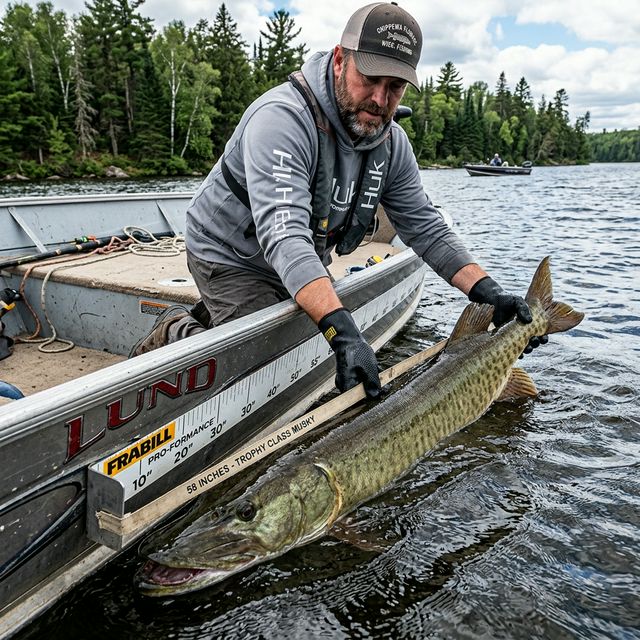
While Wisconsin allows 1 musky per day at legal length, the overwhelming majority of Wisconsin musky anglers practice voluntary catch-and-release. The musky fishing culture in Wisconsin is built around the idea of photographing, measuring, and releasing trophy fish. Guide services, lodge owners, and tournament organizations actively promote this ethic — and the result is a fishery with more 50-inch-plus fish than any other state.
Bass Regulations
Northern vs. Southern Zone
Wisconsin splits the state into two zones for bass management, with the dividing line running roughly along Highway 10:
| Zone | Species | Season | Bag Limit | Minimum Size |
|---|---|---|---|---|
| Southern | LMB + SMB | May 3 – Mar 1 | 5 combined | 14 inches |
| Northern | Largemouth | May 3 – Mar 1 | 5 combined | 14 inches |
| Northern | Smallmouth | June 21 – Mar 1 | 5 combined | 14 inches |
Catch-and-release for both bass species is permitted year-round on most inland waters, including during the closed harvest season for Northern Zone smallmouth.
Why the Northern Zone smallmouth delay: Smallmouth bass in northern Wisconsin spawn later than their southern counterparts due to colder water temperatures. The June 21 opening protects spawning nests. Catch-and-release is allowed year-round, but if you do hook a nesting smallmouth during the closed harvest period, release it immediately at the point of capture.

Rapala Stainless Steel Fishing Pliers
Stainless steel construction. Side cutter and split ring tool. Corrosion resistant.
As an Amazon Associate, we earn from qualifying purchases. Prices may vary.
Trout Regulations
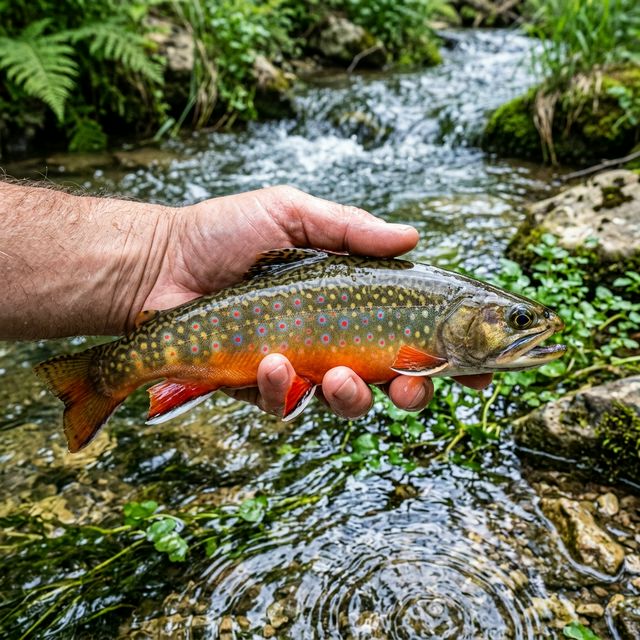
Wisconsin’s trout regulations are the most complex part of the state’s fishing management system. With over 13,000 miles of classified trout water — more than any state east of the Rocky Mountains — the DNR manages individual streams and lakes with tailored regulations.
General Inland Trout Rules
| Parameter | Regulation |
|---|---|
| General season | May 3 – October 15 (streams); check lakes individually |
| Early catch-and-release | January 4 – May 2 (2025) |
| Daily bag limit | 5 trout/salmon combined |
| Sub-limits | Max 2 brown trout over 15”; max 1 rainbow trout |
| Minimum sizes | Brook trout: 8”; Brown trout: 10”; Salmon: 12”; Rainbow: 26” |
Special Regulation Categories
Many Wisconsin trout streams fall into special regulation categories that override the general rules:
| Category | Typical Rules | Purpose |
|---|---|---|
| Category 1 (Blue-Ribbon) | Artificial lures only, catch-and-release or 1-fish limit | Protect self-sustaining wild trout populations |
| Category 2 | Reduced bag limits, often size minimums | Balance between harvest and conservation |
| Category 3 | Standard rules | Put-and-take stocked waters |
| Category 5 | Trophy management, 1-fish limit, large minimum | Create trophy brown trout fisheries |
The 26-inch rainbow trout minimum: Wisconsin protects wild steelhead (rainbow trout) populations in its inland streams with an extremely restrictive 26-inch minimum. This effectively makes inland rainbow trout a catch-and-release fishery — very few inland rainbows reach that size. This rule reflects the state’s commitment to protecting genetics from Great Lakes steelhead that naturally reproduce in tributaries.
Great Lakes Trout and Salmon
Lake Michigan and Lake Superior trout/salmon regulations are separate from inland trout rules:
- Separate Great Lakes Trout/Salmon Stamp required ($10.00)
- Daily limits, season dates, and size limits vary by species and water zone
- Chinook salmon, coho salmon, steelhead, lake trout, and brown trout are the primary target species
- Charter boat captains are responsible for knowing current regulations by zone
Prohibited Methods and Equipment
Statewide Prohibitions
- Snagging/snatching: Illegal to intentionally hook fish anywhere other than the mouth (except for sturgeon spearing during the designated season)
- Multiple lines: Only 3 hooks, baits, or lures may be used per angler (including ice fishing)
- Setlines and trotlines: Prohibited in all inland waters
- Explosives, electricity, poison: Felony offenses
- Lead sinkers and jigs: Restrictions on some state-owned properties and certain trophy trout waters
Bait Restrictions
- Live bait transportation: Anglers may not transport live fish between water bodies — this is Wisconsin’s primary defense against invasive species spread
- Minnow regulations: Only legally obtained bait minnows from licensed dealers may be used; transporting minnows between counties has restrictions
- Artificial-only waters: Many Category 1 trout streams prohibit all live bait, including worms and minnows

Plano 3700 Tackle Storage Box
Adjustable dividers. Durable construction. Perfect for organizing lures and tackle.
Affiliate link · Prices may vary
2026 Season Changes to Watch
Key regulation changes for the 2026-2027 season (opening May 2, 2026):
- General inland season: May 2, 2026 – March 7, 2027 (extended end date vs. 2025 season’s March 1)
- Musky season: Statewide May 2 – December 31, 2026 — this is a major change. The previous Northern Zone / Southern Zone split openers are eliminated. All inland musky waters now open on the same day for the first time
- Northern Zone smallmouth bass: Harvest opens June 20, 2026 (adjusted from June 21 in 2025)
- 50-inch musky minimum: Now applies to Wisconsin-Michigan boundary waters (effective June 1, 2025, continuing through 2026)
- Early trout catch-and-release: Check WDNR for exact 2026 dates (typically early January through late April/early May)
- Check WDNR regulation updates for the latest county and water-body-specific changes
The musky statewide opener: The elimination of the Northern/Southern zone split for musky is the biggest structural change in 2026. Previously, Southern Zone musky opened on the general opener in early May while Northern Zone musky opened about 3 weeks later. Starting 2026, all musky waters open May 2 statewide — simplifying planning for anglers who fish across zones.
Wisconsin’s Special Fisheries
Lake Sturgeon
Lake Winnebago supports the last self-sustaining lake sturgeon population in the world. The annual sturgeon spearing season (typically February) is managed through a permit lottery system:
- Spearing season only — no hook-and-line harvest during most of the year
- Hook-and-line catch-and-release is permitted during open season
- Sturgeon must be registered and tagged within specific timeframes
- The population is actively monitored through the world’s largest sturgeon tagging program
Panfish
Wisconsin’s panfish (bluegill, crappie, perch, pumpkinseed) are subject to daily bag limits that vary by water:
| Species | Statewide Default Bag | Common Variations |
|---|---|---|
| Panfish (combined) | 25/day total | Many lakes: 10-15/day |
| Yellow perch | Included in panfish total | Lake Winnebago: 25/day; some lakes: 10/day |
| Crappie | Included in panfish total | Some lakes: 5-10/day |
Source: Wisconsin DNR Fishing Regulations, verified March 2026.
Northern Pike
| Parameter | Regulation |
|---|---|
| Statewide daily bag | 5 northern pike |
| Minimum length | 24 inches (general) |
| Common exceptions | Some Northwoods lakes: 26” or 28” minimum; some waters: slot limits |
Northern pike management philosophy: Wisconsin uses size restrictions to shift the pike population toward larger fish. The 24-inch minimum protects younger fish from harvest, concentrating angling pressure on mature pike. On trophy waters, the 26-inch or 28-inch minimum further protects the fish that are approaching true trophy size.
Catfish (Channel and Flathead)
| Parameter | Regulation |
|---|---|
| Channel catfish daily bag | 10/day (most inland waters) |
| Flathead catfish daily bag | 1/day |
| Flathead minimum length | 24 inches |
| Best waters | Mississippi River, Wisconsin River, Fox River system |
How to Look Up Regulations for a Specific Water Body
Wisconsin’s water-body-specific regulations are the reason generic “Wisconsin fishing rules” summaries can get you in trouble. Here’s how to find the exact rules for where you’re going:
Method 1: FishWI App (Recommended)
The WDNR’s Fish Wisconsin Interactive app is the most reliable way to check specific regulations:
- Download from the App Store or Google Play (search “Fish Wisconsin”)
- Search by lake name, river name, or county
- The app shows current season dates, bag limits, size limits, and special regulations for each water body
- Also includes: fish stocking reports, boat launch locations, and species-specific tips
- Works offline after initial download — essential for Northwoods areas without cell service
Method 2: WDNR Website
- Go to dnr.wisconsin.gov/topic/fishing/regulations
- Click on the county where your water body is located
- Navigate to the specific water by name
- Review any special regulations that override statewide defaults
Method 3: Printed Regulation Booklet
Available free at authorized license agents, DNR service centers, and many bait shops. The printed booklet covers county-by-county regulations and is a reliable backup when digital sources aren’t available.
Regional Regulation Complexity: Where It Gets Tricky
Winnebago System (Fox Valley)
The Lake Winnebago system — including Winnebago, Butte des Morts, Winneconne, and Poygan — has its own regulatory micro-ecosystem:
- Walleye use statewide 3/day defaults, but sturgeon spearing adds unique regulations
- The white bass run (April-May) draws massive crowds with minimal restrictions (no minimum size, generous bag limits)
- Yellow perch harvest is a cultural tradition with a 25/day limit, but anglers routinely self-limit to protect the fishery
Door County / Green Bay
- Smallmouth bass regulations differ between Green Bay waters and inland lakes
- Great Lakes stamps are required for fishing the Bay but not inland Door County lakes
- Cherry salmon and brown trout in tributaries have specific season windows
Mississippi River Border Waters
- Interstate compact rules govern the Mississippi — different from inland WI regulations
- Walleye: 5/day (vs. 3/day inland)
- Either Wisconsin or Minnesota/Iowa license valid on border waters (reciprocal)
- Paddlefish regulations prohibit targeted harvest
Driftless Area Trout Streams
- Regulations change stream by stream — two adjacent streams in the same county may have completely different rules
- Category 1 (artificial only, catch-and-release) and Category 3 (standard rules, stocked) streams can be within walking distance of each other
- The printed trout regulation guide or FishWI app is essential — there is no way to memorize the variations