 FishKillFlea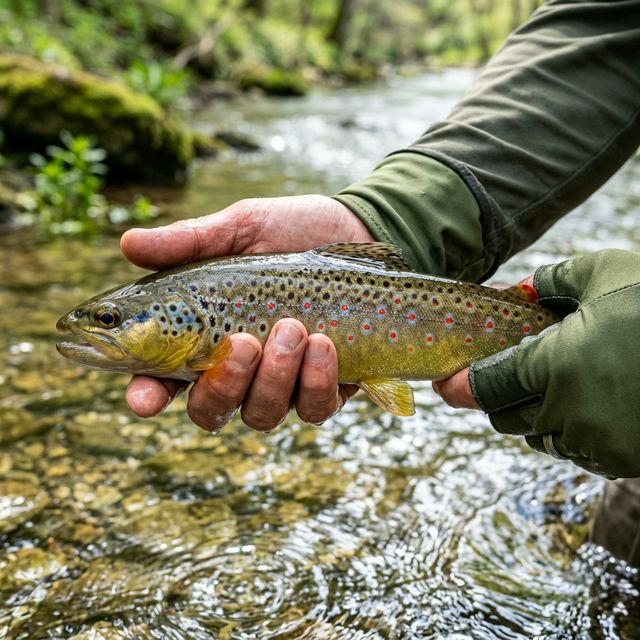
You’ve measured the trout three times. Fourteen inches, heel of the tail to the tip of the jaw — at least that’s what it looks like with the fish squirming in your wet hands on the bank of Penns Creek. The regulation says 7 inches minimum, so you’re clear on size. But you glance at the stream sign bolted to the bridge abutment and your stomach drops: “Catch and Release — Fly Fishing Only.” The wild brown trout in your hands was caught on a Mepps spinner, and keeping any trout in this stretch is illegal regardless of size. You release the fish and make a mental note that Pennsylvania’s fishing regulations aren’t just about bag limits and sizes — they’re about where you’re fishing and how.
Pennsylvania’s regulation system is more layered than any other state in the Northeast. The Commonwealth manages 86,000 miles of streams across wildly different ecosystems — from the warm, slow Susquehanna to the cold limestone spring creeks of the Cumberland Valley to the Great Lakes tributaries of Erie County. Each water type has its own season structure, gear restrictions, and harvest rules. Understanding the basics prevents citations; understanding the details puts you on better fish.
Season Structure: Pennsylvania’s Calendar-Based System
Unlike states that run seasons on a 365-day rolling basis, Pennsylvania uses fixed calendar dates for its major fisheries seasons.
Trout and Salmon
| Season | Dates | Daily Limit | Notes |
|---|---|---|---|
| Mentored Youth Trout Day | First Saturday in April | 2 trout (youth only) | Youth under 16 with licensed adult mentor |
| Regular Trout Season Opener | Second Saturday in April | 5 trout/salmon combined | All methods allowed unless restricted |
| Regular Season | Opens – Labor Day | 5 trout/salmon combined | Standard regulations |
| Extended Season | Day after Labor Day – last day of February | 3 trout/salmon combined | Designated extended season waters only |
The Opening Day phenomenon: Pennsylvania’s trout opener is one of the biggest outdoor events in the eastern United States. PFBC stocks over 3.2 million adult trout annually — the largest in-season stocking program in the country. Opening Saturday draws hundreds of thousands of anglers to stocked waters simultaneously. If you prefer solitude, the first two weeks after opener have the heaviest pressure; by mid-May, waters clear significantly.
Bass (Largemouth, Smallmouth, and Spotted)
Pennsylvania’s bass regulations are more nuanced than most states, with seasonal size limit changes that many anglers miss:
| Season | Dates | Daily Limit | Minimum Size | Methods |
|---|---|---|---|---|
| No-Harvest Period | April 12 – June 13 | 0 (catch and release only) | — | Artificial lures and flies only |
| Summer Harvest | June 14 – September 30 | 6 fish combined | 12 inches | All methods |
| Fall/Winter Harvest | October 1 – April 11 | 4 fish combined | 15 inches | All methods |
Why the no-harvest period matters: Pennsylvania closes bass harvest during the spawn to protect nesting fish. During this period, you can fish for bass using artificial lures only, but you must immediately release all bass caught. Using live bait while targeting bass during the no-harvest period is a violation. Additionally, repeatedly casting into a clearly visible bass spawning nest is prohibited — an enforcement detail most guides overlook.
The seasonal size shift: Many anglers don’t realize that the minimum size for largemouth bass increases from 12 to 15 inches on October 1, and the daily limit drops from 6 to 4. This protects larger bass entering fall feeding patterns. Check the calendar carefully when fishing in late September/early October.
Walleye and Sauger
| Season | Dates | Daily Limit | Minimum Size |
|---|---|---|---|
| Open Season | Jan 1 – March 14, then first Saturday in May – Dec 31 | 6 walleye, 6 sauger | Walleye: 15 inches, Sauger: 12 inches |
| Closed Season | March 15 – first Saturday in May | Catch and release only | — |
Important distinction: Walleye and sauger have different minimum sizes — 15 inches for walleye and 12 inches for sauger. Many anglers assume they share the same limit because the daily creel is combined. Know how to distinguish these species before keeping any.

Crab & Lobster Measurer
Stainless steel gauge ensures your catch meets minimum size regulations.
Affiliate link · Prices may vary
Bag Limits and Size Limits: Key Species
Statewide Regulations (Commonwealth Inland Waters)
| Species | Daily Creel Limit | Minimum Size | Season |
|---|---|---|---|
| Trout/Salmon (regular) | 5 combined | 7 inches | April opener – Labor Day |
| Trout/Salmon (extended) | 3 combined | 7 inches | After Labor Day – end of Feb |
| Largemouth Bass (summer) | 6 combined | 12 inches | June 14 – Sept 30 |
| Largemouth Bass (fall/winter) | 4 combined | 15 inches | Oct 1 – April 11 |
| Smallmouth Bass (summer) | 6 combined | 12 inches | June 14 – Sept 30 |
| Smallmouth Bass (fall/winter) | 4 combined | 15 inches | Oct 1 – April 11 |
| Walleye | 6 | 15 inches | Jan–March 14, May opener–Dec 31 |
| Sauger | 6 | 12 inches | Jan–March 14, May opener–Dec 31 |
| Muskellunge | 1 | 40 inches | First Sat after June 11 – mid-April |
| Northern Pike | 2 | 24 inches | Year-round |
| Chain Pickerel | 2 | 15 inches | Year-round |
| Panfish (bluegill, crappie, perch) | 50 combined | No minimum | Year-round |
| Channel Catfish | 5 | 12 inches | Year-round |
| Carp | 50 | No minimum | Year-round |
Source: PFBC Seasons, Sizes and Creel Limits, verified March 2026.
Lake Erie Regulations (Different from Inland)
Lake Erie operates under its own regulation set, often more liberal than inland waters due to the Great Lakes management framework:
| Species | Daily Creel Limit | Minimum Size |
|---|---|---|
| Walleye | 6 | 15 inches |
| Yellow Perch | 30 | No minimum |
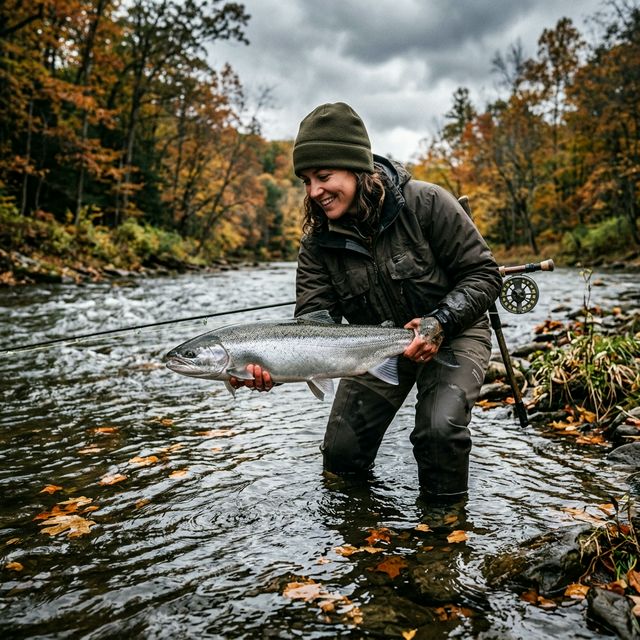
| Steelhead Trout | 3 | 15 inches (9 inches in tributaries) |
| Smallmouth Bass | 4 | 15 inches |
| Largemouth Bass | 6 | 12 inches |
Lake Erie Permit required: All Lake Erie fishing requires a separate Lake Erie Permit ($9.97) in addition to your base fishing license. Steelhead in tributaries also requires the Trout/Salmon Permit ($14.97). The Combination Permit ($20.97) covers both.

Rapala Stainless Steel Fishing Pliers
Stainless steel construction. Side cutter and split ring tool. Corrosion resistant.
As an Amazon Associate, we earn from qualifying purchases. Prices may vary.
Special Regulation Areas: Pennsylvania’s Trophy System
Pennsylvania designates dozens of special regulation areas that override statewide rules. Understanding these categories before you fish is critical — they’re the #1 source of unintentional violations.
Catch and Release — Fly Fishing Only (CRFFO)
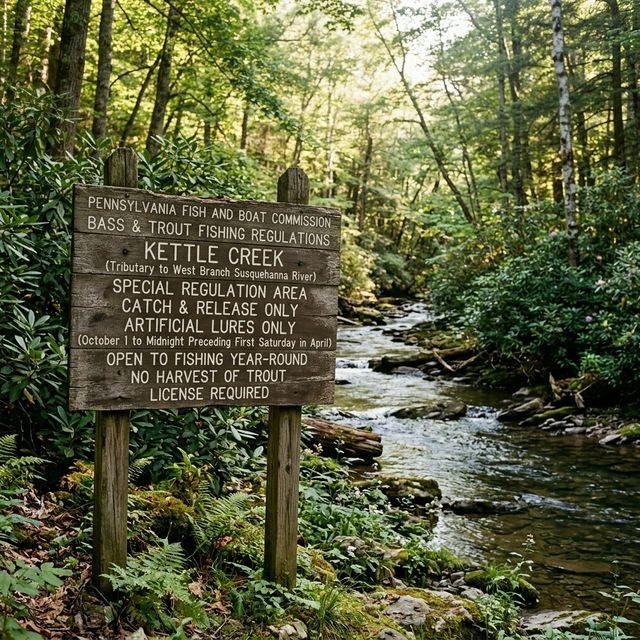
The most restrictive designation. No harvest allowed, artificial flies only (no spinning gear, no bait). These are typically the state’s premier wild trout streams:
- Penns Creek (delayed harvest section, Mifflin/Union County)
- Big Spring Creek (Cumberland County)
- Spring Creek (Centre County, selected reaches)
- Falling Spring Run (Franklin County)
Delayed Harvest Artificial Lures Only (DHALO)
During the delayed harvest period (typically September through the June opener), all fish must be released. Artificial lures and flies only — no bait. After the season opens, standard harvest rules apply. This system allows trout to survive through winter and provide catch-and-release fishing during low-pressure months.
Trophy Trout Waters
Selected waters with special size and creel limits designed to produce larger fish. Typically require a 14-inch or 18-inch minimum with reduced daily limits (usually 2 fish).
Big Bass
Certain waters designated for enhanced bass management. Largemouth minimum increased from 12 inches to 15 inches on these waters. Check the PFBC’s list before fishing any unfamiliar bass lake.

Plano 3700 Tackle Storage Box
Adjustable dividers. Durable construction. Perfect for organizing lures and tackle.
Affiliate link · Prices may vary
Prohibited Methods and Gear
Pennsylvania maintains straightforward gear restrictions compared to western states:
Prohibited Statewide
- Explosives, poisons, or electrical devices — felony offense
- Snagging — illegal for all game fish species
- Setlines, trotlines, and jug lines — prohibited in most waters
- Firearms to take fish — prohibited
- More than 3 rods per angler — maximum of 3 rods/lines per person at a time
Method-Specific Rules
- Live bait: Allowed in most waters, but prohibited during bass closed season for bass anglers and in CRFFO/DHALO waters
- Treble hooks: Allowed statewide, but banned in some special regulation areas
- Lead tackle: No statewide ban currently, but PFBC encourages non-toxic alternatives
- Chumming: Legal with most baits; however, using fish parts as chum may be restricted in certain waters
Boat and Watercraft Regulations
- All motorized boats used on Pennsylvania waters must be registered with PFBC
- Unpowered boats (canoes, kayaks, paddleboards) need either a PFBC launch permit or boat registration to use PFBC and state park access areas
- Launch permit fees: $12.00 (1-year) or $22.00 (2-year) — same for residents and non-residents
- Life jackets required for all children under 12 on boats (all sizes must be on board for every occupant on motorized boats)
- No wake restrictions on many smaller state park lakes
2026 Season Key Dates
For anglers planning their 2026 calendar, here are the verified dates:
| Event | 2026 Date | Notes |
|---|---|---|
| Mentored Youth Trout Day | Saturday, March 28 | 8 AM – 7:30 PM, youth under 16 with licensed mentor |
| Statewide Trout Opener | Saturday, April 4 | All approved trout waters |
| Bass No-Harvest Begins | April 11 (approx.) | Catch-and-release, artificial lures only |
| Bass Harvest Opens | Mid-June (approx.) | 12-inch minimum, 6-fish limit |
| Fish-for-Free Days (2025) | May 25 & July 4 | No license or permits needed; 2026 dates TBA |
| Extended Trout Season Begins | Day after Labor Day | 3-fish daily limit |
| Bass Fall Size Change | October 1 | 15-inch minimum, 4-fish limit |
| Walleye Season Closes | March 14 | Reopens first Saturday in May |
2026 Stocking: PFBC plans to stock approximately 3.2 million adult trout in 684 streams and 130 lakes, including ~2.3 million Rainbow Trout, 698,000 Brown Trout, and 128,000 Brook Trout. Approximately 72,000 trophy brood fish (14-20 inches) and 18,000 golden Rainbow Trout will also be stocked. Stocking operations begin the week of February 16, 2026.
Stay current: PFBC publishes a comprehensive annual Summary of Fishing Regulations and Laws booklet — available free at any license agent or downloadable as a PDF from pa.gov/pfbc. This booklet is the definitive source for current season dates, special regulation area boundaries, and any mid-season emergency changes.
Penalties for Violations
Pennsylvania’s penalty system uses a tiered summary offense structure. The severity depends on the offense degree:
| Offense Degree | Base Fine | Imprisonment |
|---|---|---|
| First-degree summary offense | Up to $250 | Up to 90 days |
| Second-degree summary offense | Up to $150 | Up to 20 days |
| Third-degree summary offense | $75 | — |
| Fourth-degree summary offense | $25 | — |
Additional Penalties Beyond Base Fines
- Per-fish penalty: $20–$50 for each fish taken, caught, killed, possessed, or sold in violation (fish immediately released unharmed are not counted)
- License/permit surcharge: An additional penalty equal to 2× the cost of the required license/permit (e.g., fishing without a $27.97 resident license adds $55.94 in surcharges)
- Repeat offender surcharge: Additional $200 fine if all offenses within 12 months were summary offenses; potential license suspension for up to 2 years for repeated violations
- Equipment confiscation: Rods, reels, tackle, and boats used in committing violations may be seized as evidence
7-day grace for license display: If a WCO stops you and you don’t have your license on you, you have 7 calendar days to produce a valid license that was purchased prior to your apprehension. Failure to produce it within 7 days triggers full summary proceedings. This is NOT a grace period to buy a license — the license must have been valid at the time of the stop.
Waterways Conservation Officers (WCOs) are fully commissioned law enforcement officers with the authority to check licenses, inspect catches, and enforce all fishing and boating regulations. They are active on popular waters, at boat launches, and along access trails — especially during trout opening weekend and the Lake Erie steelhead season.