 FishKillFlea
You drive south from Las Vegas, crossing the Hoover Dam as the Mojave Desert gives way to the saguaro-studded hills of northwest Arizona. Three hours later, you’re rigging a drop-shot at Lake Havasu — the same water where FLW and B.A.S.S. tournament pros chase 8-pound largemouth between the London Bridge pilings. But before your lure hits the water, you need an Arizona non-resident fishing license. Getting one takes about five minutes online and costs less than a tank of gas, but the consequences of skipping it are severe: a Class 2 misdemeanor, fines up to $750, and a permanent criminal record that shows up on background checks for years.
This guide covers every license option available to out-of-state anglers, verified prices from the Arizona Game and Fish Department (AZGFD), the critical Colorado River border-water reciprocity rules that most guides get wrong, and exactly how to buy your license before your first cast.
Non-Resident License Types and Pricing
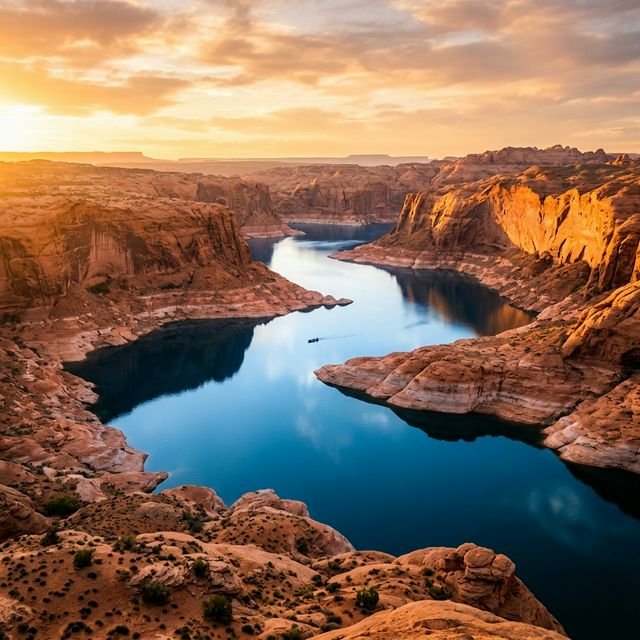
Arizona keeps its non-resident license structure straightforward compared to states that layer species-specific endorsements. The AZGFD offers four options, each valid for 365 days from the date of purchase:
General Fishing License — $55
Your standard option. Covers all fish species in every public water statewide, including the 30+ Community Fishing Program urban lakes in Phoenix, Tucson, Flagstaff, and other cities. No additional stamps or endorsements required for trout, bass, catfish, or any other species. If you’re coming to Arizona purely to fish, this is the license you want.
Combination Hunt & Fish License — $160
Everything in the General Fishing license, plus small game, fur-bearing animal, predatory animal, and upland game bird hunting. Worth considering if you plan to hunt quail, dove, or javelina alongside your fishing trip — buying them separately would cost more.
Short-Term Combination Hunt & Fish License — $20/day
A per-day license that covers both fishing and hunting. Days do not need to be consecutive — you can purchase specific dates that match your travel itinerary. This is a combination license, meaning it includes hunting privileges even if you only plan to fish.
Youth Combination Hunt & Fish License (Ages 10–17) — $5
The best deal in Arizona outdoor recreation. Gives any youth under 18 full fishing and hunting privileges for a full 365 days. Available to both residents and non-residents at the same $5 price — one of the lowest youth license fees in the country.
The Break-Even Calculation
The short-term license seems cheap at $20/day, but the math favors the annual General Fishing license ($55) for trips of 3 days or more:
| Trip Length | Short-Term Total | Annual License | Better Deal |
|---|---|---|---|
| 1 day | $20 | $55 | Short-term saves $35 |
| 2 days | $40 | $55 | Short-term saves $15 |
| 3 days | $60 | $55 | Annual saves $5 |
| 5 days | $100 | $55 | Annual saves $45 |
| 7 days | $140 | $55 | Annual saves $85 |
One important distinction: the $20 short-term is a combo hunt/fish license, while the $55 annual is fishing only. If you need both hunting and fishing privileges for more than 3 days, compare against the $160 annual combo instead.
Children Under 10: Completely exempt. No license, no fee, no registration. They fish any public water in the state for free.

Piscifun Fishing Tackle Backpack
Large capacity fishing backpack with tackle boxes. Waterproof rain cover included.
Affiliate link · Prices may vary
How to Buy: Three Channels
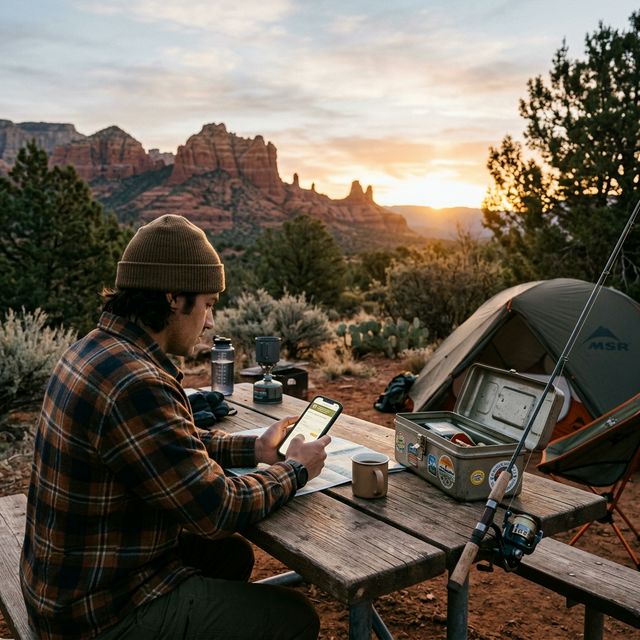
1. AZGFD Online Portal (Fastest)
Visit the official AZGFD license sales website. You’ll need your name, date of birth, home address, and a government-issued ID number (driver’s license or state ID from your home state). After payment, your license is available for immediate digital download. The portal operates 24/7 — critical when you’re crossing into Arizona late at night and want to fish at dawn.
2. Arizona E-Tag Mobile App
Download the free Arizona E-Tag app (iOS and Android). This app stores your license digitally and — critically — works offline. In Arizona’s canyon country (Oak Creek, Apache Lake, Black River), cell service often vanishes entirely. After purchasing through the AZGFD portal, sync your license to the app using your Customer ID. Game wardens accept the E-Tag app display as legal proof of license.
3. In-Person at AZGFD Offices and Retailers
Licenses are sold at all seven AZGFD regional offices (Phoenix, Tucson, Flagstaff, Mesa, Pinetop, Yuma, Kingman) and at authorized dealers statewide, including Walmart, Sportsman’s Warehouse, Bass Pro Shops, and local bait shops near popular fishing destinations.
Pre-Trip Tip: Create your free AZGFD portal account before your trip, even before purchasing. Having your Customer ID ready speeds up the checkout process and ensures you can immediately sync your license to the E-Tag app for offline field use.

Plano Guide Series Rod Tube Case
Hard-shell rod tube protects rods during travel. Airline-approved for checked baggage.
As an Amazon Associate, we earn from qualifying purchases. Prices may vary.
The 365-Day Rolling Calendar
Unlike Texas (which uses a fixed August 31st expiration) or most Eastern states (calendar-year expiration), Arizona uses a rolling 365-day system. Your license expires exactly one year from your purchase date. A license purchased on October 1, 2026 is valid through September 30, 2027.
This system rewards returning visitors. If you fish Lake Pleasant every Thanksgiving, you’ll get a full year of coverage each purchase — no “dead zone” penalty for buying mid-year like calendar-year states impose.
Auto-Renewal for Repeat Visitors
If you fish Arizona annually, AZGFD offers automatic renewal through your portal account. Navigate to “My AZGFD Dashboard” → “View All Licenses” and enroll. Your stored credit card is charged on the expiration date, and your new license activates instantly with no gap in coverage. This is particularly valuable for non-residents who maintain a consistent Arizona fishing schedule.
No Grace Period
Arizona provides zero grace period after expiration. Fishing on day 366 without renewal is treated identically to fishing without any license — a Class 2 misdemeanor. Set a calendar reminder or use auto-renewal.

KastKing Blackhawk II Telescoping Rod
Portable telescoping design collapses to 17 inches. Perfect for travel fishing.
Affiliate link · Prices may vary
Border Water Rules: The Colorado River System
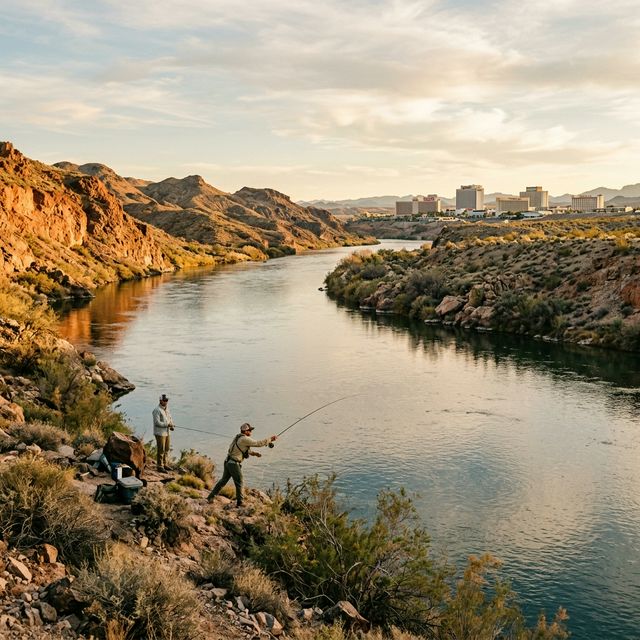
Arizona shares water borders with Nevada, California, and Utah. Most online guides get the reciprocal fishing rules wrong. Here’s what actually applies, verified against current AZGFD regulations and interstate agreements:
Arizona–Nevada: Full Reciprocity on Shared Waters
Arizona and Nevada maintain a reciprocal fishing agreement (formalized through a Memorandum of Understanding between AZGFD and NDOW) covering Lake Mead, Lake Mohave, and the Colorado River between them. The key rules:
- From a boat OR from either shoreline: A valid fishing license from either Arizona or Nevada is sufficient. You do not need a second license.
- Regulations: You must follow the regulations of the state whose license you hold, regardless of which shore you’re standing on or where on the water you’re fishing.
- Youth: Arizona requires licenses at age 10+; Nevada requires them at age 12+. Both states recognize the reciprocal privilege of minors.
- Aquatic Invasive Species: If you have a Nevada-registered watercraft on Arizona waters, you must also possess and display a Nevada Aquatic Invasive Species (AIS) decal.
Practical Example: You hold an Arizona non-resident license ($55) and fish from the Nevada shoreline of Lake Mead. This is legal under the reciprocal agreement. You follow Arizona’s bag limits and size restrictions, not Nevada’s. If the limits differ for a species, the distinction matters.
Arizona–California: Reciprocal on the Lower Colorado River
Arizona and California also maintain a reciprocal fishing agreement for the Colorado River where it forms their shared boundary — from the Nevada-Arizona-California tripoint south to the Mexico border. A valid fishing license from either Arizona or California covers fishing from shore or by boat on these shared waters.
Important Notes:
- The California-Colorado River Special Use Validation (formerly required for fishing from a boat with a California license on AZ-CA shared waters) was discontinued after 2013. No additional stamp is needed.
- On tribal waters along the Colorado River (e.g., Colorado River Indian Reservation near Parker), you need a separate tribal fishing permit regardless of which state license you hold. These tribal permits are purchased directly from the tribe.
- Lake Havasu itself falls under the reciprocal agreement since the Colorado River flows through it.
Arizona–Utah: Lake Powell Reciprocity
Lake Powell straddles the Arizona-Utah border within Glen Canyon National Recreation Area. AZGFD and the Utah Division of Wildlife Resources have established reciprocal rules:
- A valid fishing license from either Arizona or Utah covers the entire lake, including both the Arizona and Utah portions.
- You must follow the fishing regulations of the state in whose waters you are currently fishing, not the state that issued your license. This is different from the AZ-NV rule.
- Only one daily bag limit may be taken per day, even if you hold licenses from both states.
- Arizona requires licenses at age 10+; Utah requires them at age 12+ (increased from 11 in recent law changes).
- The reciprocal agreement covers Lake Powell only — other Utah or Arizona waters outside the lake require the appropriate state license.
Arizona Fishing License Violations: What’s Actually at Stake
Arizona does not treat unlicensed fishing as a civil infraction or a simple ticket — it’s a criminal offense. Under Arizona Revised Statutes, taking any wildlife (including fish) without a valid license carries serious consequences:
Criminal Penalties (A.R.S. 17-309, 17-314)
- Classification: Class 2 misdemeanor
- Maximum fine: $750 for a first offense
- Incarceration: Up to four months in county jail
- Criminal record: This conviction appears on background checks and can affect employment, housing, and security clearance applications
- License revocation: The Arizona Game and Fish Commission may revoke all fishing, hunting, and trapping privileges for up to five years
- Equipment confiscation: Fishing equipment used during the violation is subject to seizure
How Enforcement Actually Works
AZGFD employs fully commissioned wildlife officers (game wardens) with law enforcement authority. They patrol popular destinations year-round, with concentrated presence at:
- Boat ramps: Lake Pleasant, Saguaro Lake, Canyon Lake, Bartlett Lake, and Lake Havasu
- Urban waters: Tempe Town Lake, Kiwanis Lake, and Community Fishing Program lakes
- Holiday weekends: Memorial Day, Independence Day, and Labor Day see increased warden activity
Officers typically approach anglers at access points and request license display. The Arizona E-Tag app on your phone is accepted as legal proof. If you can’t produce a valid license, the officer will verify the AZGFD database on-site — there’s no “I left it at home” excuse that will prevent a citation.
A $55 license versus a $750 fine, a criminal record, and confiscated gear — the math speaks for itself.
Planning a Multi-State Southwest Road Trip
Arizona sits at the crossroads of five states’ fishing jurisdictions. A well-planned road trip can cover remarkably diverse fisheries with minimal license purchases:
Sample Week-Long Itinerary
| Day | Location | License Needed | Target Species |
|---|---|---|---|
| 1–2 | Lake Mead / Lake Mohave (AZ-NV border) | AZ license covers via reciprocal | Striped bass, largemouth, smallmouth |
| 3–4 | Lake Havasu (AZ-CA border) | AZ license covers via reciprocal | Largemouth bass, redear sunfish, stripers |
| 5 | Colorado River at Yuma | AZ license (check tribal waters) | Flathead catfish, largemouth bass |
| 6–7 | Lake Powell (AZ-UT border) | AZ license covers via reciprocal | Smallmouth bass, striped bass, walleye |
For this entire itinerary, a single Arizona non-resident General Fishing License ($55) provides legal coverage. You’d need a separate state license only if you plan to fish waters outside the reciprocal zones — for example, a Utah mountain lake or a Nevada reservoir that isn’t on the Colorado River system.
Neighboring State Non-Resident License Costs (2026)
| State | Non-Resident Annual License | Short-Term / Daily |
|---|---|---|
| Arizona | $55 (365 days, fishing only) | $20/day (combo hunt/fish) |
| Nevada | $80 (calendar year) | $15/1-day |
| Utah | $120 (365 days) | $31/3-day |
| New Mexico | $56 (Apr 1 – Mar 31) | $12/1-day · $24/5-day |
| California | $174.14 (365 days) | $21.09/1-day |
Arizona’s $55 annual non-resident license stands as the most affordable in the Southwest — less than half of California’s price and $25 less than Nevada. When you factor in the 365-day rolling calendar (no mid-year penalty) and the reciprocal agreements that effectively cover fishing on three border states’ shared waters, Arizona offers exceptional value for visiting anglers.
Where Non-Residents Actually Catch Fish
For out-of-state anglers unfamiliar with Arizona’s geography, here are the fisheries worth the drive:
Desert Lakes (Year-Round Bass, Catfish)
- Lake Havasu — Premier largemouth bass fishery, tournament-quality fish, London Bridge area is legendary
- Lake Pleasant — North of Phoenix, excellent largemouth and striped bass, modern marina facilities
- Saguaro Lake — 30 minutes from Mesa, scenic Tonto National Forest setting, reliable bass and catfish
Mountain Lakes (Trout, Cool-Weather Fishing)
- Woods Canyon Lake — Mogollon Rim, 7,500 feet elevation, stocked rainbow trout, pine forest setting
- Show Low Lake — Eastern Arizona, year-round access, trout and bass
- Lees Ferry — Below Glen Canyon Dam, world-class rainbow trout fishery, fly fishing destination
Border Waters (Multi-Species, Reciprocal Coverage)
- Lake Powell — 186 miles of canyon-carved reservoir, smallmouth bass capital of the Southwest
- Lake Mead — Largest reservoir in the US (by capacity), striped bass, largemouth, catfish
- Colorado River (Parker Strip) — Warm-water species, accessible shoreline fishing