 FishKillFlea
· License Types · 5 min read
Resident vs Non-Resident Fishing License: Price Gaps, Reciprocal Deals & Smart Strategies (2026)
Reviewed by FishKillFlea Editorial Team
Non-resident fishing licenses cost 2–5× more than resident rates. Full 50-state price comparison, residency rules, reciprocal agreements, and money-saving strategies for traveling anglers.
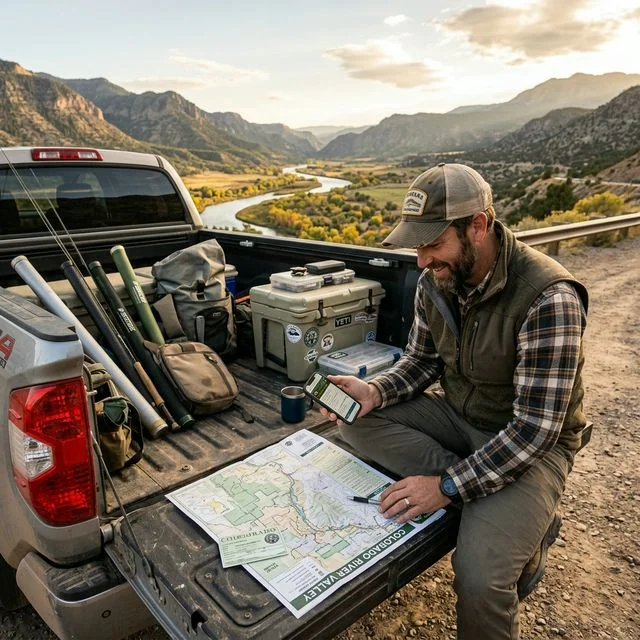
Non-resident fishing licenses cost an average of $65 compared to $25 for residents — a 160% markup. But the gap varies wildly: some states charge just $10 more for out-of-state anglers while others add $100+. This guide breaks down the pricing gap for every state, explains residency requirements, and reveals strategies to legally reduce your non-resident costs.
The Price Gap: How Much More Do Non-Residents Pay?
States With the Smallest Price Gap (Under $20 Difference)
In these angler-friendly states, visiting fishermen pay only slightly more than locals:
| State | Resident | Non-Resident | Difference | Gap % |
|---|---|---|---|---|
| Missouri | $12 | $49 | $37 | 308% |
| South Carolina | $10 | $35 | $25 | 250% |
| Georgia | $15 | $50 | $35 | 233% |
| Alabama | $13.50 | $53.10 | $39.60 | 293% |
| Arkansas | $10.50 | $50 | $39.50 | 376% |
| Oklahoma | $25 | $55 | $30 | 120% |
| Ohio | $25 | $51 | $26 | 104% |
| Hawaii | $5 | $25 | $20 | 400% |
Best absolute value for visitors: Ohio ($51 NR) and Oklahoma ($55 NR) offer the most reasonable non-resident annual rates among popular fishing destinations.
States With the Largest Price Gap (Over $60 Difference)
These states charge premium prices for visiting anglers — consider daily or short-term licenses instead:
| State | Resident | Non-Resident | Difference | Gap % |
|---|---|---|---|---|
| California | $56.01 | $148.06 | $92.05 | 164% |
| Alaska | $20 | $100 | $80 | 400% |
| Montana | $31 | $117.50 | $86.50 | 280% |
| Wyoming | $27 | $102 | $75 | 278% |
| Colorado | $36.08 | $98.63 | $62.55 | 173% |
| Oregon | $44 | $98 | $54 | 123% |
| Washington | $30.05 | $84.50 | $54.45 | 181% |
| Michigan | $26 | $76 | $50 | 192% |
Strategy for expensive states: Use a daily or short-term license if fishing fewer than 5 days. See our annual vs daily comparison for break-even calculations.

Piscifun Fishing Tackle Backpack
Large capacity fishing backpack with tackle boxes. Waterproof rain cover included.
Affiliate link · Prices may vary
What Counts as “Resident” for Fishing Licenses?
Residency rules vary by state but generally follow these patterns:
| Residency Requirement | States |
|---|---|
| Physical residency + state ID | Most states (40+) |
| 6 months continuous residency | California, New York, Colorado, and others |
| 30 days residency | Some states for specific licenses |
| Military stationed in state | Qualifies as resident in nearly all states |
| College students | Varies — some states allow student residency |
| Property owners | Owning property alone does NOT grant residency |
Military Exception — Major Money Saver
Active-duty military members stationed in another state can buy resident fishing licenses in the state where they’re stationed — even if their home of record is elsewhere. This can save $50–$100+ per year.
College Student Rules
Rules for college students vary significantly:
- Can claim student residency: Colorado, Indiana, Virginia, and several others allow students enrolled full-time to buy resident licenses
- Must use home state residency: California, Texas, New York, and most states require your home state address for license residency
- Ask your school: Many university outdoor recreation programs buy group permits

Plano Guide Series Rod Tube Case
Hard-shell rod tube protects rods during travel. Airline-approved for checked baggage.
As an Amazon Associate, we earn from qualifying purchases. Prices may vary.
Reciprocal Agreements — Fish Two States for One Price
Some border states offer reciprocal fishing agreements that let you fish in both states with one license:
| Waters | Agreement | Details |
|---|---|---|
| Tennessee / Kentucky border waters | Kentucky Lake, Lake Barkley | Either state’s license valid in shared waters |
| Maryland / Virginia | Potomac River | Either state’s license valid on the river |
| Oregon / Washington | Columbia River | Reciprocal agreement for shared waters |
| North Dakota / South Dakota | Border waters | Reciprocal for Lake Oahe, Lake Sakakawea |
See our border waters guide for more cross-border details including the Great Lakes.

KastKing Blackhawk II Telescoping Rod
Portable telescoping design collapses to 17 inches. Perfect for travel fishing.
Affiliate link · Prices may vary
Smart Strategies to Reduce Non-Resident Costs
1. Use Short-Term Licenses for Single Trips
If you’re visiting a state once for a 2–4 day trip, buy the daily or short-term option instead of the annual:
| State | NR Annual | NR 1-Day | NR 3-Day | Savings (3-Day Trip) |
|---|---|---|---|---|
| Florida | $47 | $17 (3-day) | $17 | $30 saved |
| Colorado | $98.63 | $18.83 | $45.87 (5-day) | $52 saved |
| Montana | $117.50 | $31.50 | $73.50 (5-day) | $44 saved |
| Alaska | $100 | $15 | $30 (3-day) | $55 saved |
2. Fish During Free Fishing Days
Most states waive license requirements during free fishing days — this applies to non-residents too. Plan your trip around these dates and save the entire license fee.
3. Use a Charter Boat
When booking a charter boat fishing trip, the captain’s license often covers all passengers. Verify with the charter company before buying your own license.
4. Fish Border Waters With Reciprocal Agreements
If your destination is near a state border, check whether a reciprocal fishing agreement exists. You might be able to use your home state’s cheaper license on shared waters.
5. Consider Becoming a Resident
If you visit the same state multiple times per year for fishing, the annual resident rate may justify establishing residency (if you’re already considering a move). The savings compound year over year.
Frequently Asked Questions
Why are non-resident fishing licenses so much more expensive? State fish and wildlife agencies use license revenue to fund conservation, stocking, and habitat management. Residents pay year-round through state taxes that support these programs, so their license fee is subsidized. Non-residents don’t contribute through taxes, so their license fee covers a larger share of conservation costs.
Can I use my home state fishing license in another state? No — each state requires its own fishing license. The only exceptions are waters covered by reciprocal agreements (see table above) and some national parks that have their own permit systems.
Do I need a non-resident license if I own property in another state? In most states, yes — property ownership does not establish residency for fishing license purposes. You must be a legal resident (typically with a state driver’s license or ID) to qualify for resident rates. A few states offer landowner fishing permits.
How do I establish residency for a fishing license? Obtain a state-issued driver’s license or ID at the new state address, typically after 6 months of continuous physical presence. Some states accept 30 days. You cannot hold driver’s licenses in two states simultaneously.
Are there any states where non-residents get the same price as residents? Hawaii comes closest at $5 resident / $25 non-resident for daily, but no state charges equal rates for annual licenses. The closest absolute gap is Ohio ($25 resident / $51 non-resident) and Oklahoma ($25 resident / $55 non-resident).
Compare exact prices for your destination using our Cost Estimator, browse non-resident license costs for all 50 states, or use our License Finder for personalized recommendations.