 FishKillFlea
· Free & Discounts · 5 min read
Fishing Without a License — Fines & Penalties by State (2026)
Reviewed by FishKillFlea Editorial Team
What happens if you get caught fishing without a license? State-by-state guide to fines, penalties, equipment confiscation, and criminal charges for unlicensed fishing.
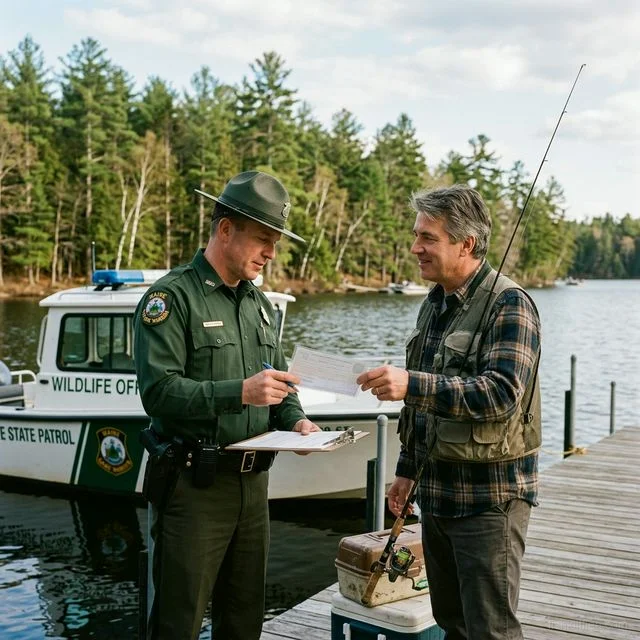
Fishing without a license in the US results in fines from $50 to $500+ for a first offense, with the national average around $75–$150. The consequences range from a simple ticket to criminal misdemeanor charges, equipment confiscation, and loss of fishing privileges. This guide breaks down state-by-state penalties and how to avoid them.
How Much Is the Fine for Fishing Without a License?
First-offense fines for fishing without a valid license range from $15 to $1,000 depending on the state. The national average is approximately $75–$150 for a first offense. Repeat offenders face significantly steeper penalties, including potential jail time in some states.

Plano 3700 Tackle Storage Box
Adjustable dividers. Durable construction. Perfect for organizing lures and tackle.
Affiliate link · Prices may vary
State-by-State Penalty Comparison
| State | First Offense Fine | Repeat/Aggravated | Misdemeanor? | Equipment Seizure? |
|---|---|---|---|---|
| Alabama | $50–$500 | Up to $1,000 | Yes | Yes |
| Alaska | $300–$10,000 | Up to $25,000 | Yes | Yes |
| Arizona | $100–$500 | Up to $750 | Class 2 misd. | Yes |
| Arkansas | $50–$1,000 | Up to $2,500 | Yes | Yes |
| California | $100–$1,000 | Up to $2,000 | Yes | Yes |
| Colorado | $100 base + surcharges | $1,000+ | Class 2 misdemeanor | Possible |
| Connecticut | $50–$250 | Up to $500 | No (infraction) | No |
| Delaware | $100+ | Up to $500 | No (Class C environmental) | No |
| Florida | $50–$500 | Up to $1,000 | 2nd degree misd. | Yes |
| Georgia | $150–$1,000 | Up to $1,000 | Misdemeanor | Yes |
| Hawaii | $100–$500 | Up to $1,000 | Petty misd. | Possible |
| Idaho | $25–$300 | Up to $1,000 | Misdemeanor | Yes |
| Illinois | $75–$500 | Up to $1,500 | Petty offense | Possible |
| Indiana | $61–$500 | Up to $500+ | Class A misdemeanor | No |
| Iowa | $50–$500 | Up to $1,500 | Simple misd. | Possible |
| Kansas | $50–$500 | Up to $1,000 | Unclassified misd. | Possible |
| Kentucky | $25–$500 | Up to $1,000 | Misdemeanor | Yes |
| Louisiana | $100–$350 | Up to $750 | Misdemeanor | Yes |
| Maine | $100–$500 | Up to $1,000 | Civil violation | No |
| Maryland | $50–$500 | Up to $1,000 | Misdemeanor | Possible |
| Massachusetts | $50–$200 | Up to $500 | No (fine only) | No |
| Michigan | $50–$500 | Up to $1,000 | Misdemeanor | Yes |
| Minnesota | $100–$500 | Up to $1,000 | Misdemeanor | Yes |
| Mississippi | $25–$500 | Up to $1,000 | Misdemeanor | Yes |
| Missouri | $50–$500 | Up to $1,000 | Class A misd. | Yes |
| Montana | $50–$500 | Up to $1,000 | Misdemeanor | Yes |
| Nebraska | $100–$500 | Up to $1,000 | Class III misd. | Possible |
| Nevada | $50–$500 | Up to $1,000 | Misdemeanor | Yes |
| New Hampshire | $150–$1,000 | Up to $1,000+ | Misdemeanor | Yes (30-day first offense) |
| New Jersey | $50–$500 | Up to $3,000 | Disorderly persons | Possible |
| New Mexico | $100–$2,000 | Up to $2,000 | Misdemeanor | Possible |
| New York | $50–$250 | Up to $500 | Violation | No |
| North Carolina | $25–$200 | Up to $500 | Class 3 misd. | Possible |
| North Dakota | $50–$500 | Up to $1,000 | Class B misd. | Possible |
| Ohio | $75–$500 | Up to $1,000 | Minor misd. | Possible |
| Oklahoma | $100–$500 | Up to $1,000 | Misdemeanor | Yes |
| Oregon | $50–$600 | Up to $2,500 | Class A violation | Yes |
| Pennsylvania | $75–$200 | Up to $500 | Summary offense | No |
| Rhode Island | $50–$500 | Up to $1,000 | Misdemeanor | Possible |
| South Carolina | $25–$500 | Up to $1,000 | Misdemeanor | Yes |
| South Dakota | $50–$500 | Up to $1,000 | Class 2 misd. | Possible |
| Tennessee | $50–$500 | Up to $2,500 | Class C misd. | Yes |
| Texas | $25–$500 | Up to $4,000 | Class C misd. | Yes |
| Utah | $50–$750 | Up to $1,000 | Class B misd. | Yes |
| Vermont | $50–$400 | Up to $1,000 | Civil violation | No |
| Virginia | $50–$500 | Up to $1,000 | Class 3 misd. | Possible |
| Washington | $50–$500 | Up to $1,000 | Misdemeanor | Yes |
| West Virginia | $20–$500 | Up to $1,000 | Misdemeanor | Possible |
| Wisconsin | $50–$500 | Up to $2,000 | Forfeiture | Yes |
| Wyoming | $50–$500 | Up to $1,000 | Misdemeanor | Yes |
Note: Fine ranges shown are typical. Actual penalties depend on the judge, whether additional violations occurred (over-limit, protected species, trespassing), and your cooperation with the game warden.

Flambeau Outdoors Zerust Tackle Box
Corrosion-proof tackle box with Zerust anti-corrosion technology. Protects lures and gear.
As an Amazon Associate, we earn from qualifying purchases. Prices may vary.
What Happens When You Get Caught
Here’s the typical enforcement process when a wildlife officer catches someone fishing without a license:
Step 1 — The Approach
A uniformed or plainclothes game warden will approach and ask to see your fishing license. Game wardens have broad enforcement authority — in most states, they can inspect your license, catch, and equipment without a warrant.
Step 2 — The Citation
If you cannot produce a valid license, the officer will:
- Verify your identity (driver’s license or ID)
- Write a citation (similar to a traffic ticket)
- In some states, issue a notice to appear in court
- Potentially confiscate your catch and/or fishing equipment
Step 3 — Court or Payment
Depending on the state:
- Many states allow you to pay the fine online or by mail, similar to a traffic ticket
- Some states require a court appearance, especially for repeat offenses
- Court costs ($25–$100) are often added on top of the fine

Rapala Stainless Steel Fishing Pliers
Stainless steel construction. Side cutter and split ring tool. Corrosion resistant.
Affiliate link · Prices may vary
Beyond the Fine — Additional Consequences
The fine itself is often the least costly part of getting caught. Additional consequences can include:
Equipment Confiscation
Over 30 states allow game wardens to seize your fishing equipment — rods, reels, tackle, and sometimes even your boat — as part of the citation. Equipment may be returned after you pay the fine and purchase a valid license, or it may be permanently forfeited.
Loss of Fishing Privileges
Repeat offenders may have their fishing privileges suspended for one or more years. This means even after paying the fine, you legally cannot fish in that state.
Criminal Record
In approximately 35 states, fishing without a license is classified as a misdemeanor. While typically minor, a misdemeanor can appear on background checks and potentially affect employment, housing, or immigration applications.
Impact on Hunting Privileges
Many states have a point system that links hunting and fishing violations. Accumulating too many violations can result in loss of both hunting and fishing privileges, and through the Interstate Wildlife Violator Compact (IWVC), violations in one member state can affect your privileges in 48 other states.
How Game Wardens Catch Unlicensed Anglers
Wildlife officers use several methods to check for license compliance:
- Random patrols at popular fishing spots, boat ramps, and piers
- License checkpoints on busy weekends during peak season
- Undercover operations at high-violation areas
- Tip lines — other anglers can report suspected violators anonymously
- Digital verification — wardens can look up licenses in real-time using a mobile database
How to Avoid Penalties
The simplest way to avoid a fine: buy a fishing license before you fish. Here’s how:
- Buy online — Available 24/7 through your state’s portal. See our Buy Online Guide.
- Buy at Walmart — Over 4,700 locations, no appointment needed. See our Walmart Guide.
- Download the app — Carry your digital license on your phone. See our Apps Guide.
- Check exemptions — You might qualify for a free or discounted license. See our Exemptions Guide.
Frequently Asked Questions
How much is a ticket for fishing without a license? First-offense fines typically range from $50–$500 depending on the state. The national average is roughly $75–$150. Court costs ($25–$100) may be added on top. Compare this to license costs of $15–$55 — it’s always cheaper to buy a license.
Is fishing without a license a misdemeanor? In about 35 states, yes. In the remaining states, it’s classified as a civil infraction, violation, or petty offense — which typically means a fine but no criminal record.
Can you go to jail for fishing without a license? It’s exceedingly rare for a first offense, but technically possible in states where it’s classified as a misdemeanor (jail time up to 30–90 days theoretically). Jail time is more realistic for repeat offenders or those who also commit additional violations (poaching, trespassing).
What if I forgot my license at home but have one? Some states offer a “failure to carry” citation with a reduced fine ($10–$25) that’s dismissed if you show proof of a valid license within a set timeframe (typically 5–30 days). Carrying a digital license on your phone prevents this problem entirely.
Can I be fined for having an expired fishing license? Yes. An expired license is treated the same as no license in most states. Set a reminder to renew before your expiration date.
Don’t risk it — a fishing license costs far less than the potential fines. Visit our state pages to find your state’s portal, or use the License Finder to get licensed today.