 FishKillFlea
· Guides · 7 min read
The Real Cost of Stocking Fish: Why Your License Fee Barely Covers It (2026)
Reviewed by FishKillFlea Editorial Team
It costs $1–$9 to raise a single trout, $300 per adult salmon harvested, and states stock hundreds of millions of fish each year. Here's the full economics of why your fishing license fee is a bargain.
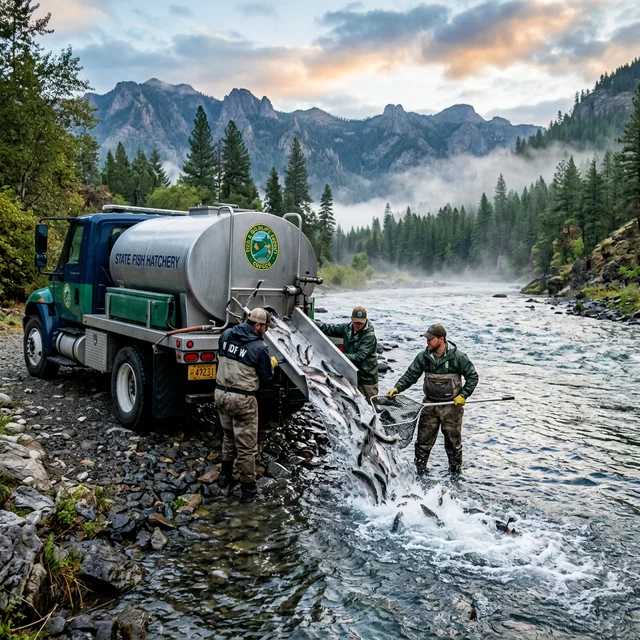
Your $25 fishing license fee pays for… about 7 stocked trout. That’s it. When you consider that states stock hundreds of millions of fish annually across tens of thousands of miles of rivers and lakes, the math doesn’t add up — until you understand the massive conservation funding system behind it. This guide follows each dollar from the hatchery to your hook.
What It Actually Costs to Raise a Fish
Every stocked fish goes through a lifecycle that burns money at every stage. Here’s what state hatcheries spend per fish, from egg to release:
Trout (Rainbow, Brown, Brook)
| Life Stage | Size | Cost Per Fish | Timeline |
|---|---|---|---|
| Eyed egg | 3mm | $0.02–$0.05 | Spawning → 30 days |
| Fry | 1–2 inches | $0.05–$0.15 | 30–90 days |
| Fingerling (fall stocking) | 3–5 inches | $0.85–$1.75 | 4–6 months |
| Yearling (spring stocking) | 7–9 inches | $3.00–$5.00 | 12–14 months |
| Catchable (standard put-and-take) | 10–12 inches | $5.00–$9.00 | 14–18 months |
| Trophy/Broodstock | 14–20+ inches | $10.00–$25.00+ | 2–3 years |
Reality check: That 10-inch rainbow trout you catch on opening day took 14–18 months to raise and cost the state $5–$9 in feed, labor, water treatment, and facility costs. Your fishing license likely covered 3–7 fish like that — but you might catch 30+ during the season.
Salmon & Steelhead
| Species | Cost Per Fish Released | Cost Per Adult Harvested | Why So Expensive? |
|---|---|---|---|
| Chinook salmon | $3–$8 per smolt | ~$150–$300 per adult | Ocean survival rate is only 1–5% |
| Coho salmon | $2–$5 per smolt | ~$100–$200 per adult | Better survival than chinook, still low return |
| Steelhead | $3–$7 per smolt | ~$100–$250 per adult | Multi-year ocean rearing before return |
| Atlantic salmon (Great Lakes) | $1–$4 per fingerling | $50–$150 per adult | Variable survival in Great Lakes |
The salmon economics gap: Oregon’s hatchery system analysis found that while trout cost under $5 per harvested fish, anadromous species (salmon/steelhead) cost roughly $300 per adult harvested — because ocean survival rates are brutally low. 95–99% of stocked salmon smolts never return. The ones that do cost an enormous amount per fish.
Other Species
| Species | Typical Stocking Cost | Notes |
|---|---|---|
| Channel catfish | $0.50–$2.00 per fingerling | Hardy, cheap to raise, high survival |
| Walleye | $0.05–$0.30 per fry | Stocked as tiny fry; natural mortality is high |
| Largemouth bass | $1.00–$3.00 per fingerling | Increasingly supplemented by natural reproduction |
| Musky | $5.00–$15.00 per fingerling | Expensive to raise; low stocking density |
| Striped bass | $0.10–$0.50 per fry | High volume stocking offsets low survival |
| Lake trout | $2.00–$5.00 per yearling | Great Lakes restoration programs |
The Hidden Costs Nobody Talks About
The per-fish cost above only captures direct rearing expenses. Hatcheries have massive operational overhead:
Monthly Hatchery Operating Costs (Typical State Facility)
| Cost Category | Monthly Range | % of Budget |
|---|---|---|
| Fish feed | $30,000–$50,000 | 25–35% |
| Staff wages (biologists, technicians, managers) | $40,000–$80,000 | 30–40% |
| Electricity (pumps, chillers, aeration) | $15,000–$45,000 | 10–20% |
| Water treatment (filtration, disease prevention) | $8,000–$15,000 | 5–10% |
| Facility maintenance | $5,000–$12,000 | 3–8% |
| Biosecurity (disease testing, quarantine) | $5,000–$10,000 | 3–5% |
| Vehicle/transport (stocking trucks, fuel) | $5,000–$10,000 | 3–5% |
| Total | $110,000–$220,000/month |
A single state hatchery costs $1.3–$2.6 million per year to operate. Most states run 5–20 hatcheries. Colorado operates 19. Pennsylvania operates 14. California? Over 20.

KastKing Centron Spinning Reel
Budget-friendly 9+1 ball bearing reel. Lightweight graphite frame, great for beginners.
Affiliate link · Prices may vary
How Much Fish Do States Actually Stock?
Here’s the sheer scale of American fish stocking:
Top Fish-Stocking States (2024 Data)
| State | Fish Stocked Per Year | Primary Species | Hatchery Count |
|---|---|---|---|
| Colorado | 90 million+ | Trout (multiple species), kokanee | 19 hatcheries |
| Michigan | 9.1 million+ | Salmon, steelhead, trout, walleye | 6 state hatcheries |
| Wisconsin | 5 million+ | Brook/brown/rainbow trout, salmon, walleye | Multiple state/tribal facilities |
| Pennsylvania | 3.2 million+ | Trout (14 hatcheries focused on trout) | 14 state hatcheries |
| Maine | 936,725 | Brook trout (66%), brown trout (19%) | State hatchery system |
| Oregon | Millions (salmon + trout) | Chinook, coho, steelhead, rainbow | State hatchery network |
Colorado’s 90 million fish includes massive fry and fingerling stockings — tiny fish that cost pennies each but have high natural mortality. The “fishable” stocking number (catchable-size trout) is lower, but the cost per fish is much higher.
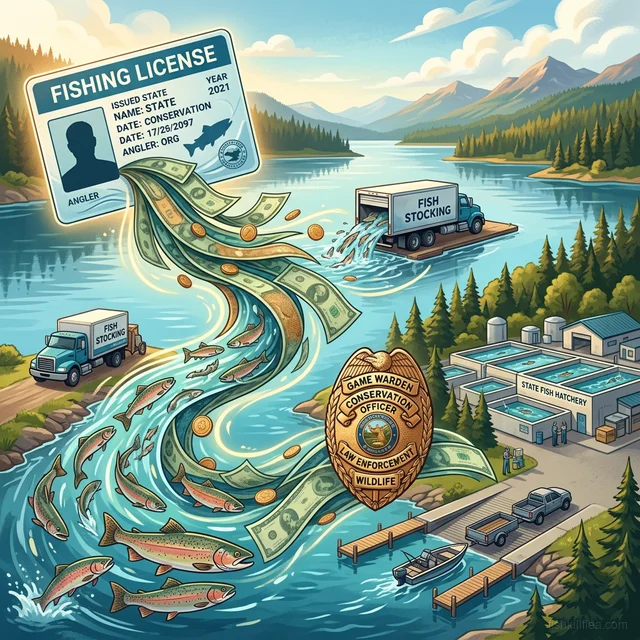
Your $25 License Fee: Where It Goes
Let’s trace a typical $25 resident fishing license through the actual cost structure:
The $25 Breakdown
Your $25 fishing license fee
├── ~$10 → Fish stocking (direct hatchery costs)
│   └── Pays for approximately 2–7 catchable trout
├── ~$5 → Habitat restoration
│   └── Stream improvement, fish passages, riparian planting
├── ~$4 → Law enforcement
│   └── Game warden salaries, patrol boats, equipment
├── ~$3 → Research & monitoring
│   └── Fish population surveys, creel studies, genetics
├── ~$2 → Administration
│   └── License processing, database, customer service
└── ~$1 → Access development
    └── Boat ramps, fishing piers, parking areas, signage
But Wait — The Federal Multiplier
Your $25 license fee doesn’t work alone. Through the Dingell-Johnson Act, the federal government matches state fishing license revenue with excise tax funds collected on fishing equipment:
| Your Fee | Federal Match | Total Working Capital |
|---|---|---|
| $25 license fee | $75 federal match (3:1 ratio) | $100 total conservation funding |
That $100 goes much further than $25. This multiplier effect is why the American conservation funding model is recognized as one of the most successful in the world. See our full explainer: Where Your Fishing License Money Goes.

Thkfish Fishing Accessories Kit
Complete terminal tackle kit with hooks, sinkers, swivels, and bobbers. Everything in one box.
As an Amazon Associate, we earn from qualifying purchases. Prices may vary.
Why Hatcheries Still Matter in 2026
Some anglers question why we stock fish at all — “just let them reproduce naturally.” Here’s why hatcheries remain essential:
The 4 Purposes of Fish Stocking
| Purpose | Why It’s Needed | Example |
|---|---|---|
| Put-and-take recreation | Many waters can’t sustain natural trout populations (too warm, too small) — stocking creates fishing where none would exist | Urban fishing programs, small ponds, warm lowland rivers |
| Supplemental stocking | Boost underperforming natural populations in otherwise suitable habitat | Mountain streams after drought, lakes after winterkill |
| Restoration | Reestablish extirpated species in their historical range | Greenback cutthroat in Colorado, lake trout in Great Lakes, Atlantic salmon in Connecticut River |
| Mitigation | Compensate for habitat destroyed by dams, development, or pollution | Below-dam tailwater fisheries, compensatory stocking requirements in dam licenses |
Natural Reproduction vs. Stocking
| Factor | Wild Fish | Stocked Fish |
|---|---|---|
| Cost to agency | Near-zero (habitat must be maintained) | $1–$9+ per fish |
| Survival rate | Higher (adapted to environment) | Lower (hatchery-adapted) |
| Genetic fitness | Excellent | Variable — hatchery genetics can be less fit |
| Fishing quality | Generally better fighters and more selective | Often easier to catch initially |
| Where it works | Cold, clean, undisturbed habitat only | Works anywhere you can truck a fish |
The ideal: Most fisheries biologists prefer wild reproduction where habitat supports it. Stocking is a tool used when habitat can’t sustain natural populations, when restoration goals demand it, or when recreational demand exceeds what natural populations can provide without depletion.
The Economics of Catch-and-Release
Catch-and-release changes the stocking math dramatically:
| Scenario | Fish Killed Per Angler/Year | Fish That Must Be Stocked | Cost Per Angler |
|---|---|---|---|
| 100% harvest (keep everything) | ~20–30 fish | 30+ catchable trout | $150–$270 |
| Mixed (50% harvest) | ~10–15 fish | 15–20 trout | $75–$180 |
| Mostly C&R (90% release) | ~2–3 fish | 5–10 trout | $25–$90 |
| 100% catch-and-release | 0 fish kept (some mortality) | Minimal | ~$5–$15 |
The math is simple: If every angler practiced predominantly catch-and-release, states could dramatically reduce stocking costs OR redirect those funds to habitat improvement. This is why many states are moving toward catch-and-release regulations on premium waters — it’s not just about conservation, it’s about economics.

Ugly Stik GX2 Spinning Rod
Durable graphite and fiberglass construction. Perfect for beginners and experienced anglers.
Affiliate link · Prices may vary
State Stocking Schedules: When and Where
Most states publish their stocking schedules online. Here’s how to find yours:
| State | Where to Find Schedule | Update Frequency |
|---|---|---|
| Pennsylvania | ”Gone Fishing” page on PFBC website | Updated daily during stocking season |
| Colorado | CPW stocking reports on their website | Weekly during season |
| Michigan | MDNR fish stocking database | Updated per stocking event |
| California | CDFW trout plant schedule | Weekly during season |
| Virginia | DGIF stocking schedule | Updated per stocking event |
| All other states | Search “[State] fish stocking schedule 2026” | Varies by state |
Pro tip: States typically stock on weekday mornings. Fish on Tuesday or Wednesday, 1–2 days after a stocking event, for the best put-and-take fishing. The newly stocked fish will have dispersed from the stocking point but won’t yet have been heavily pressured.
Frequently Asked Questions
How much does it cost to stock a trout? $1–$9+ depending on size. Small fingerlings (3–5 inches) cost $0.85–$1.75 each. Catchable-size trout (10–12 inches) cost $5–$9. Trophy fish (14–20+ inches) can cost $10–$25+. These costs include feed, labor, water treatment, and facility overhead.
Does my fishing license pay for stocking? Partially. About 40% of your license fee typically goes to hatchery operations and stocking. The rest funds habitat, enforcement, research, and administration. Federal Dingell-Johnson matching funds multiply your contribution by roughly 3:1. See Where Your License Money Goes.
Why are salmon so much more expensive than trout? Ocean survival rates. States stock salmon smolts and send them to the ocean, where 95–99% die before returning as adults. The few that survive cost roughly $150–$300 per adult harvested — compared to under $9 per catchable trout. The ocean is an uncontrolled and extremely hostile environment.
How often does my local lake get stocked? It varies by state, lake, and season. Most states stock popular waters weekly to biweekly during spring and fall seasons. Check your state’s stocking schedule (search “[State] fish stocking schedule 2026”) for specific dates and locations.
Are stocked fish as good as wild fish? Biologically: generally no. Stocked fish are often less wary, less fit, and less adapted to their environment. On the table: similar quality. For the fight: wild fish are typically stronger. But stocked fish make fishing possible in waters that couldn’t sustain natural populations, dramatically expanding where Americans can fish.
Can I stock fish in my own pond? Most states require a permit to stock fish in private ponds — especially if the pond connects to public waterways. Stocking non-native species without a permit can result in fines. Contact your state fish & wildlife agency for private stocking regulations.
For the full picture of fishing license funding, see Where Your License Money Goes. For license costs, see our Cost Guide. To understand trout stamps that fund stocking, see our Trout Stamps Guide.