 FishKillFlea
· License Types · 6 min read
Deep Sea & Offshore Fishing License Guide (2026) — Federal Permits, Charter Rules & State Requirements
Reviewed by FishKillFlea Editorial Team
Do you need a fishing license for deep sea fishing? Complete guide to offshore fishing permits, federal EEZ regulations, charter boat exemptions, and HMS permits across all US coastal states.
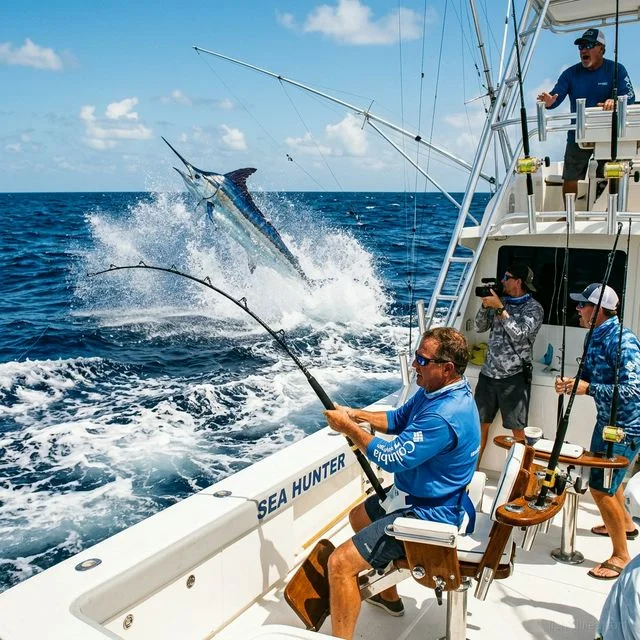
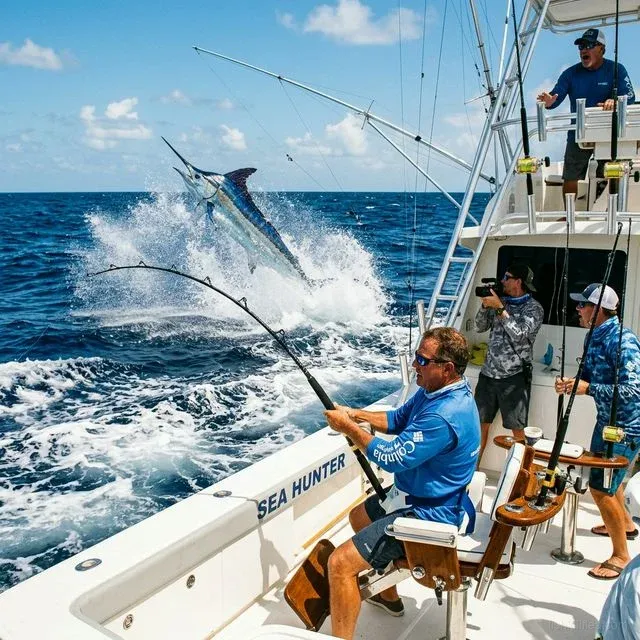
Planning a deep sea fishing trip? The licensing requirements for offshore and deep sea fishing are more complex than freshwater fishing because you may be dealing with both state and federal regulations. Whether you’re booking a charter in the Florida Keys or running your own boat offshore from Texas, this guide explains exactly what permits you need, whether charter boats cover your license, and how federal EEZ (Exclusive Economic Zone) rules work.
Do You Need a Fishing License for Deep Sea Fishing?
Yes — but the specific requirements depend on three factors:
- Where you’re fishing — State waters (0–3 or 0–9 miles offshore) vs. federal waters (3–200 miles offshore)
- What species you’re targeting — Regular saltwater fish vs. HMS (Highly Migratory Species like tuna, swordfish, billfish)
- How you’re fishing — From your own boat vs. on a licensed charter boat
Here’s the quick summary:
| Scenario | License Required? | What You Need |
|---|---|---|
| Charter boat in state waters | Depends on state | Many states cover you under the captain’s license |
| Charter boat in federal waters | Varies | Federal reef fish permit may apply; state license in some cases |
| Private boat in state waters | Yes | State saltwater fishing license |
| Private boat in federal waters | Yes | State saltwater license + possible federal permit |
| Targeting HMS species | Yes | NOAA HMS permit (in addition to state license) |

Yo-Zuri Crystal 3D Minnow
Holographic finish attracts fish. Great for inshore saltwater species.
Affiliate link · Prices may vary
State Waters vs. Federal Waters
Understanding the boundary between state and federal jurisdiction is critical for offshore anglers:
State Waters
- Atlantic & Pacific coasts: 0–3 nautical miles from shore
- Gulf of Mexico (FL west coast, AL, MS, LA): 0–9 nautical miles from shore (Texas: 9 nm in Gulf)
- Governed by: State fish and wildlife agency
- License required: State saltwater fishing license
Federal Waters (EEZ)
- Range: 3 nautical miles (or 9 nm in Gulf states) to 200 nautical miles from shore
- Governed by: NOAA Fisheries (National Oceanic and Atmospheric Administration) through Regional Fishery Management Councils
- License required: Typically your state saltwater license is sufficient for most species, but additional federal permits may be required for specific fisheries
Important: Even in federal waters, you must comply with the more restrictive regulations between federal rules and your home port state’s rules.

Penn Battle III Surf Spinning Combo
10-foot surf rod with Penn Battle III reel. Built for beach casting stripers and bluefish.
As an Amazon Associate, we earn from qualifying purchases. Prices may vary.
Charter Boat Fishing — Do You Need Your Own License?
This is one of the most common questions about deep sea fishing, and the answer varies by state:
States Where the Charter License Covers Passengers
In these states, licensed charter boats hold a vessel license that covers all passengers — you do NOT need to buy your own individual license:
| State | Charter Covers You? | Notes |
|---|---|---|
| Alabama | ✅ Yes | Captain’s license covers passengers |
| Connecticut | ✅ Yes | Party/charter boat license covers all |
| Delaware | ✅ Yes | Party/charter boat covers passengers |
| Florida | ✅ Yes | Licensed charter vessels cover customers |
| Louisiana | ✅ Yes | Charter license covers passengers |
| Maryland | ✅ Yes | Charter boat license covers passengers |
| Mississippi | ✅ Yes | Licensed charters cover all anglers |
| New Jersey | ✅ Yes | Party boat license covers passengers |
| New York | ✅ Yes | Party/charter license covers passengers |
| Texas | ✅ Yes | Licensed guide vessels cover customers |
States Where You NEED Your Own License (Even on a Charter)
| State | Need Your Own? | Notes |
|---|---|---|
| California | ✅ Yes | Each angler needs a sport fishing license |
| Georgia | ✅ Yes | Individual fishing license + free SIP permit required |
| Hawaii | ✅ Yes | Individual recreational marine license |
| Maine | ✅ Yes | Individual license required |
| Massachusetts | ✅ Yes | Saltwater permit required (free) |
| North Carolina | ✅ Yes | CRFL required per person |
| Oregon | ✅ Yes | Individual angling license required |
| South Carolina | ✅ Yes | Individual saltwater license required |
| Virginia | ✅ Yes | Individual saltwater license required |
| Washington | ✅ Yes | Individual fishing license required |
Tip: When booking a charter, always ask the captain whether you need to bring your own fishing license. Reputable charter operations will tell you upfront.

Penn Battle III Spinning Reel
Full metal body and sideplate. HT-100 carbon fiber drag washers for smooth performance.
Affiliate link · Prices may vary
Federal Permits for Offshore Fishing
HMS (Highly Migratory Species) Permits
If you’re targeting any of the following species in federal waters, you (or the vessel) need an HMS Angling Permit from NOAA:
- Tunas — Bluefin, yellowfin, bigeye, albacore, skipjack
- Sharks — Most pelagic and coastal shark species
- Swordfish — Recreational harvest requires specific permit
- Billfish — Blue marlin, white marlin, sailfish (catch-and-release only for some)
| Permit Type | Cost | Duration | Who Needs It |
|---|---|---|---|
| HMS Angling Permit | Free (registration required) | Annual | Private recreational vessels |
| HMS Charter/Headboat Permit | Free (registration required) | Annual | For-hire charter vessels |
| Atlantic Tuna Permit | Included with HMS | Annual | Anyone targeting Atlantic tunas |
Register for HMS permits at hmspermits.noaa.gov.
Gulf Reef Fish Permits
Anglers fishing for reef fish species (red snapper, greater amberjack, red grouper, etc.) in the Gulf of Mexico federal waters may need additional state-specific authorizations:
| State | Gulf Reef Fish Requirement |
|---|---|
| Florida | State Reef Fish Angler Designation (free, via GoOutdoorsFlorida) |
| Alabama | Gulf Reef Fish Endorsement (included with saltwater license) |
| Mississippi | Tails n’ Scales registration (free) |
| Louisiana | LA Creel survey registration |
| Texas | Gulf iSnapper tag (free, required for red snapper) |
Coastal State Saltwater License Costs
Here’s what you’ll pay for a basic recreational saltwater fishing license in each coastal state. This is the minimum license needed for offshore fishing from a private vessel:
| State | Resident Annual | Non-Resident Annual | Notes |
|---|---|---|---|
| Alabama | $13.50 | $51.40 | Includes saltwater |
| California | $64.54 | $174.14 | Sport fishing license covers all waters (2026 CDFW rate) |
| Connecticut | Free | Free | No saltwater license required |
| Delaware | $8.50 | $20 | Single license covers all waters; boat license $40–$50 extra |
| Florida | $17 | $47 | Saltwater-specific license |
| Georgia | $15 | $50 | Saltwater license required |
| Hawaii | Free | $70 (annual) | Residents exempt; non-residents need recreational marine license |
| Louisiana | $17 | $60 | Basic fishing license; add $15 saltwater license for offshore |
| Maine | Free | Free | No saltwater license required |
| Maryland | $15 | $22.50 | Tidal (saltwater) license |
| Massachusetts | Free | Free | Free saltwater permit (registration required) |
| Mississippi | $12 | $30 | Saltwater license |
| New Hampshire | $11 | $11 | Recreational saltwater license required |
| New Jersey | Free | Free | Free saltwater registry |
| New York | Free | Free | Marine registry (free, required) |
| North Carolina | $7 | $7 | Coastal Recreational Fishing License (CRFL) |
| Oregon | $50 | $138 | Angling license covers all waters (2026 ODFW rate) |
| Rhode Island | Free | Free | No saltwater license required |
| South Carolina | $10 | $35 | Saltwater license |
| Texas | $35 | $63 | Resident Saltwater Package |
| Virginia | $18.75 | $30 | Saltwater license |
| Washington | $30.05 | $79.90 | Fish & shellfish license covers all |
For freshwater vs. saltwater license details, see our Saltwater vs Freshwater License Guide.
Deep Sea Fishing Checklist
Before heading offshore, make sure you have:
- State saltwater fishing license (valid for the state you’re departing from)
- HMS permit (if targeting tuna, sharks, swordfish, or billfish — free registration at NOAA)
- Reef fish designation (if fishing Gulf of Mexico federal waters)
- Charter booking confirmation (verify whether the charter covers your license)
- Fish ID knowledge — Know your target species, size limits, and bag limits
- Reporting requirements — Some species require immediate electronic reporting after harvest
- Digital license on your phone — Most states accept digital copies at sea
Frequently Asked Questions
Do you need a fishing license for deep sea fishing? Yes. At minimum, you need a state saltwater fishing license. For certain species in federal waters (tunas, sharks, swordfish), you also need a free NOAA HMS permit. Charter boats may cover your license in some states. Check our License Finder to get the right license.
Does the charter captain’s license cover me? It depends on the state. About half of coastal states allow charter boat licenses to cover all passengers. The other half require each angler to hold their own individual license. Always ask your charter captain before the trip.
How far offshore do you need a license? A fishing license is required at all distances from shore — there is no “far enough offshore” exemption. Both state waters (0–3/9 miles) and federal waters (up to 200 miles) require valid licensing. Fishing without a license carries serious fines.
Do I need a federal fishing license? There is no general “federal fishing license.” However, you may need a free NOAA HMS permit for certain species and a state-specific reef fish endorsement. Your state saltwater license is the primary requirement even in federal waters.
Can I fish in international waters without a license? US citizens fishing beyond the 200-mile EEZ are technically in international waters. However, you still must comply with US fishing laws if you depart from and return to a US port, and you need applicable permits for HMS species. For international fishing in other countries’ waters, separate licenses apply.
For shore and pier fishing rules, see our Surf, Shore & Pier Fishing Guide. For complete state requirements, visit our state pages. For Mexico or Canada offshore fishing, see those dedicated guides. Compare license costs across states with our Cost Estimator.